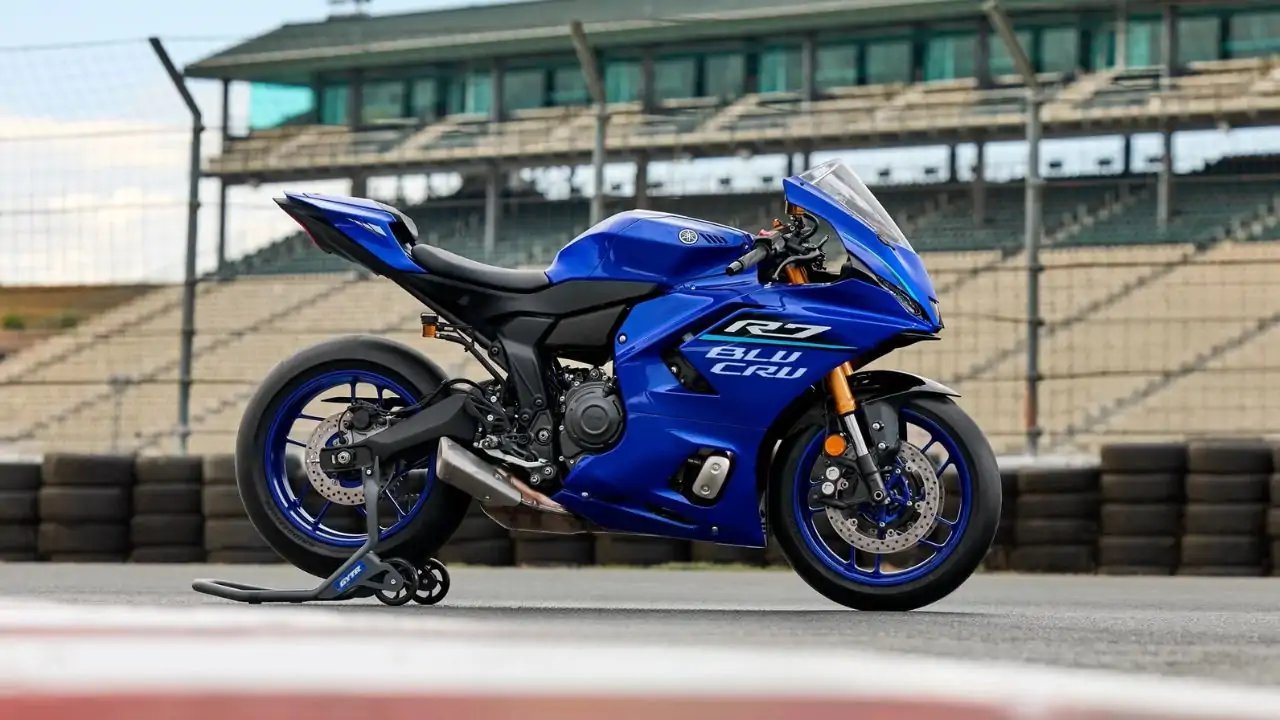
If you’ve been watching the FIM Yamaha BLU CRU World Cup since 2021, you’ve seen it serve as a genuine launchpad for raw talent. But starting in 2027, the game changes. Yamaha is retiring the R3 and replacing it with the R7 BLU CRU. This isn’t just a cosmetic refresh; it’s a fundamental step up in platform capability.
The road-going R7 already packs a 689cc, liquid-cooled parallel-twin CP2 engine making 71hp and 68Nm of torque. While Yamaha hasn’t leaked the exact race-spec numbers for the BLU CRU variant, the jump from the R3’s 321cc single-cylinder is massive. Competitors will now be chasing lap times on a machine with significantly more mid-range grunt and a heavier, more stable chassis. For a rookie, that’s a steeper learning curve, but it mirrors the demands of higher international categories like Moto2 or Supersport.
Visually, the R7 BLU CRU leans hard into the track day aesthetic. It wears exclusive Yamaha Racing graphics and revised bodywork that tapers the profile for aerodynamic efficiency. It looks less like a street bike with a livery slapped on and more like a purpose-built circuit weapon. The one-make format remains, so every rider gets an identical setup. No privateer advantages. Just pure skill differentiation on a bigger bike.
For the industry, this is a smart play. Keeping talent on Yamaha platforms longer builds brand loyalty early. For fans, it means faster, more aggressive racing from 2027. The R7 BLU CRU is a clear indicator that Yamaha wants this series to be a true feeder championship, not just a beginner’s playground.