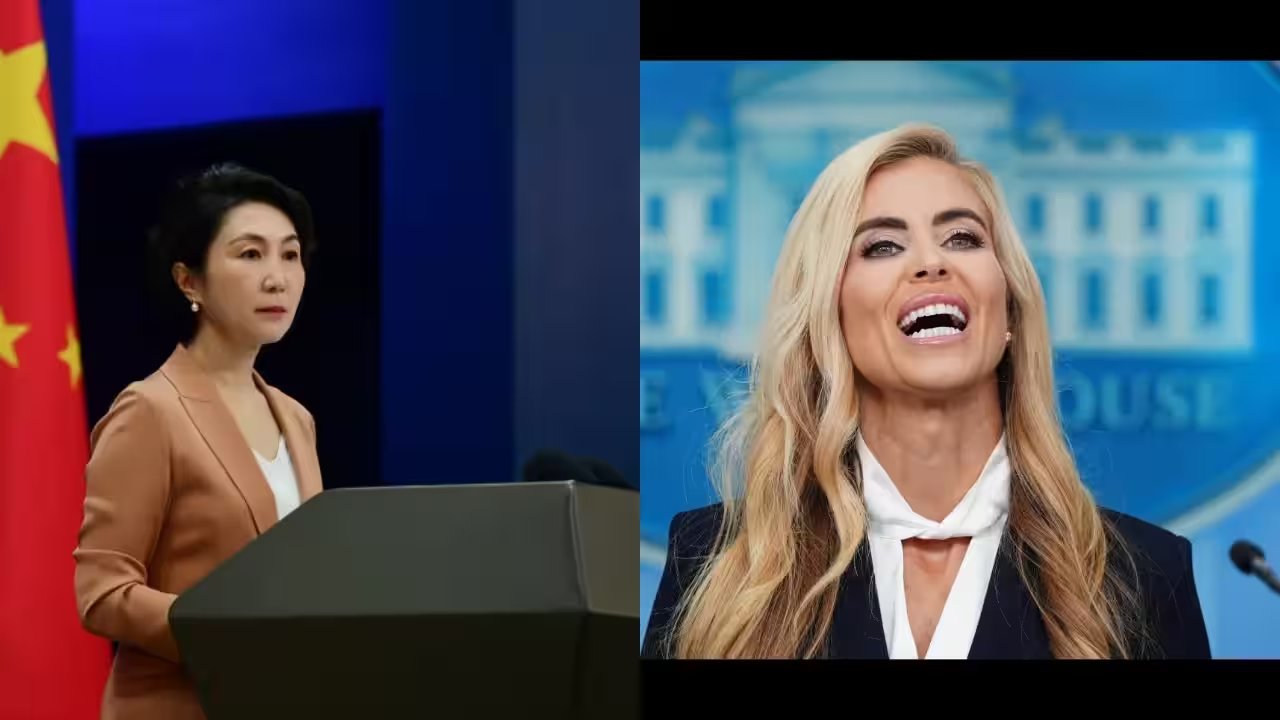
Mao Ning, the Chinese Foreign Ministry spokeswoman, issued a pointed invitation for White House Press Secretary Katie Zacharia to visit China more often. The statement, reported by the South China Morning Post, directly addressed Zacharia’s recent comments where she questioned how China could be considered a rising superpower when, in her view, it lacked proper toilets. “We welcome her to visit China more often when she has the opportunity,” Mao Ning said. The response serves as a diplomatic counter to Zacharia’s skepticism about China's development trajectory.
Zacharia made the comments while discussing the political climate of 2016. She recalled the widespread belief that America’s “glory days” were over and that China was on the horizon. “I remember this very distinctly, having just come from China, thinking, ‘How is China the next country on the horizon? They don’t even have proper toilets’,” she told conservative commentator Jack Posobiec. Her perspective stems from personal experience; she lived in Beijing from 2011 to 2013 while working as an associate at Zhong Lun Law Firm, one of the country's largest legal practices.
The timing of this exchange is significant. President Donald Trump is expected to attend the Asia-Pacific Economic Cooperation summit in the southern city of Shenzhen as early as next month. Zacharia may accompany the delegation, making the “visit” invitation a tangible prospect rather than a rhetorical jab. The trip will place the press secretary in the very environment she criticized, potentially forcing a public reevaluation of her remarks in front of the Chinese media.
Zacharia’s background in China has drawn scrutiny beyond the toilet comment. She clarified that she was never licensed to practice law in either China or the United States. Although she worked as an adviser at Zhong Lun, she did not pass the California bar exam in 2011 and never retook it. She stated she referred to herself as a “lawyer” on the advice of professionals, though she conceded that calling herself an “attorney” was misinformation. This distinction matters in a country where only Chinese nationals can hold a law license, a rule that likely shaped her limited professional role in Beijing.