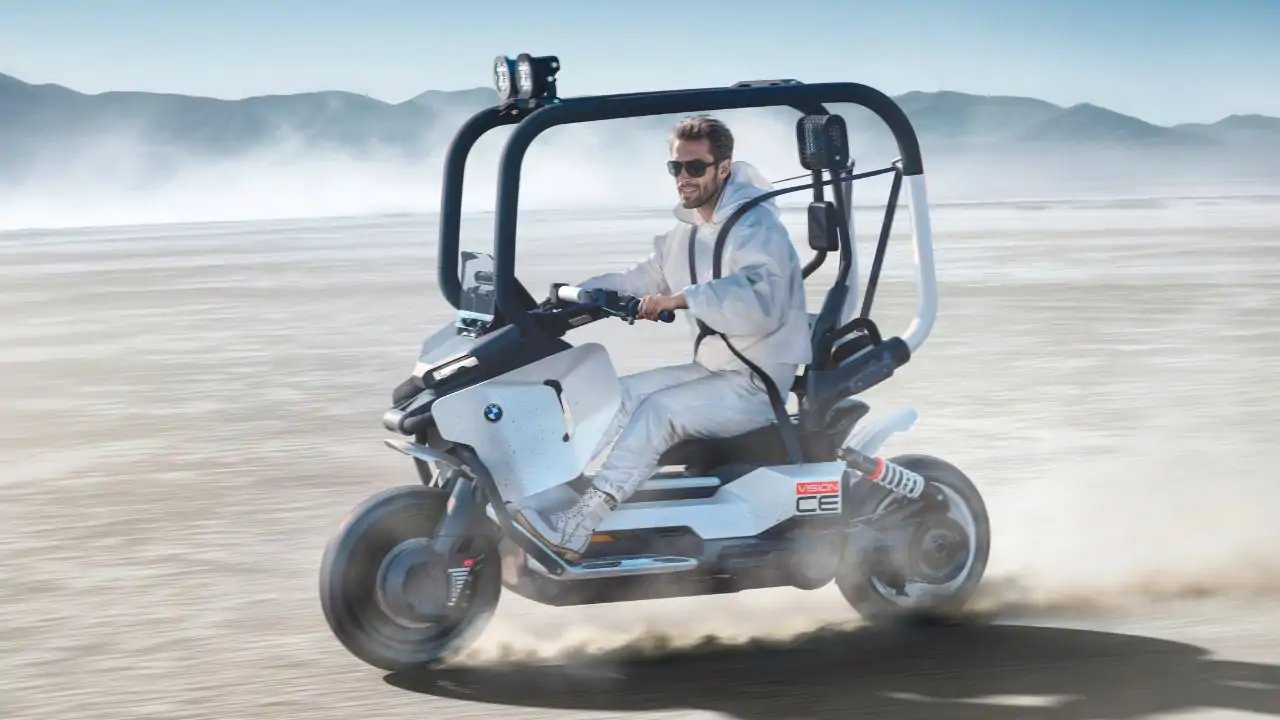
BMW's Vision CE, a self‑balancing electric scooter concept, just filed a design patent in India in 2025, signaling the brand's intent to bring the idea to market, though no production details yet.
The scooter's standout feature is a tubular cage that lets riders ride without a helmet, a nod to the BMW C1. In practice, it offers foot and leg protection and lateral safety around hips and shoulders, but helmets remain legally required in India.
BMW hasn't disclosed motor power, battery pack, or range. For context, the closest comparable models in India are Bajaj Chetak EV at ₹1.9 lakh with a 120 km range, and Vespa Elettrica at ₹1.2 lakh with 70 km. Buyers will have to wait for concrete numbers before weighing the Vision CE against these.
The concept debuted at IAA Mobility and was later shown at EICMA, both in 2025. The design registration protects the scooter's aesthetic but does not guarantee a production version, so it's still a concept at this stage.
India’s EV incentives and the government's push for zero‑emission vehicles may create a favorable environment for a product like the Vision CE, but the lack of a price point or launch window means consumers can't yet plan purchase decisions.
Keep an eye on BMW’s next press releases for battery specs, pricing, and a potential launch date, probably in 2027 or 2028, and whether the company will adapt the helmet‑free concept to meet local safety regulations.