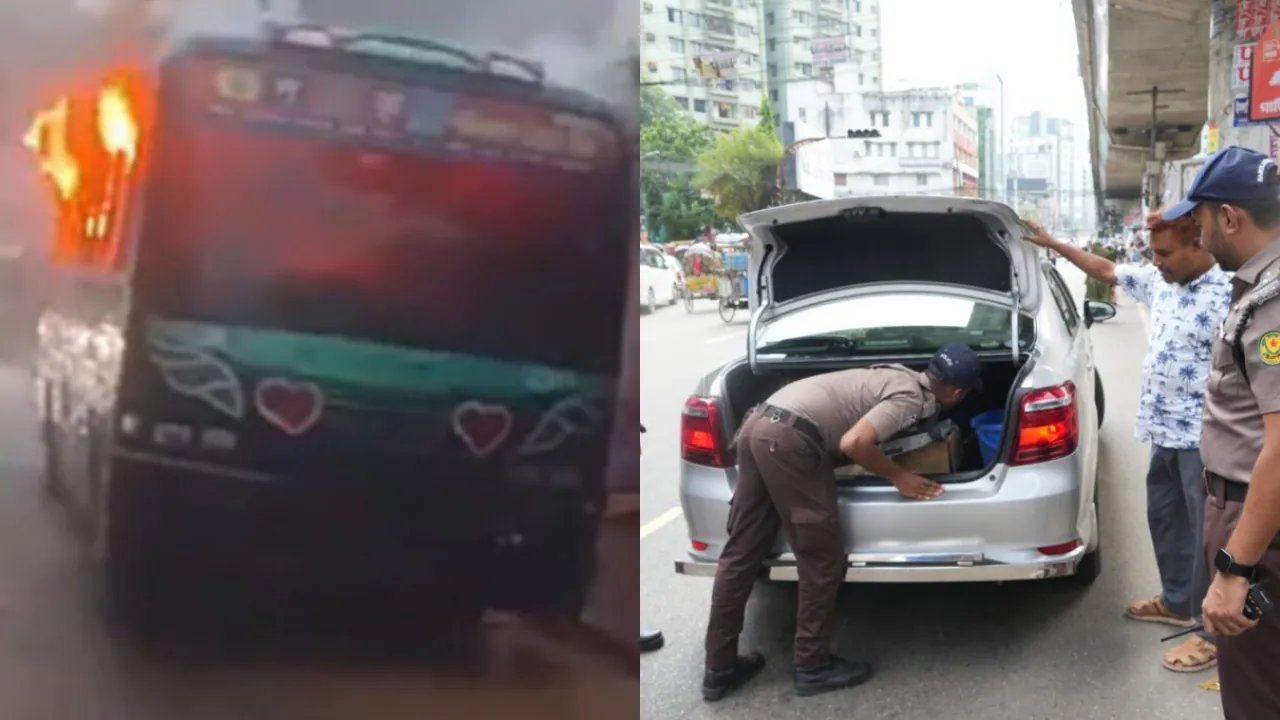
The Dhaka Metropolitan Police (DMP) seized a record 500 suspects in a 24‑hour sweep that began on 20 September, following a series of crude bomb blasts that rattled the capital. The arrests spanned Mirpur, Tejgaon, Motijheel, Wari, Ramna, Uttara, Lalbagh, and the high‑profile Gulshan area, where the Prime Minister’s residence sits.
Earlier this month, a cocktail bomb detonated in front of the Supreme Court, the same day the International Crimes Tribunal sentenced seven accused, including former Awami League general secretary Obaidul Quader, to death for 2024 atrocities. A week later, a crude bomb exploded at the High Court’s main gate, as Deputy Commissioner Sheikh Zahidul Islam confirmed through a BSS statement.
The city also saw three separate bus arson incidents: a parked bus in Mymensingh, another at Daulatdia in Rajbari, and a third set ablaze in Dhaka’s Jatrabari on Saturday night. CCTV footage is being reviewed to link the arsonists to the bomb plot, while four unexploded cocktail bombs were recovered near Lalbagh Police Station.
Security forces have erected more than 200 checkpoints on key roads and reinforced all four main entry points to Dhaka. "Law enforcement agencies have stepped up security measures across Dhaka to maintain public safety and prevent any further incidents," Deputy Commissioner Sheikh Zahidul Islam told BSS. Chief of Detective Branch Md Shafiqul Islam added that the recovered 500 grams of gunpowder, 250 grams of petrol, and nail fragments point to a coordinated plot.
Amid the crackdown, the opposition Jamaat‑e‑Islami‑led 11‑party alliance has already begun a long march from Dhaka to Rangpur, demanding a referendum verdict, trials for July killings, and the Teesta Master Plan’s implementation. Meanwhile, Prime Minister Tarique Rahman departed for New York to attend the United Nations General Assembly, adding a diplomatic dimension to the domestic security surge.