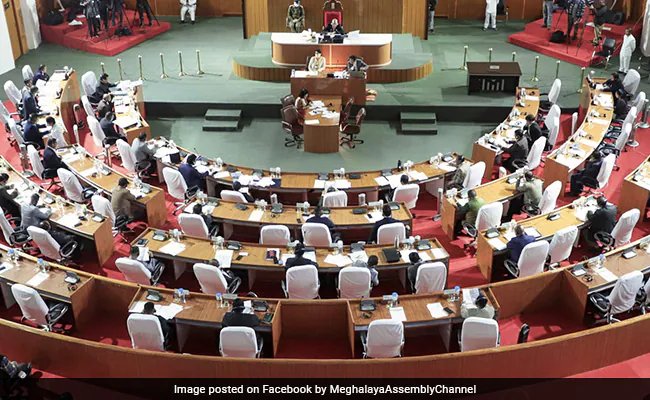
On May 28, 2026, Meghalaya Speaker Thomas A. Sangma formally acknowledged that eight United Democratic Party (UDP) legislators had merged with the Bharatiya Janata Party (BJP) under the Tenth Schedule’s paragraph 4. The eight lawmakers—Lahkmen Rymbui, Pius Marwein, Kyrmen Shylla, Mayralborn Syiem, Matthew Beyondstar Kurbah, Ollan Singh Suin, Balajied Kupar Synrem, and Synshar Kupar Roy Lyngdoh Thabah—were listed in the assembly’s official notification.
The decision reduces the UDP’s representation from 12 to a solitary four seats, while the BJP’s tally rises from two to ten, making it the largest faction in the 60‑member house. This shift alters the power balance, giving the BJP a clear numerical advantage for committee chairmanships and agenda setting.
Under the Tenth Schedule, a party can merge if at least two‑thirds of its members agree, a requirement that the eight MLAs evidently satisfied. The speaker’s recognition is the final administrative step, but legal challenges could still arise if any former UDP members contest the merger’s validity.
The notification, issued by the Secretary of the Meghalaya Legislative Assembly, lists the eight legislators’ names and explicitly states the new party strengths, leaving no ambiguity about the change in arithmetic. The move is already reflected in the assembly’s official records, and the BJP’s leadership has expressed confidence that the increased numbers will solidify its influence.
For the constituents of the eight former UDP seats, the shift means their representatives will now work under BJP’s policy framework, potentially affecting local development priorities and resource allocation. The change also signals a broader consolidation of BJP influence across northeastern states.