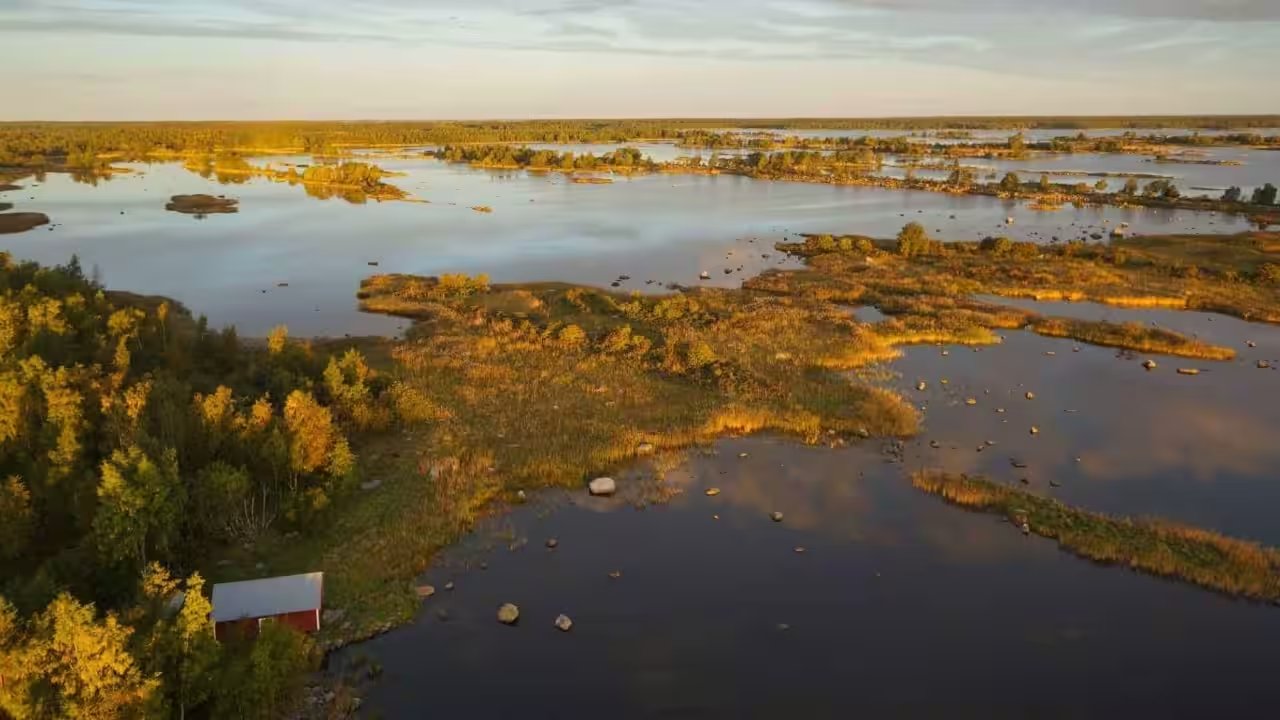
Finland’s National Land Survey disclosed on Tuesday that post‑glacial rebound is adding 1,730 acres (700 hectares) of land to the Gulf of Bothnia every year, a figure that dwarfs earlier estimates of 500 meters of subsidence during the last ice age.
The land uplift is not uniform; the Kvarken area sees nearly a centimetre a year, while southeastern Finland rises less than three millimetres annually. This unevenness means that new shorelines form at different rates, creating patches of "vesijättö"—relict water that, once dry, becomes legally distinct from adjacent properties.
Under Finnish law, newly exposed ground does not automatically transfer to the nearest waterfront owner. Instead, it often remains in the hands of the original water‑area proprietors, who may be a collective osakaskunta or a single stakeholder. Consequently, a cottage that once faced the sea could find a stretch of dry land between its boundary and the new shoreline.
Owners who wish to claim the emerging land must submit a redemption application to the National Land Survey. The agency conducts a survey, appraises the parcel, and sets compensation. The whole procedure typically takes seven months, with winter fieldwork sometimes causing delays. Current guidance lists €2,000–€3,000 as the average procedural cost for a cottage plot, excluding the landowner’s compensation or taxes.
The practical stakes are high. A family that has lived on a 12‑acre lakefront plot for generations could suddenly find a 200‑square‑meter strip between their fence and the sea that belongs to a neighboring communal trust, limiting their ability to build a dock or expand a garden. The redemption route offers a legal remedy, though it requires patience and money.
Looking ahead, geologists warn that continued uplift will be countered by rising global sea levels, meaning the net change of the coastline may slow or reverse in the coming decades. Until then, Finland stands as a living laboratory where slow geological forces intersect with property law, demanding that owners keep a keen eye on the exact legal boundaries of their land.