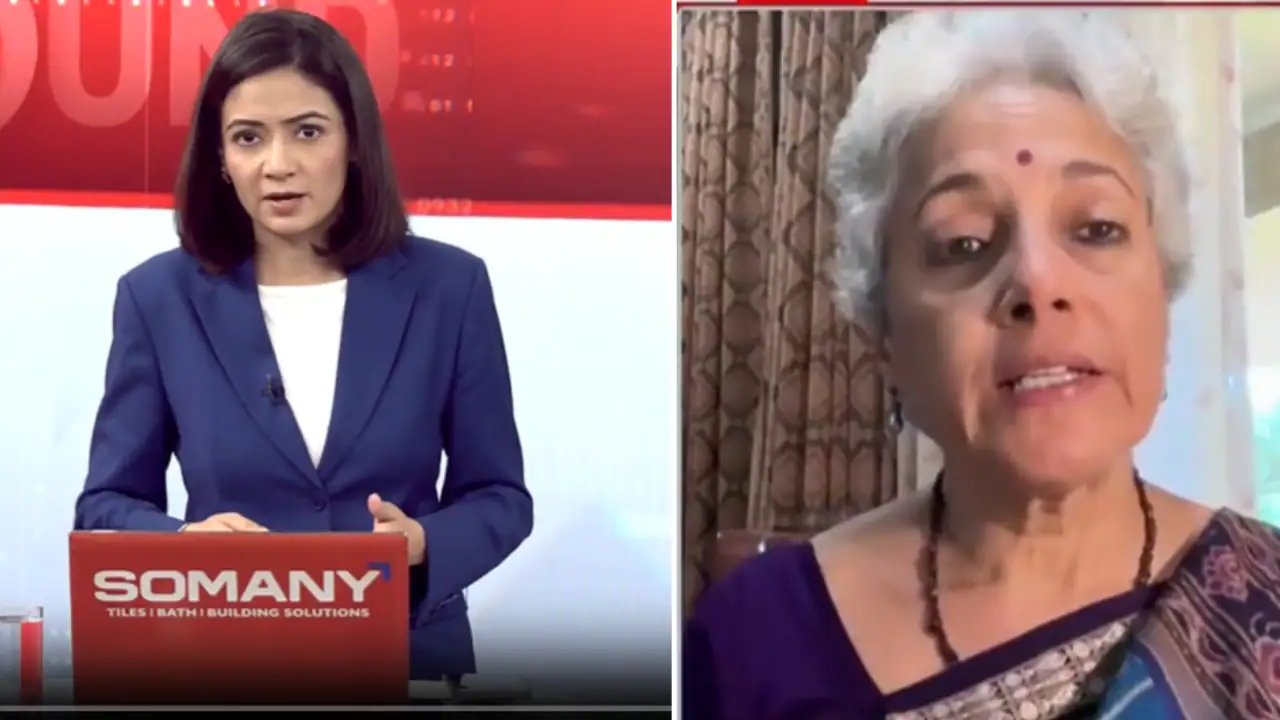
Air pollution kills quietly. Yet former World Health Organisation chief scientist Dr. Soumya Swaminathan warned that toxic air has ballooned into a national public health crisis every bit as destructive as COVID-19. Speaking on systemic environmental fallout, Dr. Swaminathan pressed authorities to treat chronic pollution with the same sweeping, coordinated scientific firepower mobilized during the height of the viral pandemic.
The global health body formally declared the COVID-19 emergency over in May 2023, but air pollution grinds on without pause. It strikes every human organ. It primes patients for adult-onset diabetes, triggers chronic asthma, impairs cardiac function, and inflames brain tissue.
The difference is, of course, that COVID, a pandemic caused by a virus, came out of the blue. There was a huge amount of fear of unknown. It was sudden, visible, and taking lives in front of your eyes. We don't see it, we get used to the smell of it, and it is slow-moving. It does kill.
— Dr. Soumya Swaminathan, Former WHO Chief Scientist
Clinical corridors are already reeling from the seasonal fallout. In Delhi, hospitals are recording an aggressive spike in acute respiratory patients, confirmed cardiac surgeon Dr. Naresh Trehan. Yet unlike viral epidemics, environmental casualties slip past the registry unnoticed. Doctors write heart failure, stroke, or chronic obstructive pulmonary disease on admission papers. Dr. Swaminathan pointed out that no death certificate in the country has ever listed air pollution as the cause of death.
Toxicity begins long before a child draws their first breath. Microscopic particulate matter measuring 2.5 microns or less—roughly 1/40th the thickness of a human hair—bypasses the body's natural airway filters. These jagged specks cross deep into alveolar tissue, enter maternal blood streams, and pierce the placental barrier.
Expectant mothers exposed to heavy pollution face sharply higher rates of premature labor and deliver low-birth-weight infants. And the developmental penalty compounds rapidly after birth. Children breathe faster than adults while their vital organs are developing. Because infant brain growth peaks within the first three years of life, prolonged toxic exposure stunts respiratory development, leaving infants with permanently smaller lung capacities.
| Pollutant / Metric | Biological Mechanism & Clinical Impact |
|---|---|
| PM2.5 (≤2.5 micrometers) | Sized at 1/40th a human hair; enters maternal bloodstream, breaches placenta, stunts lung size |
| PM10 (Coarse Particles) | Settles in upper respiratory tracts, triggering chronic bronchial inflammation |
| Ozone (O3) | Induces acute chest constriction and inflames lung linings across pregnant women and infants |
| Nitrogen Dioxide (NO2) | Aggravates pediatric asthma, lowers pulmonary clearance, and inflames respiratory tissue |
| Carbon Monoxide (CO) | Binds to hemoglobin, starving vital cardiac and neurological tissue of oxygen |
India continues to maintain permissible air pollution thresholds far higher than limits set by the World Health Organisation, which maintains that no safe level of PM2.5 exposure exists. Dr. Swaminathan argued that the current monitoring architecture blinds citizens to specific clinical risks.
The Central Pollution Control Board currently calculates the national Air Quality Index by compiling eight primary parameters: PM10, PM2.5, Ozone, Sulphur Dioxide, Nitrogen Dioxide, Carbon Monoxide, Lead, and Ammonia. Under this framework, the highest single sub-index sets the city's overall number, explained Mohan George, Consultant at the Centre for Science and Environment. If PM2.5 registers at 400 and ozone reads 300, the composite AQI displays as 400.
Dr. Swaminathan argued that this mechanism obscures localized vulnerabilities. Ground-level ozone damages pregnant women differently than fine dust particles assault toddlers. She advised state and municipal administrations to scrap the blanket AQI in favor of an Air Quality Health Index (AHQI)—a targeted tool that ties localized chemical concentrations directly to clinical risk warnings.
Turning to emergency response policies, Dr. Swaminathan pushed back against recurring school closures across heavily polluted urban belts. Wealthier households seal their rooms with mechanical air purifiers. Poorer families cannot afford these machines. Shutting classroom doors traps lower-income children inside unpurified homes, stripping away daily education, critical social interaction, and nutritious mid-day meals while forcing them to breathe identical toxic air.
Protective policy must pivot from cosmetic shutdowns to indoor environmental remediation. Dr. Swaminathan urged municipal administrators to clean school air supplies directly through localized filtration, upgrade ventilation in public spaces, and treat toxic spikes as an active clinical emergency requiring immediate, targeted medical protection.
| CPCB 8-Pollutant Matrix |
| Includes SO2, Lead (Pb), and Ammonia (NH3) to calculate regional sub-indices |