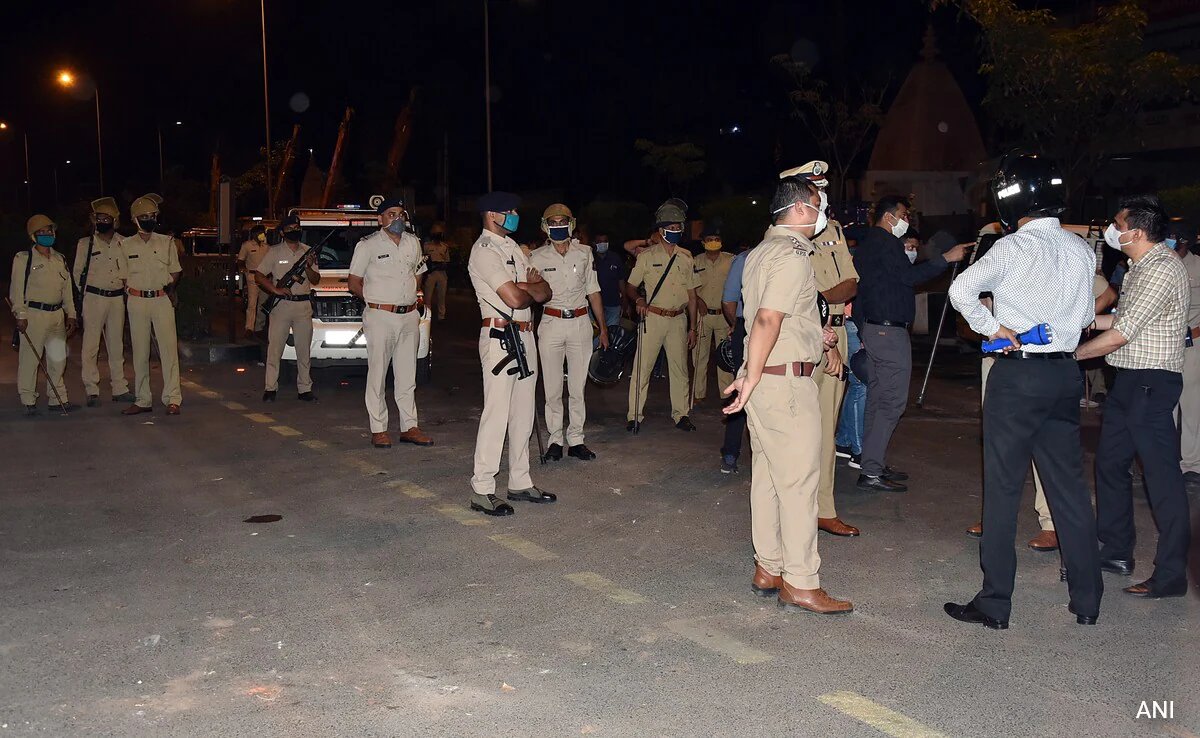
The Surendranagar police force logged the case after a graphic video showing a woman’s confinement and assault went viral, prompting an immediate investigation. The footage, posted on social media, depicted the victim chained, beaten, and gang‑raped by a group including the man she had left her husband for, all under the pretense of a religious purification ceremony.
Superintendent Premsukh Delu confirmed that community members alerted authorities when the victim failed to report the incident herself. Officers traced the location via the video, located the survivor, and secured her testimony under a sealed witness protection order.
A formal complaint was filed under sections 376, 420, 506, 323, and 354 of the Indian Penal Code, as well as sections 66A and 67 of the Information Technology Act. The police have also documented the chain of custody for the incriminating video, which will be used as evidence in the upcoming trial.
Eight of the accused are male, and two are female accomplices. All nine have been remanded to judicial custody pending the first hearing, which is set for June 5, 2024, at the Surendranagar Sub‑court.
The case has sparked a broader debate on the misuse of religious practices to justify violence, with community leaders calling for stricter enforcement of both criminal and cyber laws to deter such atrocities.
The victim, a 28‑year‑old mother of two, is currently receiving counseling and medical care at a local hospital, while the police continue to investigate the broader network of individuals involved.
The court is expected to convene next week to determine bail eligibility and to assess the adequacy of the evidence collected.
As the investigation proceeds, law‑enforcement agencies are exploring whether similar incidents have occurred elsewhere in the state, with a focus on identifying patterns of religiously framed violence.
Meanwhile, the Gujarat government has pledged to strengthen community policing initiatives to prevent such crimes and to ensure swift justice for victims of gender‑based violence.
The next critical step will be the court’s decision on June 5, which could set a precedent for handling cases that blend cyber‑crime with violent sexual offenses.
The case underscores the urgent need for robust legal frameworks that address both the physical and digital avenues through which perpetrators exploit cultural rituals.
The survivor’s voice remains a rallying point for activists demanding reforms in how the law treats incidents that cross the lines of tradition and legality.
With the trial slated to commence, all eyes will be on Surendranagar Sub‑court to see whether the justice system can deliver a verdict that deters future atrocities.
The story continues to evolve as investigators dig deeper into the accused’s backgrounds and potential accomplices.
The legal community is watching closely, aware that the outcome could influence how similar cases are prosecuted nationally.
The forthcoming hearing will likely bring the community’s expectations of justice into sharp focus.
The narrative of this case is a stark reminder that the intersection of technology and tradition can create a dangerous platform for abuse.
The authorities’ swift action, however, signals a shift toward a more proactive stance in combating gender‑based violence.
The next hearing will be a litmus test for the efficacy of the existing legal framework in addressing complex, multi‑faceted crimes.
It remains to be seen how the courts will balance the evidentiary weight of the video with the need to protect the survivor’s dignity.
The case is a microcosm of the broader struggle to reconcile cultural practices with modern human rights standards.
As the legal process unfolds, the world watches Gujarat’s approach to justice in an era where social media can expose, but also complicate, criminal investigations.
Ultimately, the outcome could influence national policy on the intersection of religious rituals, cyber‑crime, and sexual violence.
The community’s call for accountability continues to grow louder, demanding that the law keep pace with the evolving tactics of modern abuse.
The decisive moment lies ahead, as the court prepares to deliver a verdict that may shape the future of similar prosecutions.
The case, though tragic, offers a potential pathway for reforming legal responses to gender‑based violence disguised as cultural rites.
The next week’s hearing will serve as a barometer for whether the justice system can rise to the challenge of protecting vulnerable citizens in the digital age.
The story is far from over, but the upcoming trial marks a pivotal juncture in Gujarat’s history of confronting sexual violence.
The legal community and activists alike will be watching closely as the court weighs evidence, testimonies, and the broader implications for society.
In the weeks ahead, the focus will shift from discovery to adjudication, with the court’s decision poised to set a precedent.
The outcome will likely reverberate beyond Surendranagar, influencing how states across India address similar crimes.
The case serves as a stark reminder that technology can both reveal and mask the darkest facets of human behavior.
The world watches, hopeful that justice will prevail.