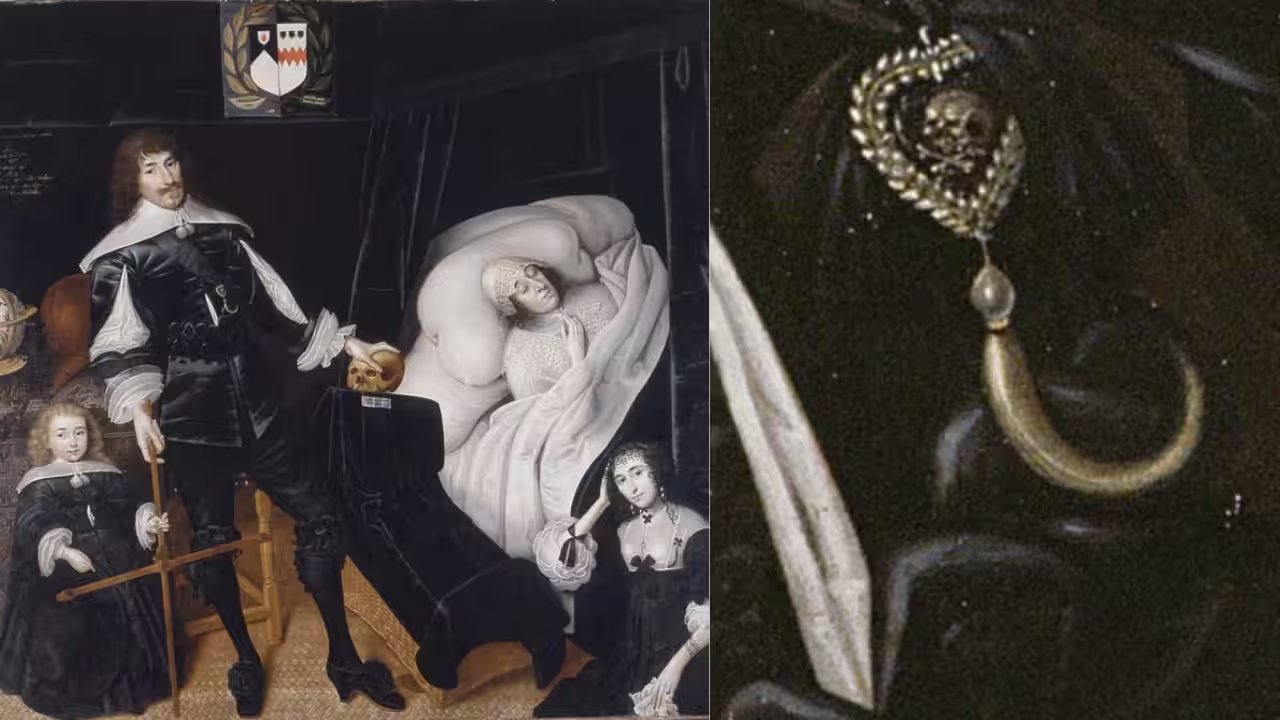
During a recent tour of a Manchester Art Gallery exhibition, a private collector spotted a heart‑shaped pendant that matched the one depicted in John Souch’s 1635 painting "Sir Thomas Aston at the Deathbed of His Wife". The collector immediately contacted Martyn Downer, a historian and specialist in historical jewellery, who confirmed the piece belonged to Sir Thomas Aston’s estate.
The pendant, crafted in the 17th century, features a gold wreath surrounding a heart, black‑enamel detailing, a skull motif, and Latin inscriptions. A tassel of blond hair from the six‑year‑old Robert Aston hangs beneath the heart, turning the jewel into a tangible memorial of a child who died on 4 May 1634.
Souch’s painting, now housed at Manchester, portrays Sir Thomas mourning his wife Magdalen, who died during childbirth, while their son Thomas, aged three, watches—a composition that intertwines portraiture with symbols of loss. The Aston family had already endured multiple bereavements; Robert, Elizabeth, and Jane had died young before the canvas was finished, and their son Thomas died in 1636.
Memento mori jewellery like this pendant served to keep the deceased close to the living, and scholars note its similarity to the mourning objects of the Hamnet era, when child mortality was a pervasive reality. Downer has appraised the pendant at £650,000, and it will now be examined by specialists at Manchester Art Gallery before its next exhibition.