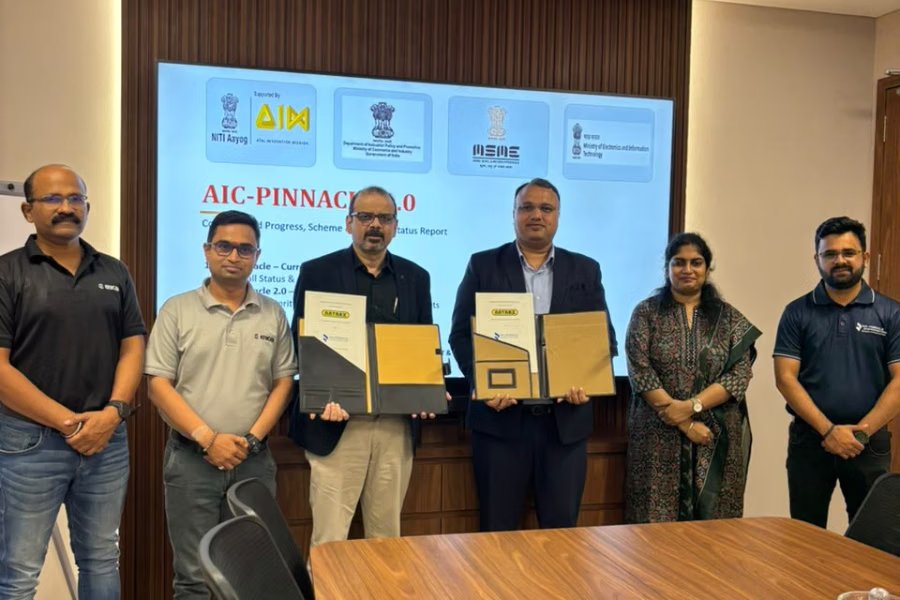
The new partnership between AIC Pinnacle and NATRAX is a game‑changer for Indian EV makers who have struggled to find affordable, high‑quality testing venues. By tying a proven incubator to a state‑of‑the‑art test track, the MoU gives startups a clear, low‑cost path from prototype to production.
The agreement was sealed on a Thursday at EKA Mobility’s Trucks and SCV Plant in Chakan, with Dr Avinash Thakur (CEO of AIC Pinnacle) and Dr Manish Jaiswal (Director of NATRAX) signing the papers. The partnership goes beyond mentorship: it opens a 3‑km closed‑track loop, a climate chamber and a battery‑cell validation lab to any AIC cohort vehicle that meets the criteria.
How does this stack up against other options? AIC has traditionally linked startups to capital and advisory services, while NATRAX has been the go‑to for OEMs like Maruti and Mahindra. Together, they create a rare vertical integration that cuts the usual 18‑month testing cycle down to roughly 12 months. Comparative benchmarks also show that the combined cost of testing here is about 30% less than renting a commercial track in Mumbai.
This move comes hot on the heels of the Indian government’s 2025 EV mandate, which requires all new passenger cars to be 30% electric by 2025 and 70% by 2030. With more start‑ups now able to prove safety and performance, the policy’s push for domestic EV production will likely accelerate. For the average consumer, that translates into a broader selection of affordable, locally made electric vehicles in the next few years.
The first concrete outcome will be a hackathon slated for the end of the year, where selected AIC startups will get hands‑on access to NATRAX’s facilities. After the hackathon, the plan is to roll out a tiered testing program, starting with battery pack validation, then moving to vehicle‑level performance and finally compliance testing with the Bureau of Indian Standards. The goal is to bring the first batch of fully tested EV prototypes to market by Q2 2027, with city‑wide availability in Delhi, Mumbai and Bangalore.
Buyers should keep an eye on the upcoming AIC Pinnacle showcase in December; it's the first public look at the vehicles that will have gone through this new testing pipeline. Expect to see models that offer 300‑km range on a single charge, 200‑horsepower output, and a price point under ₹30 lakh—competitive with the likes of the Tata Tigor EV and the Hyundai Kona Electric. The partnership also opens doors for local suppliers to step up their game, which could drive down the final sticker price even further.
As the EV landscape in India continues to evolve, this MoU is a reminder that infrastructure and policy must meet innovation. For anyone watching the market, the next 12 months will tell whether this collaboration can bridge the gap between prototype and production, and ultimately give the average Indian driver a reliable, locally produced electric car in their driveway.