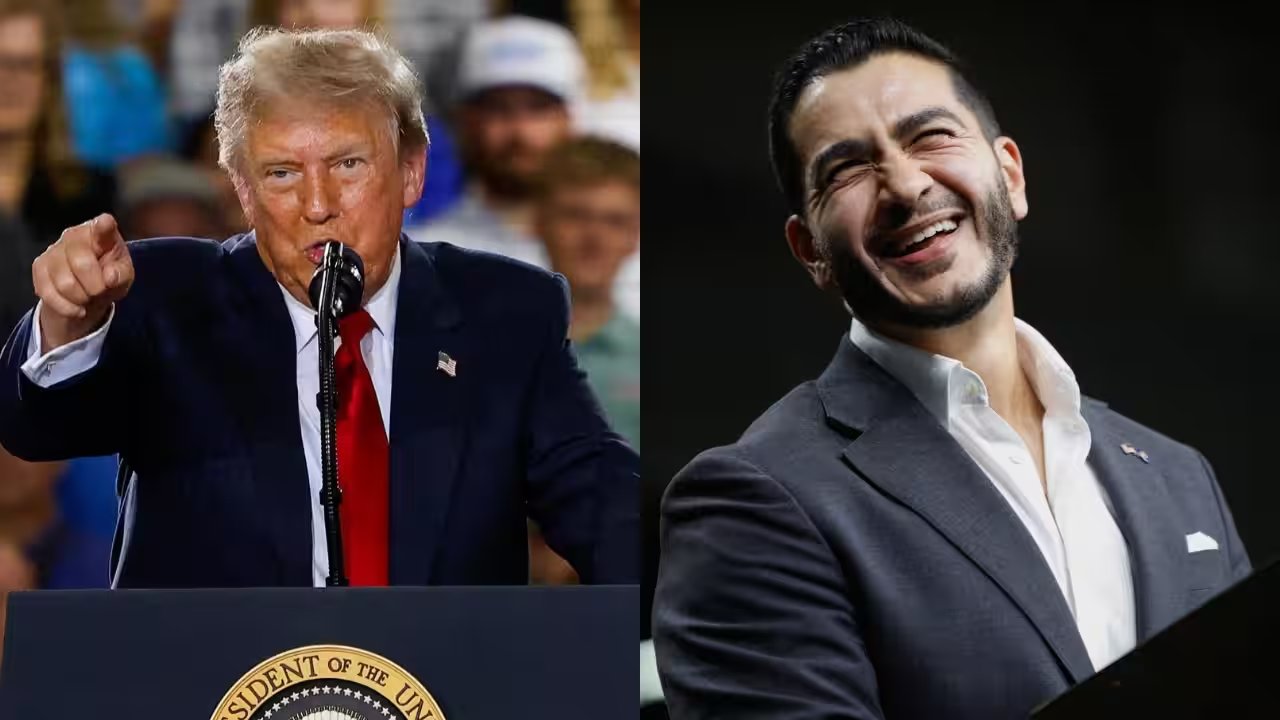
President Donald Trump called Michigan Democratic Senate candidate Abdul El-Sayed a "jihadist" and accused him of siding with terrorists during a Sunday rally in Port Huron. The attacks escalated sharply from previous campaign rhetoric, with Trump explicitly stating he came to Michigan "to keep a jihadist Muslim Brotherhood member from becoming a United States senator." He compared blocking El-Sayed from the Senate chamber to passengers fighting hijackers aboard United Flight 93.
El-Sayed, a former Detroit health official, faces Republican opponent Mike Rogers in a race critical for Senate control. If elected, he would become the first Muslim American senator. There is no evidence linking El-Sayed to the Muslim Brotherhood, a claim Republicans have pushed by citing a 2012 social media post by his half-sister, Eman Abdelhadi. El-Sayed, raised by his father after his parents divorced, has consistently denied any ties to extremist groups.
The president’s rhetoric triggered an immediate backlash from within his own voter base. Bishara Bahbah, who founded Arab Americans for Trump and helped lead the party’s outreach to Arab American voters in 2024, labeled the comments racist. "The president’s statements are out of line," Bahbah said. "They are crossing a red line." The organization has since been renamed Arab Americans for Peace, signaling a strategic pivot away from the president’s latest messaging.
Trump also targeted El-Sayed’s association with streamer Hasan Piker, who made controversial statements regarding Hamas and Israel during the primary campaign. El-Sayed responded to the attacks at a later rally in Grand Rapids, adopting a defiant tone. "I don't even care that he remembers my whole name because he can just go on and call me 'senator' after Nov," El-Sayed said. "I will be Senator Muhammad to you, bro."
The campaign dynamics in Michigan are complicated by recent events, including a synagogue attack in the Detroit area where the perpetrator had lost relatives in an Israeli airstrike on Lebanon. El-Sayed’s initial comment that "hurt people hurt people" drew criticism, though he later apologized for the phrasing. Senator Bernie Sanders, campaigning alongside El-Sayed, accused Trump of using Islamophobia to deflect from economic issues like inflation and fuel prices. With the general election set for Nov 3, the fight over the Senate’s balance of power hinges on these suburban and urban demographics.