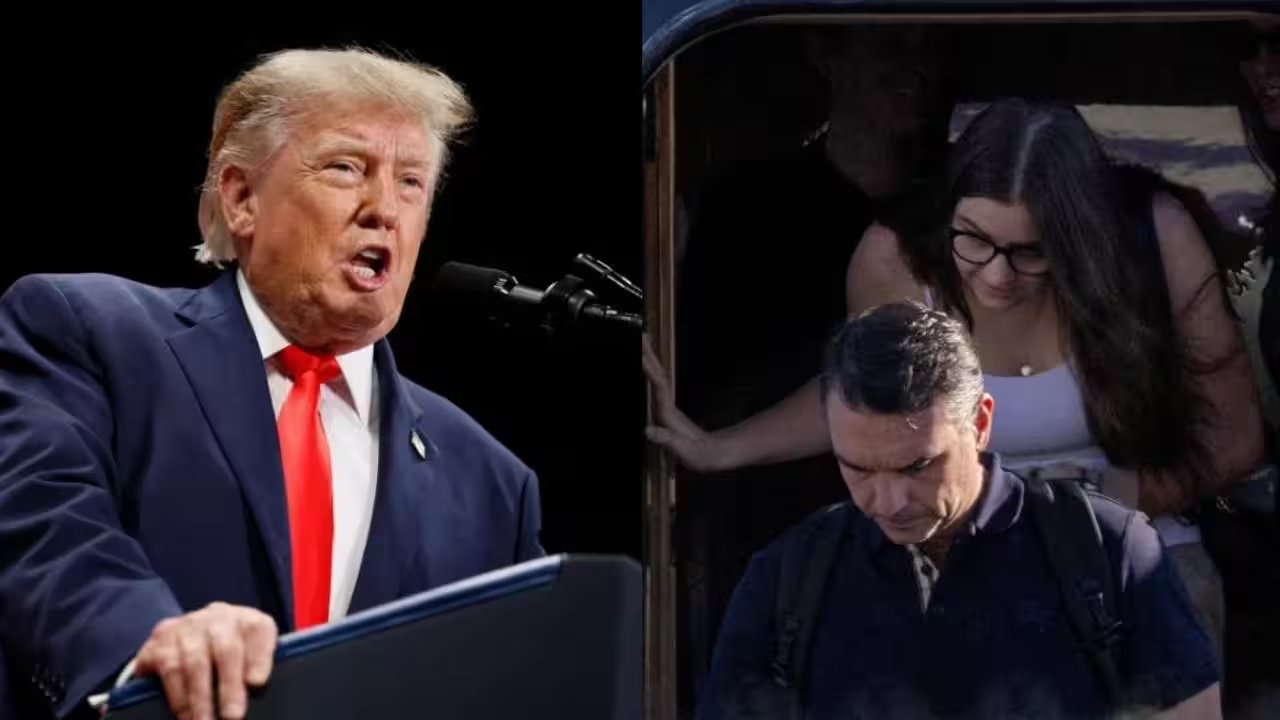
Donald Trump declared at his Mar-a-Lago club in Florida on Saturday that Flavio Bolsonaro can remain in the United States "as long as he wants." The President added a sharp jab at Brasilia, stating, "In my opinion, the election was a disgrace," referring to the 2022 vote that saw Luiz Inacio Lula da Silva defeat Bolsonaro’s father, Jair.
Flavio Bolsonaro arrived in the US under humanitarian parole, a status typically capped at one year. By signaling indefinite residency, Trump is overriding standard immigration protocols for a figure facing two federal money-laundering investigations in Brazil. Police in Brazil had flagged the former senator as a flight risk before he left the country, a move enabled after a Supreme Court justice ordered his passport revoked.
The political fallout is immediate. While Trump allows Flavio to stay, a US official confirmed the President has no plans to meet him or support his political ambitions. This creates a strange diplomatic limbo: Washington is hosting a key figure from the ousted Bolsonaro circle while simultaneously engaging with Lula’s government. Jason Miller, a White House official, reportedly helped arrange Flavio’s journey, a detail that contradicts Secretary of State Marco Rubio’s claim that the US government was "not involved directly" in the politician's departure.
Diplomacy continues in parallel. Rubio held talks with Brazilian Foreign Minister Mauro Vieira on the sidelines of the G20 meeting in Atlanta. The two ministers are expected to meet again at the G7 foreign ministers' summit in France next month, where Brazil will attend as an observer. These engagements suggest a desire to stabilize bilateral ties, but Trump’s public comments suggest the underlying political tension remains unresolved.
The stakes extend beyond immigration policy. Jair Bolsonaro, Flavio’s father, is currently imprisoned in Brazil for plotting a coup after losing the 2022 election. Lula, who has his own history of legal battles including a 17-month prison stay in 2018-2019, now faces a US President who openly questions the legitimacy of his electoral mandate. The next critical test for US-Brazil relations will be the G7 summit in France, where both sides will attempt to navigate these fractious waters.