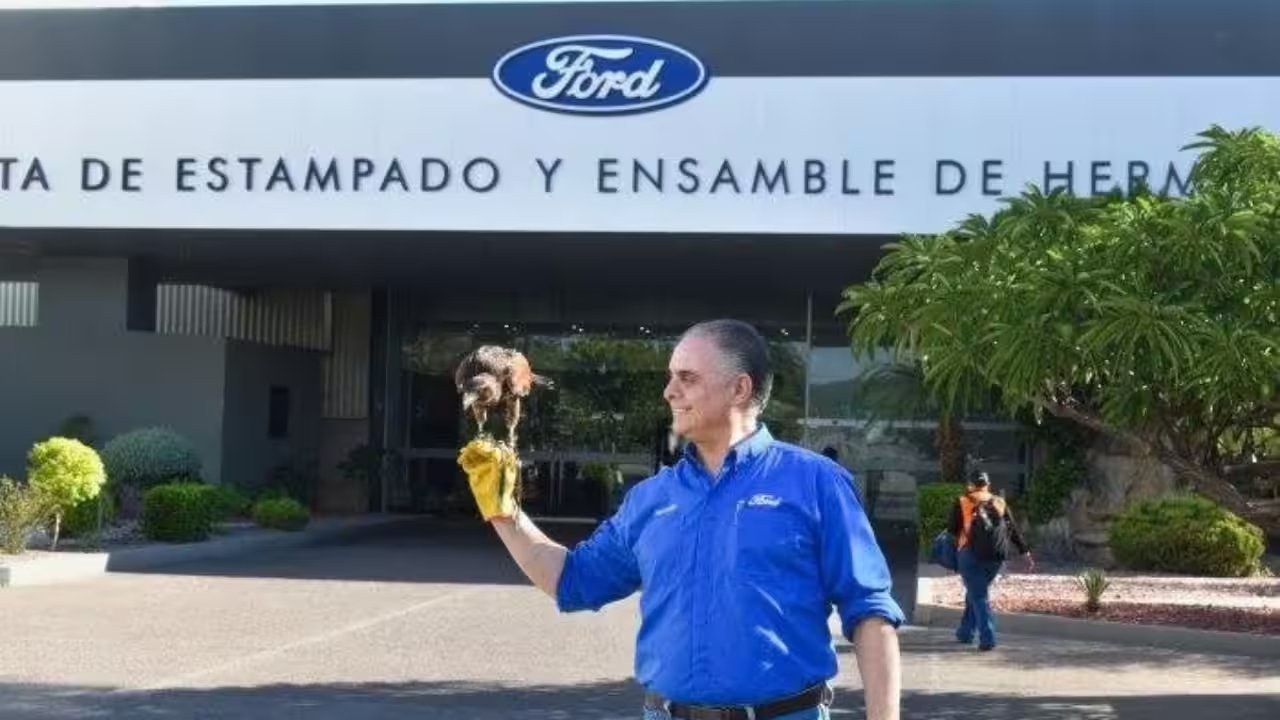
If you’re buying a Ford, the first thing that comes to mind is the car’s specs, its safety rating, and the price tag. Yet behind every sleek exterior lies a complex factory network, and one of the newest guardians of that network isn’t a robot— it’s a hawk.
The Hermosillo plant churns out more than 300,000 vehicles a year and employs over 4,000 workers. That’s a lot of paint, a lot of metal, and a lot of potential mess. Pigeons— with their droppings and nesting habits— had become a recurring nuisance, contaminating freshly painted surfaces and posing a hygiene risk for both workers and vehicles.
Ford tried the usual tricks: loud predator sounds and fake eyes that mimic a hawk’s gaze. The birds shrugged off those deterrents, learned the patterns, and kept coming. When the real predator arrived, the outcome was instant: pigeons fled, and the plant’s clean‑room standards improved.
El Charro spends two to three hours a day patrolling, with a routine that starts with a meal and ends with a sweep of the airspace. In that time, the hawk has logged over 1,170 hours of patrol and flown more than 300 missions, identifying nesting sites and guiding workers to remove them. The result: an 80% drop in pigeon activity in the monitored zones.
This isn’t just a quirky story; it’s a practical example of how the industry can blend traditional and modern solutions. Airports, landfills, and even some auto plants already use falcons or hawks to keep birds at bay. For Ford, the hawk’s presence underscores a broader bird‑control strategy that includes nest removal and environmental monitoring.
What does this mean for buyers? Cleaner production lines translate into fewer defects, tighter quality control, and ultimately a more reliable vehicle on the road. For the industry, it shows that investing in innovative, low‑cost, and sustainable solutions can pay off in both product quality and operational efficiency. Ford’s experiment could set a new standard for how factories protect their output from unexpected wildlife intruders.
El Charro has been on duty since July 2025, and Ford plans to keep him in the lineup as long as the bird problem persists. The company will also continue to refine its nest‑removal protocols and may look into expanding the program to other plants facing similar challenges. For now, the hawk is a silent, feathered witness to Ford’s relentless pursuit of factory perfection.