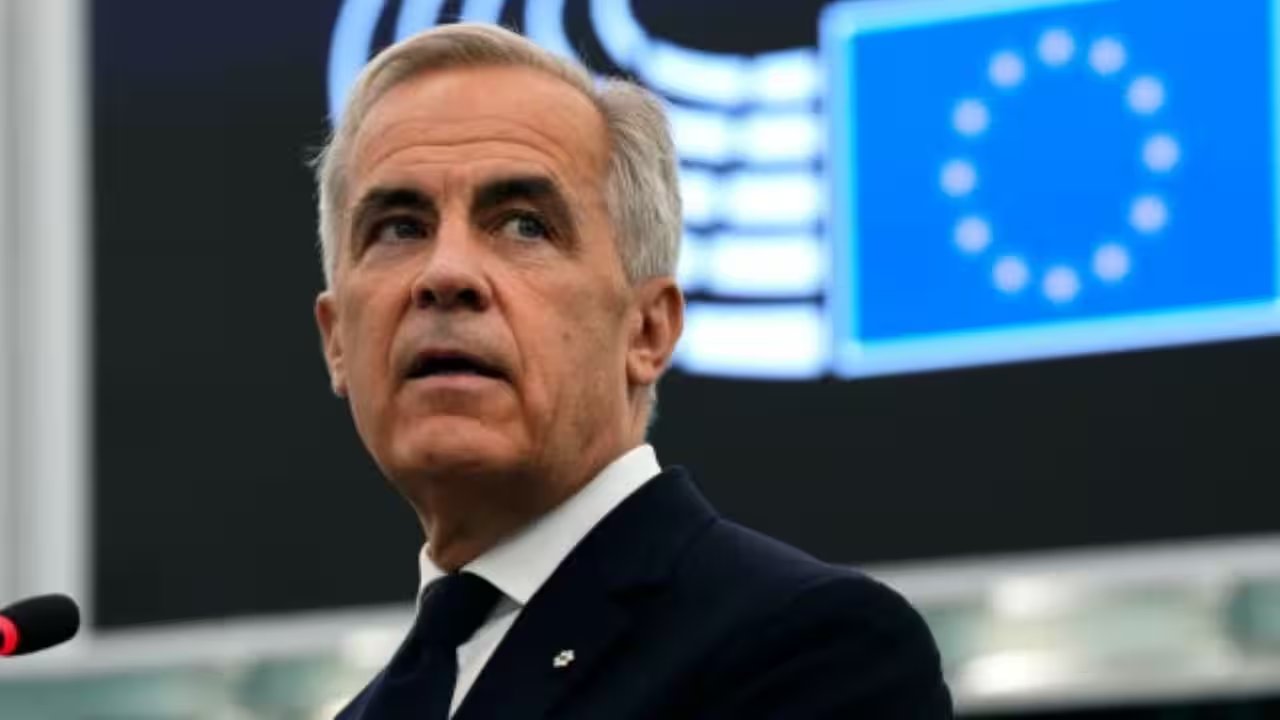
Mark Carney stood before the European Parliament in Strasbourg on Thursday and effectively handed Donald Trump a political headache. The Canadian Prime Minister backed the European Union’s plan to make Canada its first 'associate member,' arguing that the two entities are 'stronger together' in protecting their markets and democracies. He did not use the exact term 'associate member' in his address but welcomed the ambition explicitly, signaling Ottawa’s readiness to deepen ties with Brussels rather than Washington.
The reaction in the US was immediate and volatile. On Wednesday, hours before Carney’s speech, Trump dismissed the proposal as 'laughable' during a stop in North Carolina. He warned that if the move was intended as a 'bad intention,' the US would impose 'very heavy tariffs' on Europe or halt trade on certain goods. 'If it’s a good intention, that’s fine,' Trump told reporters, 'If it’s a bad intention, we’ll put very heavy tariffs on Europe.'
Carney’s speech was a clear rebuttal to US economic pressure. He described economic integration as being 'weaponized' through tariffs and warned that supply chains and financial mechanisms were being used for coercion. He stressed that Canada would not be dictated to, stating, 'Canadians are united that nobody is going to tell us what language we speak.' The PM outlined plans for deeper cooperation in critical minerals, defence, artificial intelligence, and energy security, though he clarified this was not about creating a rival power bloc.
The diplomatic friction extends beyond trade. French Europe Minister Benjamin Haddad asserted on Thursday that the US holds no veto power over European geopolitical decisions. 'It is not up to the United States — or anyone else — to choose the political and geopolitical direction of the Europeans,' Haddad said. The European Commission, through spokesperson Olof Gill, maintained the proposal was 'not against anyone else, but for our common strength.'
Legally, this 'associate member' status does not exist under current EU treaties. It would require a new legal framework and approval from all 27 member states. The existing Comprehensive Economic and Trade Agreement (CETA), which eliminated 99% of tariff lines since 2017, serves as the baseline. With Washington and Ottawa already locked in a tariff dispute, the next phase of this negotiation will likely face intense scrutiny from both European capitals and the White House.