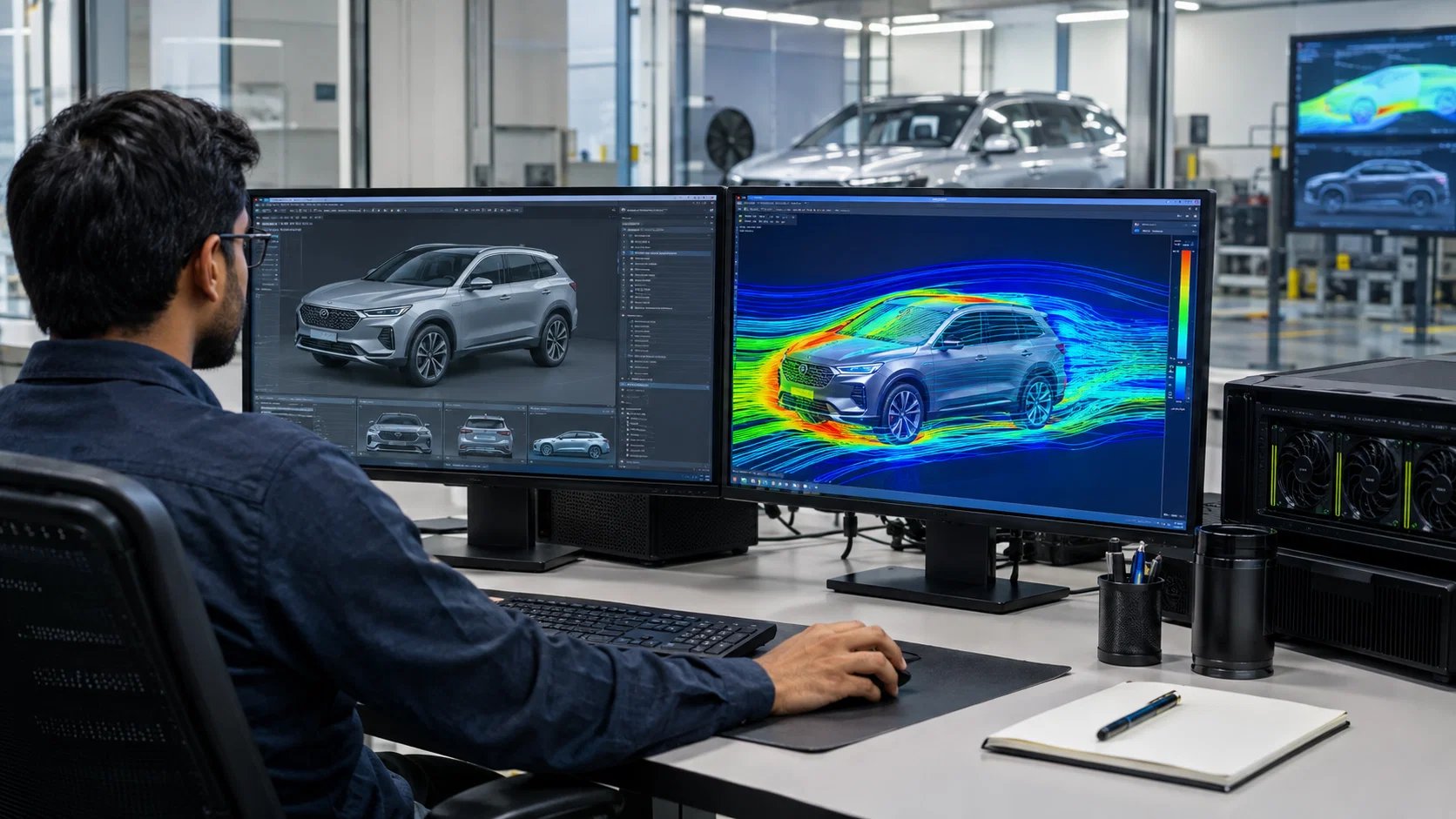
EV Development Slashed to 24 Months with GPU‑Accelerated CFD
The first thing that matters for any buyer is how fast a car gets from concept to the showroom floor. GPU‑accelerated computational fluid dynamics (CFD) has cut the traditional 50‑month cycle down to roughly 24 months, essentially halving the wait time before a new electric vehicle can hit the road.
So what does that look like for you? Imagine a Tesla Model 3 that could have hit launch earlier, with more battery cooling options, a sleeker aerodynamic package, and a smoother ride thanks to tighter thermal control. Ford’s Mustang Mach‑E, too, could have seen earlier updates to its air‑cooled motor and cabin HVAC, all thanks to the same simulation speedups.
The magic happens inside the software. Traditional CFD would mesh a 300‑million‑cell model in ten hours, but a new Rapid Octree meshing tool cuts that to under an hour—more than a ten‑fold gain. Then, instead of offloading only part of the calculation to a GPU, a fully native GPU solver runs the entire simulation on the graphics card. The result? Speedups of 5–13× for air‑cooled motors, 6–9× for external aerodynamics, and a staggering 230× for complex water‑wading cases.
From a policy angle, this acceleration is a boon for meeting India’s EV mandate, which pushes each manufacturer to ship 30% electric cars by 2030. Faster simulation means quicker compliance checks, fewer costly chassis tweaks, and a smoother path through the tariff maze. Consumers benefit because fewer redesigns translate to lower production costs and, eventually, more pocket‑friendly prices.
Looking ahead, most OEMs are slated to roll out GPU‑powered CFD suites by mid‑2025, and the first wave of vehicles—especially those in the compact SUV and sedan segments—should reflect the gains. Keep an eye on the next model releases in New Delhi, Mumbai, and Hyderabad, where you’ll see the tangible effects of this tech: lighter batteries, tighter thermal envelopes, and a more polished driving experience.