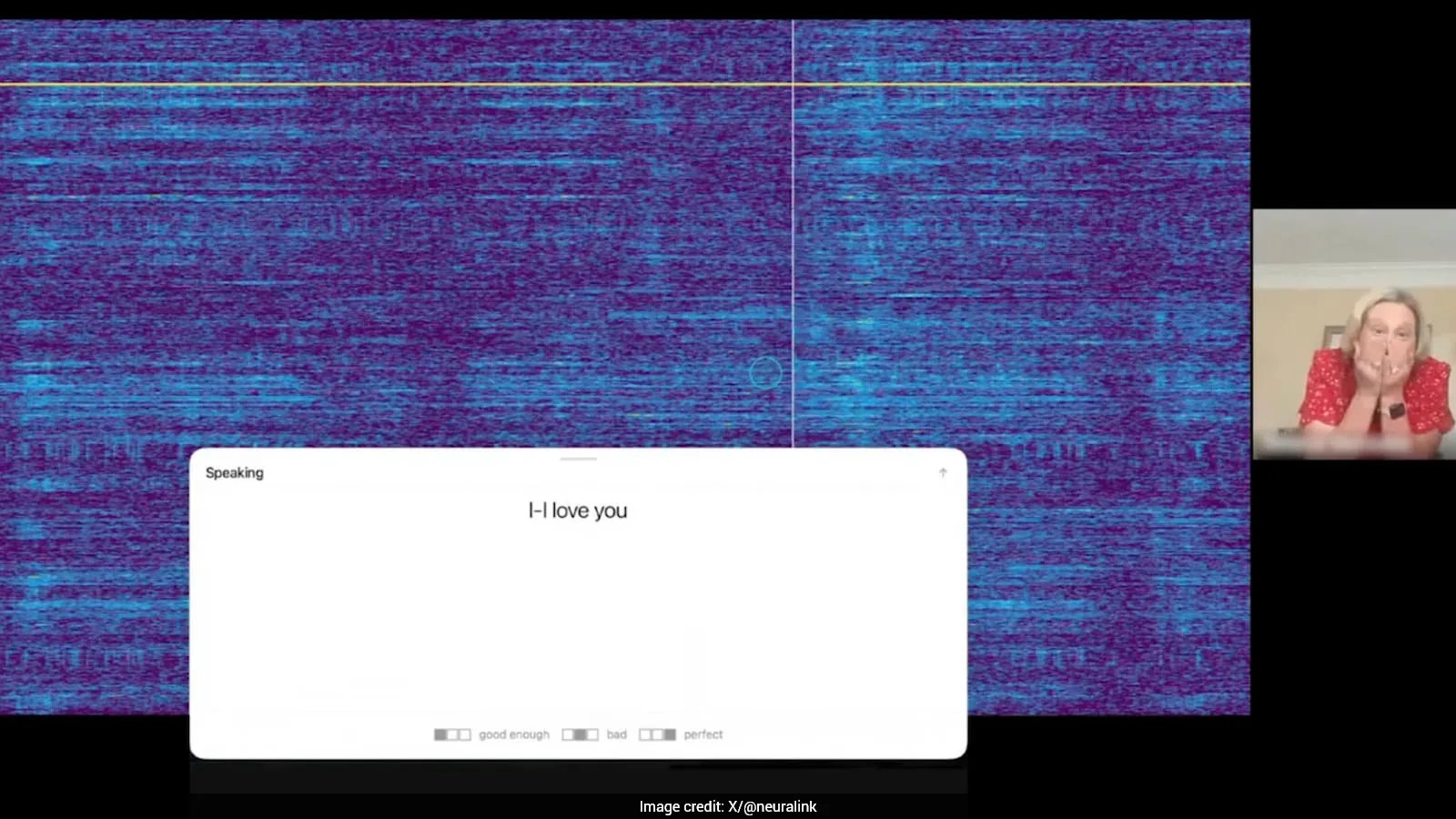
A man who has battled speech difficulties since a stroke just said "I love you" out loud, the first time anyone has heard his voice since the accident—thanks to a tiny chip implanted in his cortex. Neuralink, the company behind the device, says the implant reads electrical patterns from the brain and, through artificial‑intelligence algorithms, turns those patterns into spoken words in a synthetic voice. The video, shared on social media by Elon Musk, shows the man’s partner visibly moved as the chip translates his thoughts into clear, audible speech.
Neural‑interface technology works by placing microelectrodes in the cerebral cortex, picking up signals that normally travel between neurons. The chip then uses machine‑learning models to interpret those signals as speech commands, producing words that sound like a real human voice. In this case, the implant decoded the simple phrase "I love you"—a moment that feels both tiny and monumental.
Neuralink’s trial program currently has 21 participants worldwide, a number that keeps the focus tight and the safety record tight. Earlier this year the company demonstrated a patient playing video games and browsing the internet, showing the platform’s broader potential beyond speech. Doctors say that, while the device is still in its infancy, the early safety data—zero serious device‑related adverse events—offers cautious optimism.
For people with severe speech disorders—locked‑in syndrome, ALS, or post‑stroke aphasia—the idea of a direct brain‑to‑voice link could be life‑changing. Dr. Arjun Kumar, a neurologist at the National Institute of Neurological Disorders, notes, "If the signal‑to‑speech conversion is reliable, patients could communicate basic needs and emotions that were previously impossible." Yet the procedure is still surgical, carries risks, and is only available in a handful of clinical centers.
If you or someone you love is dealing with speech impairment, it might be worth asking a neurologist about the latest research into neural‑interfaces. The technology is still experimental, but early trials suggest a future where patients could say what they feel with the click of a thought. Until then, the best step is to stay informed, consult specialists, and explore existing therapies that improve communication.
While the footage is heart‑warming, it also reminds us that medical breakthroughs need careful scrutiny. The implant’s safety record is promising, but long‑term outcomes, cost, and accessibility are still unknown. For now, the message is clear: science is moving forward, but patients must weigh the benefits against the risks before considering such cutting‑edge treatments.