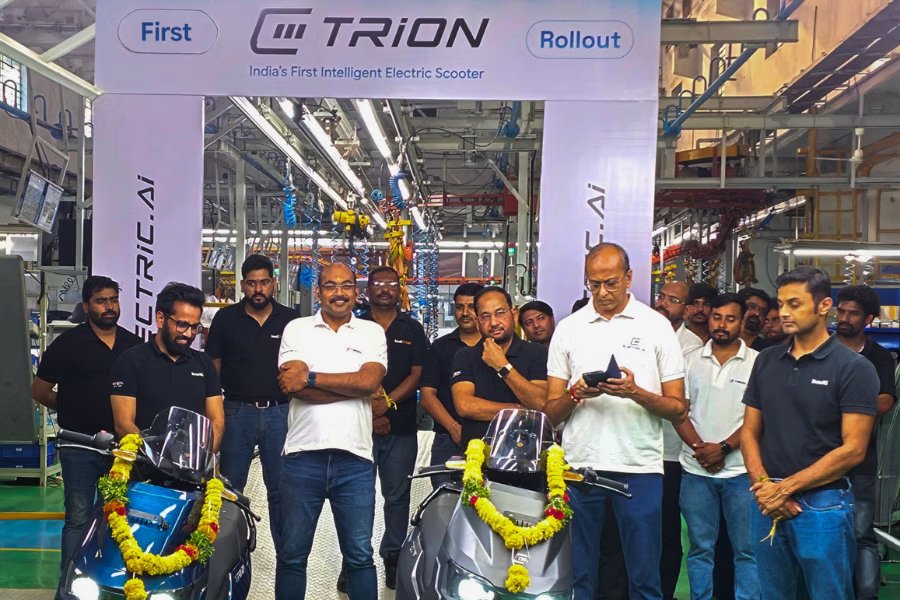
The first thing a buyer will notice is that the E3 TRION is built on a 2.3‑kWh battery for the entry‑level C1, while the C1X and C2 models use a 3‑kWh pack. That means the base version can comfortably handle city commutes, whereas the higher‑capacity variants are aimed at families and small‑business riders who need a bit more range. The scooter keeps its pricing opaque for now, but the extended warranty that comes with the first 100 orders adds a layer of confidence that the company has a lot of trust in its engineering.
In the crowded Indian scooter market, the E3 TRION sits alongside Ather 450X, Bajaj Chetak, and Hero iQ200. The Ather 450X packs about 3.4 kWh and is priced around ₹3.5 lakh, the Chetak starts at ₹2.5 lakh with a 2.5 kWh battery, and the iQ200 comes in at ₹1.3 lakh with a 1.5 kWh pack. By offering a 2.3‑kWh base and a 3‑kWh mid‑range, the E3 is carving out a niche for buyers who want a balance between affordability and endurance without jumping into the premium 3.4‑kWh territory.
The launch comes at a time when the Indian government is tightening its EV mandate, pushing commercial fleets to 30% EV adoption by 2030 and offering reduced duties on batteries. For consumers, that translates into a more competitive price point and better after‑sales support. E3 Electric.Ai’s 550+ design validation tests, including water‑wading up to 300 mm and mixed‑terrain trials between Bengaluru and Hogenakkal, signal that the company is trying to build a scooter that can handle India’s diverse road conditions.
The first batch of 100 customers will receive an 8‑year/100‑000‑km extended warranty that covers the battery and key components, plus a full year of roadside assistance. The C1 variant’s warranty is bundled at ₹6,500, while the C1X and C2 get it for ₹8,500. Six colour options—Nova Blue, Teal Blue, Graphite Grey, Misty Green, Solar Red, and Luna White—mean buyers can choose a look that fits their style, not just a spec sheet.
Deliveries will roll out from October 7, 2026, starting with Hyderabad and expanding to major metros over the next few months. The company plans a phased launch, first supplying the C1 in cities with dense traffic, then moving to the C1X and C2 for regional hubs and fleet operators. Keep an eye on the next phase: a possible 4‑kWh variant and a cargo‑tuned version could broaden the lineup further.