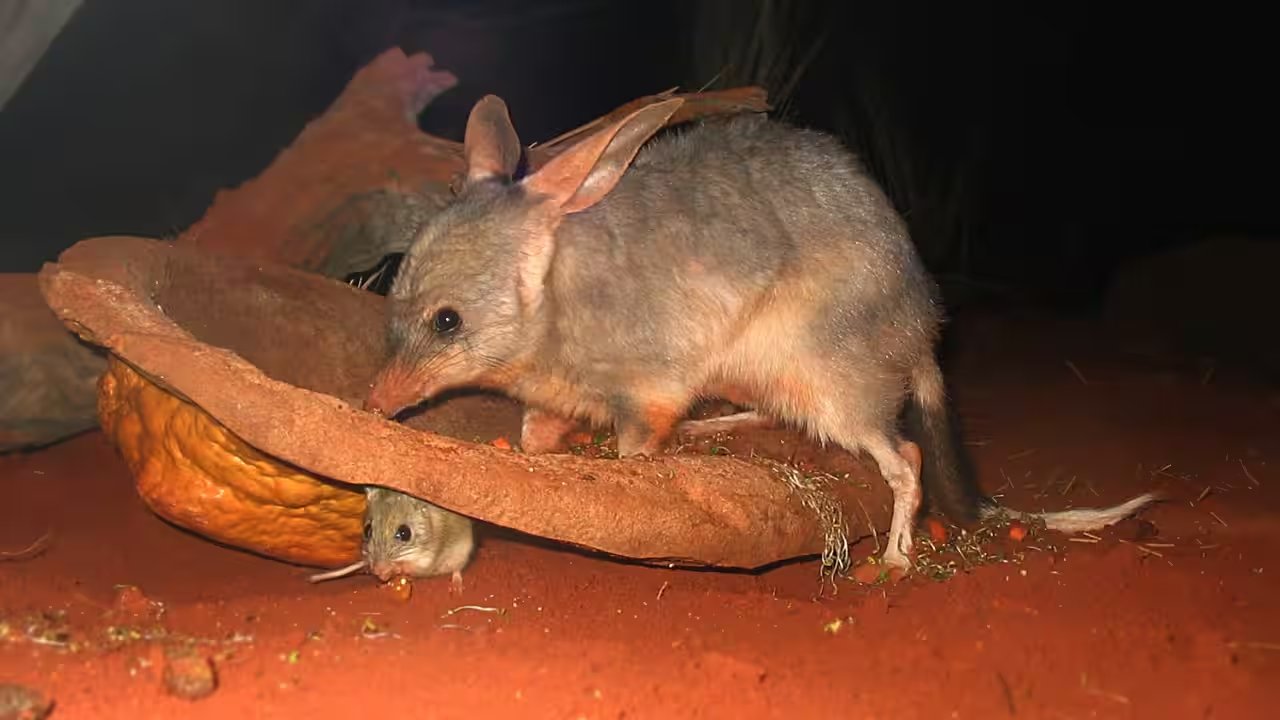
The island, once devoid of any bilby, was chosen for its lack of foxes and feral cats, giving the marsupial a predator‑free refuge that would otherwise be impossible on the mainland.
The Department’s 2019 Recovery Plan cites Berris et al., who mapped bilby sightings across the 112 square‑kilometre island, noting a steady rise in numbers and a spread that now covers every dune, scrub and lagoon.
Meanwhile, the 2,500‑square‑kilometre Matuwa reserve, a joint project with Martu Indigenous rangers, saw a similar strategy in 2007‑09 when 128 bilbies were released into a fenced area where feral cats were baited each year. The population has since leapt beyond the fence, colonising adjacent lands and proving that sustained predator control can sustain recovery even outside enclosure walls.
Across the former range, fenced sanctuaries—from the 262,000‑hectare Yookamurra Sanctuary to the 10,000‑hectare Scotia Sanctuary—now host an estimated 3,000 bilbies, a figure that the Australian Wildlife Conservancy’s latest census puts at 5,330 individuals nationwide, a jump of 2,000 from the previous year and four times the 2021 total.
Yet, the species remains officially vulnerable under the Environment Protection and Biodiversity Conservation Act 1999, its range eroded by over 80 per cent since European settlement and still threatened by introduced predators, habitat loss, altered fire regimes and reduced Traditional Owner land management.
A recent study, ‘Digging deeper,’ recorded densities of 101 bilbies per square kilometre on Thistle Island, far higher than the 0 to 0.2 per square kilometre typical of arid‑zone populations, underscoring the island's robust ecosystem.
The ongoing monitoring programme will now focus on expanding fenced reserves and strengthening predator‑control protocols across the continent, with a target of doubling the protected bilby population by 2030.