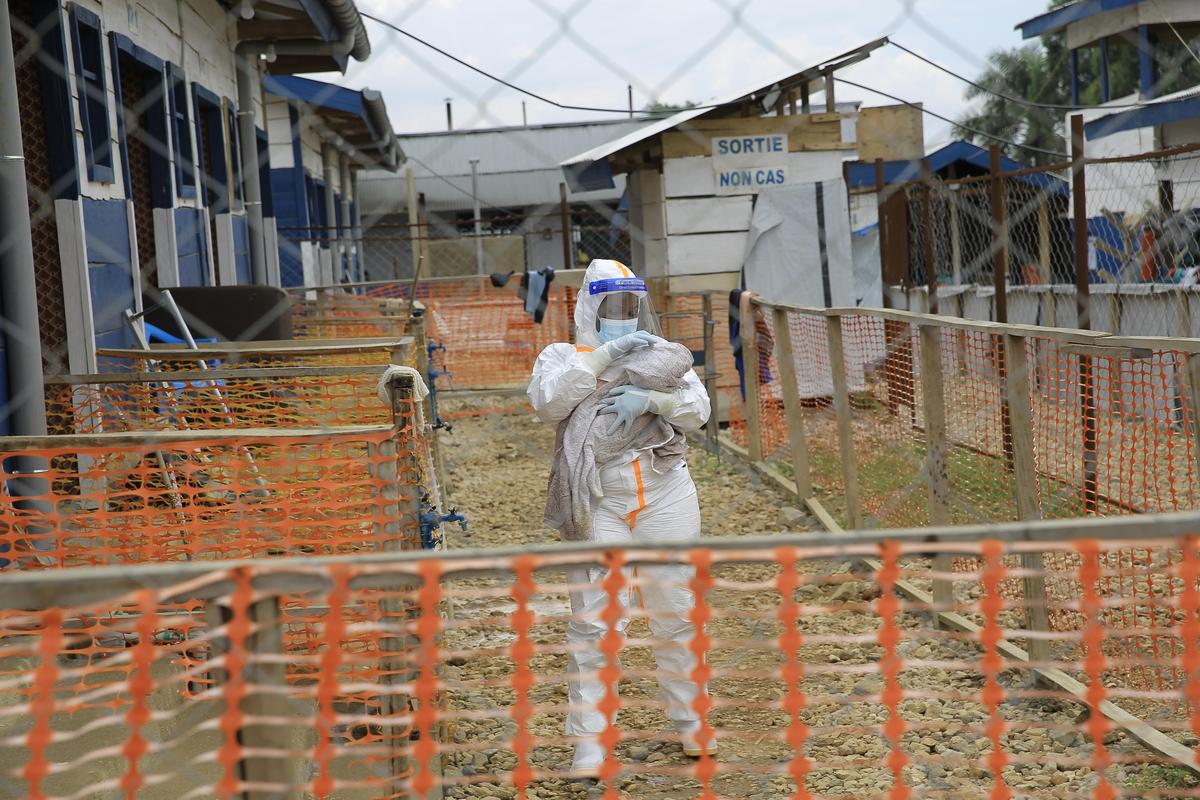
BUNIA — Congo’s worst Ebola epidemic has breached another grim threshold.
Official Health Ministry tallies released on Wednesday, November 11, 2026, confirmed that cumulative infections reached 11,042. The hemorrhagic fever has killed 5,387 people so far — a staggering toll that wipes out nearly half of all documented patients. Transmission shows no sign of halting. Instead, the pathogen continues to push into new territory, cementing this crisis as the country’s deadliest encounter with the virus since records began.
Health authorities formally sounded the alarm in mid-May. Yet retrospective clinical data points to an even more troubling timeline: human-to-human transmission was quietly underway months before the government issued an official alert.
| Outbreak Metric | Verified Figure (Official Health Ministry Data) |
|---|---|
| Total Documented Infections | 11,042 |
| Confirmed Fatalities | 5,387 |
| Case Fatality Ratio | ~48.8% |
| Affected Provinces | 8 of 26 |
| Identified Pathogen | Bundibugyo ebolavirus |
| Official Outbreak Declaration | Mid-May 2026 |
Unlike past crises driven by the Zaire strain, this surge stems from the Bundibugyo virus. It carries no approved vaccine. It offers no licensed therapeutic cure.
Doctors have no specialized pharmaceutical arsenal to deploy against the infection. Clinical teams are forced to rely solely on aggressive supportive care — administering intravenous fluids, rebalancing electrolytes, and managing organ failures as they arise.
Geographic containment has unravelled. The virus has swept through eight of Congo’s 26 administrative provinces, fanning outward from remote rural epicenters into denser commercial corridors.
The medical crisis is colliding with an active humanitarian collapse. Decades of armed militia conflict and a shattered provincial health grid have paralyzed containment logistics.
Contact tracing remains fractured. In frontline villages, medical workers routinely spend more hours pleading with suspicious communities for access than delivering life-saving bedside care. Families conceal symptomatic relatives in private homes. Others bypass treatment facilities entirely, fearing quarantine wards or distrusting state interventions.
Epidemiologists warn that the transmission curve has reached an unstable plateau. Without deep community cooperation and secure field access, that plateau risks tipping into an explosive secondary wave across central Africa.
Scientists have tracked dozens of distinct Ebola flare-ups since the pathogen was first isolated along the Ebola River in 1976. None in Congo have ever approached this scale.
The current crisis ranks as the second-largest Ebola event in global history, trailing only the catastrophic 2014–2016 West Africa epidemic that infected 28,000 individuals and killed over 11,000. But the pace here is unprecedented. In the months since mid-May, this outbreak has generated at least three times the cases and fatalities recorded during the comparable early phase of the West Africa tragedy.
Surveillance teams across eastern and central provinces are now expanding isolation units, racing to track down unmonitored contacts before the virus breaches regional transit borders.