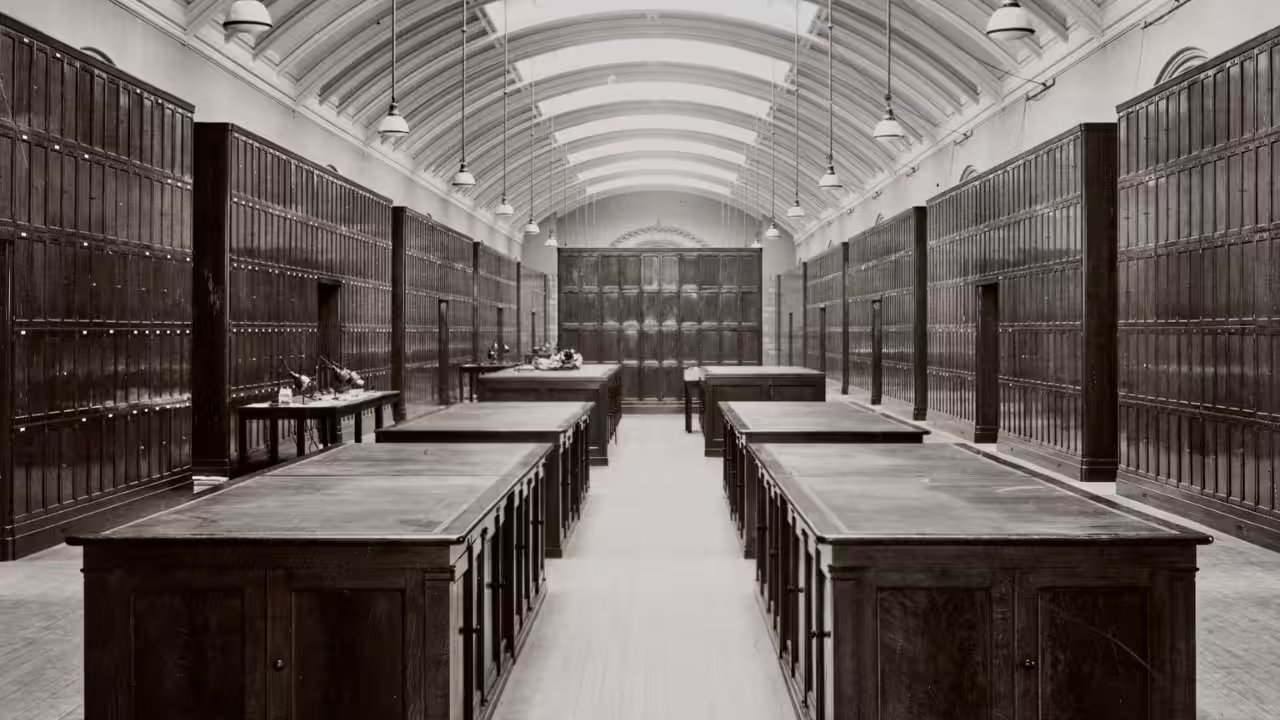
The Natural History Museum’s Waterhouse building gallery, hidden beneath the façade of the iconic structure, opened its doors to the public on 16 September 2026, marking the first time since 1943 that visitors can step inside the space. The reopening follows the building’s wartime transformation when the original herbarium was damaged and the gallery was repurposed to house botanical collections, shutting the room to the public for over eight decades.
The gallery had previously served a dual role: the Osteology wing, showcasing skeletons, and the Upper Mammals wing, displaying live mammals, as documented in photographs from 1893 and 1911. World War II forced the Museum to shift its priorities, and the space became a working area for scientists, its wooden herbarium cabinets still visible as a relic of that era.
The 18‑month exhibition, titled "Nature and Us," presents 50 objects that illustrate humanity’s evolving relationship with the natural world. Highlights include a 400,000‑year‑old handaxe that reshaped our understanding of early tool use, a 14,300‑year‑old replica jaw of a domesticated dog, a Victorian skeleton of a monk seal, and a Star Wars toy from the 1980s encrusted with bryozoans, underscoring how ordinary items can acquire new meanings through time.
Visitors have a hand in shaping the permanent gallery slated to open in 2029. Interactive stations allow guests to record their thoughts on the objects, with the Museum promising to incorporate the most resonant voices into the final design. This participatory approach aims to deepen public engagement and encourage personal connections to science.
The reopening is part of a broader campaign to revitalize the South Kensington building ahead of its 150th anniversary in 2031. The Natural Environment Research Council, a UK Research and Innovation entity, led the funding, joined by Björn Savén and several foundations. The Museum plans to launch a new or refreshed gallery each year through 2031, targeting an additional 1 million visitors annually and reaching 10 million schoolchildren, families and changemakers, while raising an extra £150 million.
The gallery is free to enter and will remain open daily from 10:00 to 17:50, except 24‑26 December. After the initial 18‑month run, a permanent collection will be unveiled, building on the success of the current exhibition and continuing the Museum’s mission to inspire environmental stewardship.