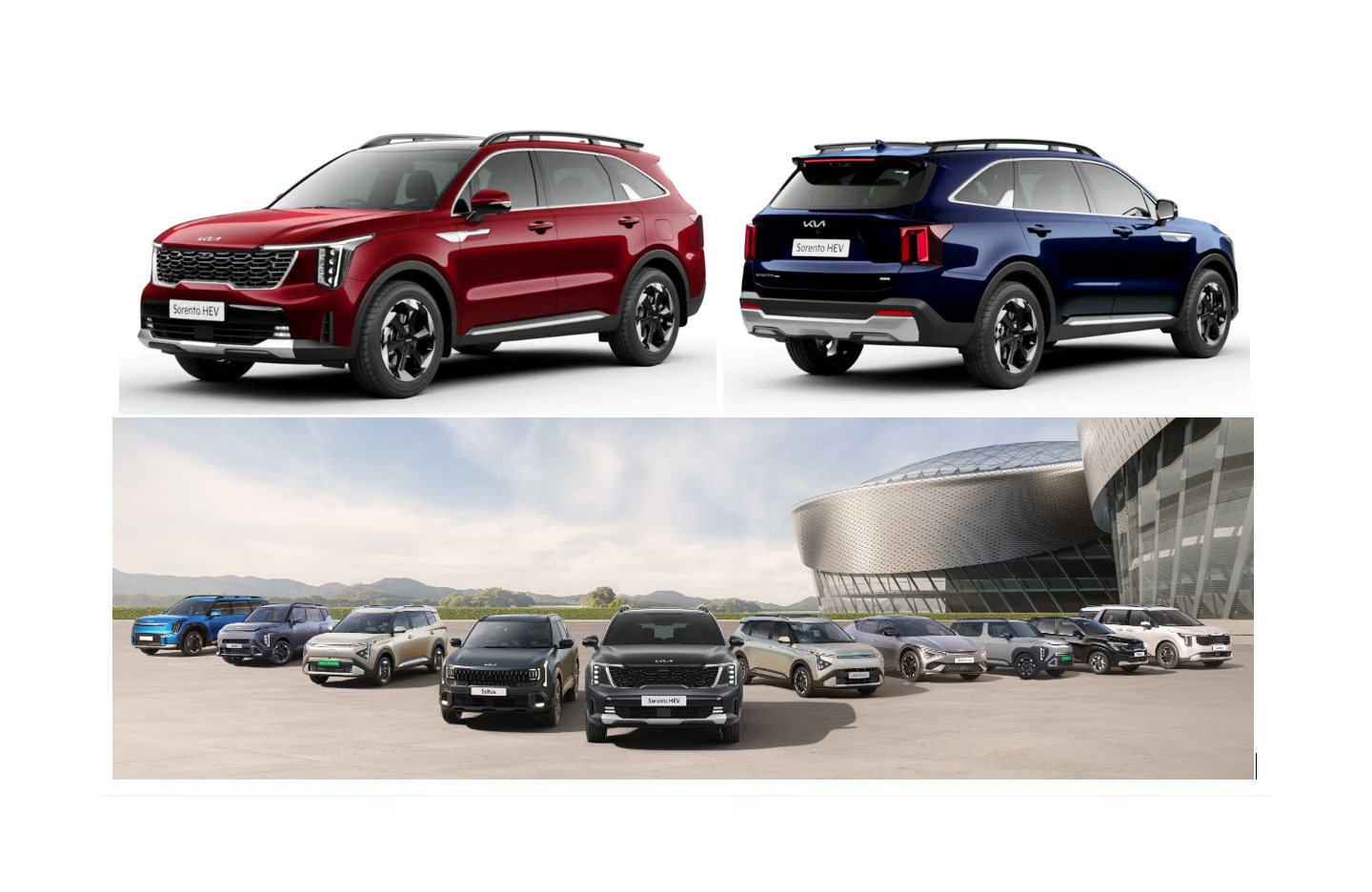
For a buyer looking for a premium three‑row SUV that feels like home, the Sorento’s first‑month sales tell you it’s getting a thumbs‑up. The 32‑variant lineup, with six‑ and seven‑seat options, is the longest and widest in its class, and it’s fully localised – a big deal in a market that still leans heavily on CKDs.
Under the hood, you can pick between a 1.6‑litre turbo‑petrol that pumps 180 hp and 265 Nm, blended with a 65‑hp electric motor for a hybrid output of 245 hp, or a 2.2‑litre turbo‑diesel that delivers 193 hp and a hefty 442 Nm of torque. The hybrid’s battery sits under the passenger seat, keeping the cabin spacious while the diesel offers a punchy torque curve for overtaking.
Safety and tech are not just buzzwords here. The Sorento comes standard with ten airbags, dual dashcams, a 360‑degree camera, and a level‑2+ ADAS suite that includes automatic emergency braking and adaptive cruise control. Inside, two 12.3‑inch displays share a common screen, a head‑up display projects speed and navigation, and the front seats are powered with ventilation and memory settings.
Sales figures reinforce the model’s appeal: 1,739 units in the first full month, plus 365 pre‑launch, bringing the two‑month total to 2,104. That number sits comfortably within the 32,017 units Kia sold in September, a 41 % jump YoY, and marks the first time the company has crossed 30,000 wholesales in a single month. In the premium three‑row segment, the Sorento now sits alongside the Jeep Meridian, Skoda Kodiaq and VW Tayron, but with a higher localisation ratio and a hybrid option that rivals the diesel‑only offerings.
The launch on September 4, 2026, means you can expect the Sorento at all major dealer clusters by mid‑October, with city‑wised roll‑out starting in Delhi, Mumbai, Bengaluru and Hyderabad. Keep an eye on the upcoming variants – the 7‑seat version will likely hit the market next quarter, and a possible plug‑in hybrid variant could arrive later in the fiscal year if the demand follows the current trend.