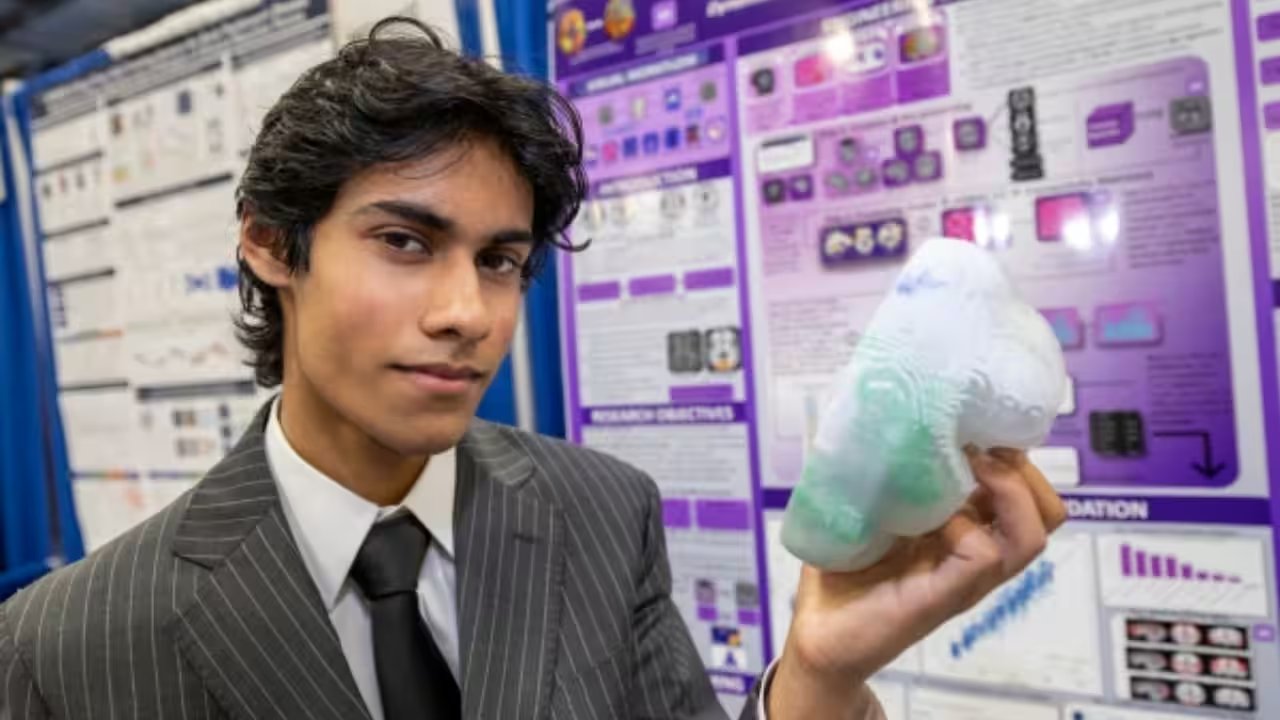
Ameya Kharade, a 17‑year‑old from Nashua, built HALO‑Vox, a brain‑computer interface that turns electrical brain waves into spoken words at 65 words per minute—about 20 times faster than the 3 wpm rate of current non‑invasive spellers.
The idea came after Kharade watched a family member lose speech after a stroke. He spent more than six hours a day in his garage for a year, learning math, coding and neuroscience to solve the problem. He says, "Seeing that my relative’s mind was still alive made me realize that silence should not be the default."
HALO‑Vox works differently: instead of spelling each letter, it decodes the intent behind the thought. In 111 randomized trials, the system produced a full sentence in an average of 10.7 seconds, compared to 242 seconds for the conventional approach. The team called the underlying principle the Six Laws of Intent Resolution, a way of squeezing more meaning from fewer signals.
What makes the project stand out is its cost—about $1,800 worth of off‑the‑shelf electroencephalography (EEG) gear—and the fact that it’s non‑invasive. Kharade has open‑sourced the code and filed a patent to keep it accessible, aiming to bring it to anyone who needs a voice without brain surgery or a $100,000 implant.
While the early numbers are promising, HALO‑Vox is still in the research phase. Anyone interested should talk to a speech‑language pathologist or neurologist before trying it, and keep an eye on future clinical trials that will confirm safety and effectiveness.