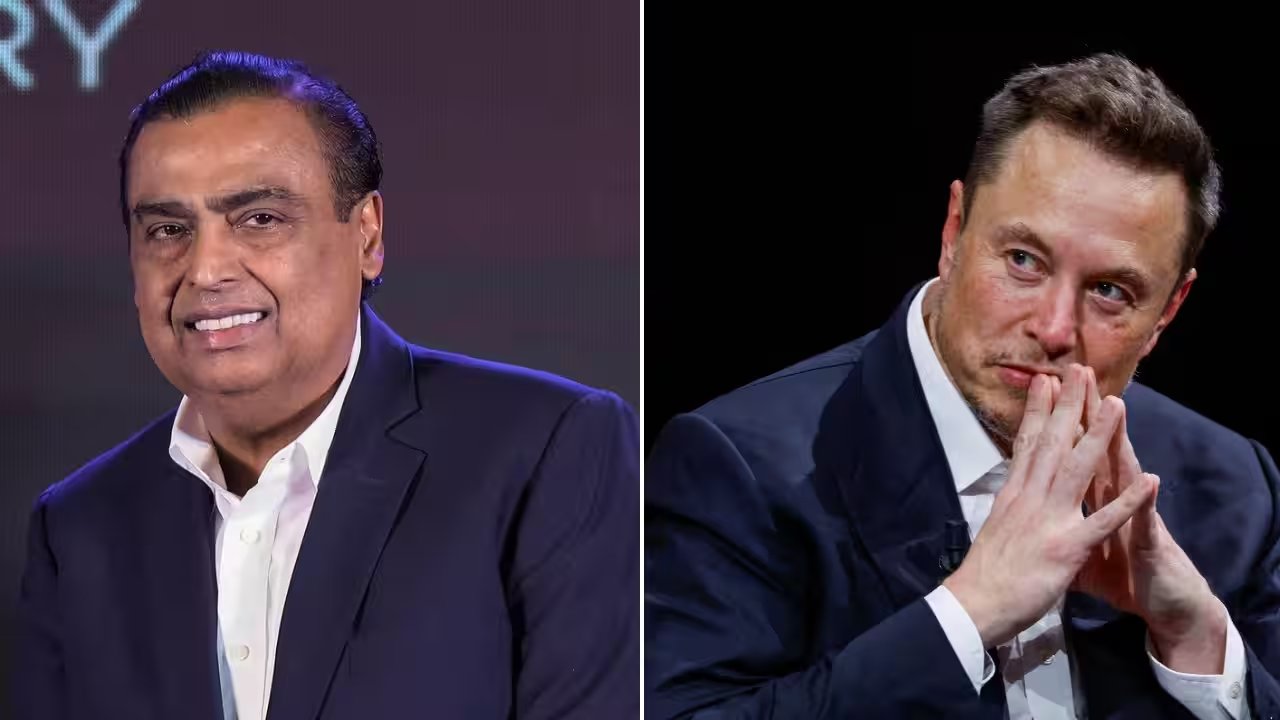
Mukesh Ambani’s Reliance Industries spent Friday morning dismantling Elon Musk’s latest viral complaint. In a sharp, uncharacteristically public statement, the conglomerate rejected Musk’s claim that Indian “oligarchs” were blocking Starlink’s entry. “We welcome competition in satellite communications, including Starlink,” the statement read, while insisting that every player must abide by Indian laws. This is the first direct, corporate-level response from Ambani’s camp since Musk named him explicitly in a series of X posts over the last two days. The stakes are high. Jio is preparing for a ₹30,213-crore IPO, and any narrative of regulatory capture or anti-competitive behavior could spook investors. Reliance countered Musk’s grievance with its own track record: Jio entered the telecom market in 2016 with zero customers and has since built a base of 53 crore users, a feat it argues proves India’s openness to disruptive, foreign-backed or homegrown innovation.
Musk’s accusations landed hard over the weekend. He accused unspecified “oligarchs” of blocking Starlink, then specifically targeted Ambani, suggesting the Indian tycoon was using state influence to protect his own satellite ambitions. The timing is not accidental. As Jio prepares to list its assets, the narrative of a level playing field is critical for its valuation. Reliance’s statement leans heavily on this point, noting that Jio’s own satellite services are still awaiting the same clearances that Starlink seeks. “At Reliance, we have never feared competition,” the company stated, drawing a parallel between Jio’s 2016 market entry and the current satellite race. The message is clear: if Jio could survive against incumbents, Starlink can survive against Jio, provided it follows the rules.
The government has already moved to defuse the diplomatic tension. Union Communications Minister Jyotiraditya Scindia addressed the issue at the India Mobile Congress, confirming that three entities—Reliance Jio, Eutelsat OneWeb (backed by Sunil Bharti), and Starlink—have received licenses. Scindia emphasized that spectrum assignment and operational clearance depend on fulfilling security conditions and revenue-based charging models, processes that apply uniformly to all applicants. “There are three parties that have got licences,” Scindia said, signaling that no single entity is being fast-tracked. Jeff Bezos’s Amazon is also eyeing a license for its Project Kuiper, adding a fourth potential player to the mix. The regulatory framework is strict, but it is not exclusive. For now, the ball is in Starlink’s court to meet the same security and infrastructure benchmarks that Jio and OneWeb are navigating. The IPO window remains open, but the regulatory race is just beginning.