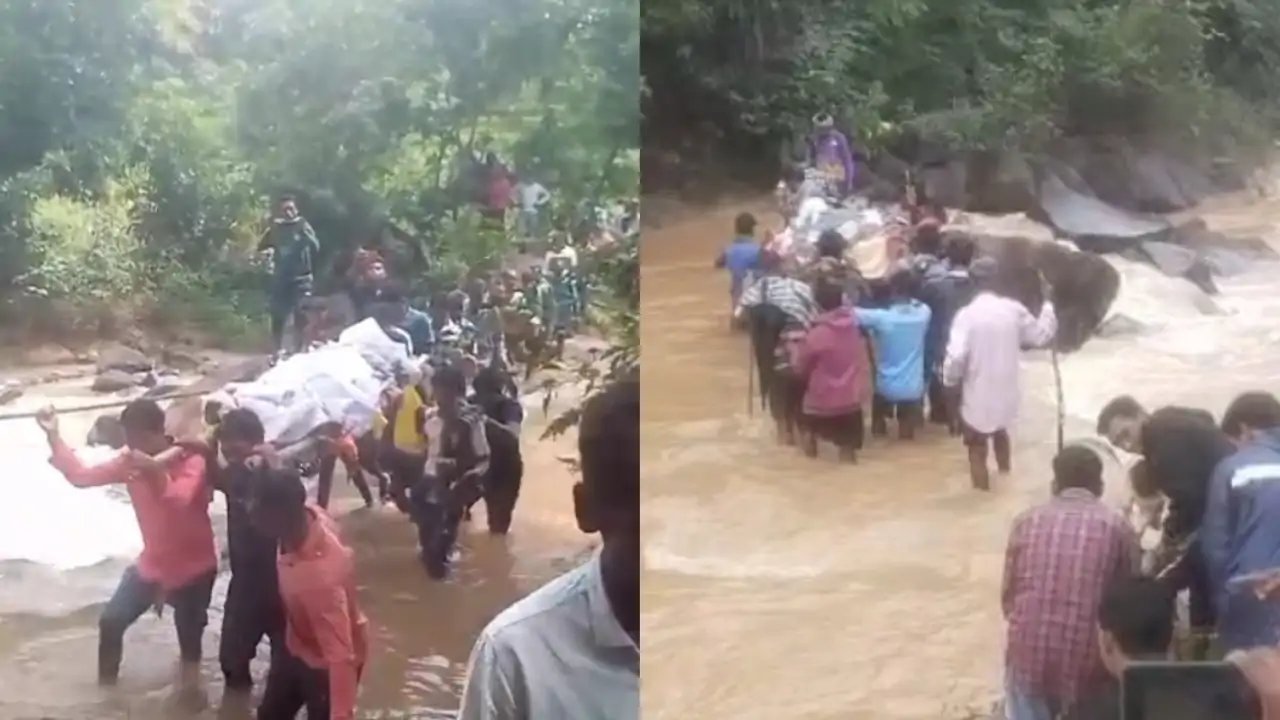
Devashandaguda village in Koraput district, Odisha, saw residents risk their lives by ferrying an elderly woman’s body across the Basuki River after a sudden rise in water levels left the village disconnected from the cremation ground. The river’s current, intensified by days of heavy rainfall, made the crossing perilous, yet villagers improvised a rope‑tied path between the banks to guide the body safely to the far side.
This was not an isolated episode; a similar rescue occurred just two days earlier when another villager’s body had to be transported over the same treacherous stretch. In both cases, the absence of a bridge forced the community to confront the river’s fury, underscoring a longstanding grievance that has festered for years.
Local leaders have long demanded that the state government construct a bridge over the Basuki River. “We cannot keep risking lives for a simple infrastructural need,” said a resident of Devashandaguda who requested anonymity. The community’s repeated pleas have now gathered momentum, with petitions circulated in the village and a social‑media campaign calling for swift action.
The Odisha state government has acknowledged the issue, announcing that it will submit a bridge proposal to the Chief Minister’s office next week. The proposal will outline budgetary requirements and a construction timeline aimed at ensuring the bridge is operational before the next monsoon season peaks.
The incident has brought national attention to the infrastructure gaps in Odisha’s rural hinterlands, prompting several parliamentary members to question the state’s prioritization of essential connectivity projects. The outcome of the upcoming proposal could set a precedent for similar communities across the state.