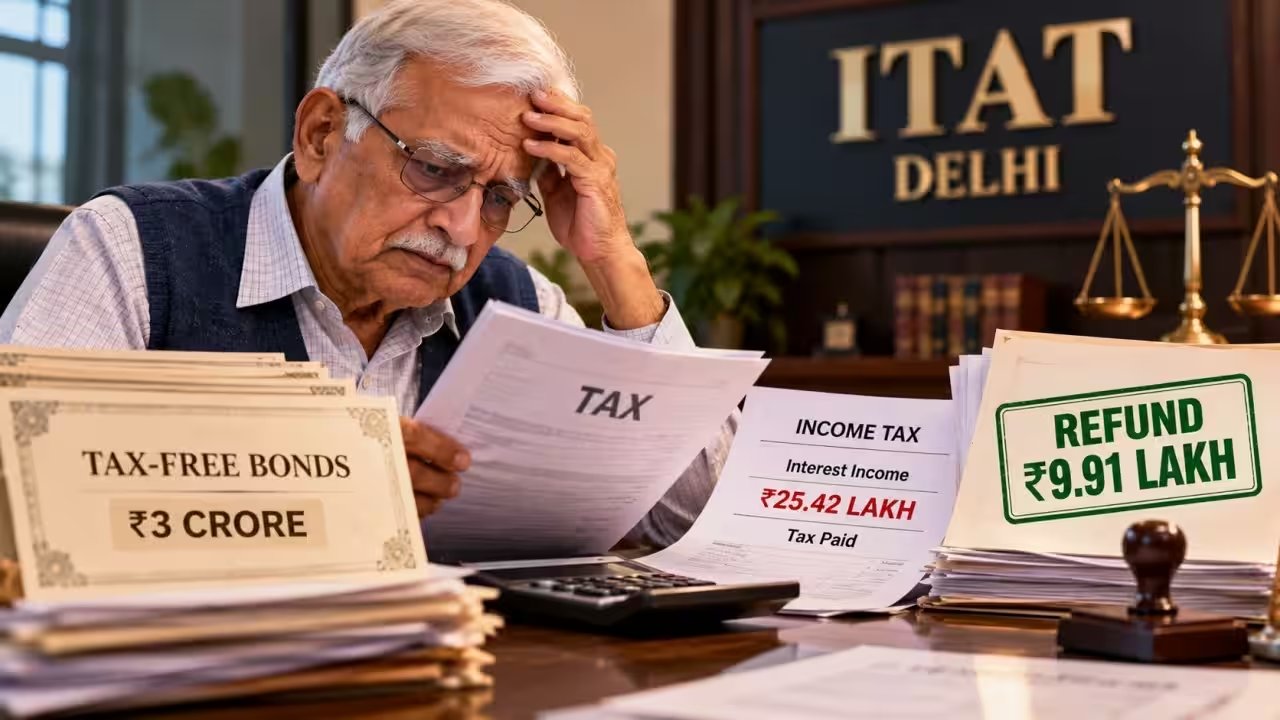
Bakaya, a senior citizen from Gurugram, had invested ₹3 crore in IIFCL and REC tax‑free bonds in 2013. In his 2022‑23 income‑tax return he mistakenly reported ₹25.42 lakh of interest as taxable, leading to a ₹9.91 lakh tax bill.
He discovered the error only after the revised‑return window closed, and on 19 January 2024 filed a Section 154 rectification with the jurisdictional assessing officer. The officer rejected the claim, citing the Supreme Court’s Goetze decision, and the Commissioner of Appeals upheld that stance.
Bakaya then petitioned the Income Tax Appellate Tribunal Delhi, which ruled that the Goetze precedent did not bar correction of an obvious error. The tribunal ordered the assessing officer to treat the interest as exempt income under Section 10(15)(iv)(h) and to refund the excess tax.
Ashish Niraj, partner at A S N & Company, explained that interest on tax‑free bonds issued by entities like IIFCL and REC is fully exempt under Section 10(15)(iv)(h). He warned that clerical mistakes should not create tax liabilities when the underlying income is exempt.
The assessing officer had already acknowledged the mistake in an April 7 2025 order, stating that the interest was “erroneously added as taxable income.” The ITAT’s directive obliges the officer to refund the ₹9.91 lakh plus interest by the end of May 2025.
The ruling reaffirms that tax‑free bond interest remains exempt even when misreported, and signals that taxpayers can seek rectification through the appellate system.