Drug-resistant superbugs claimed more than 4.7 million lives across the globe in 2021 alone. The medicines designed to cure standard bacterial infections are losing their bite.
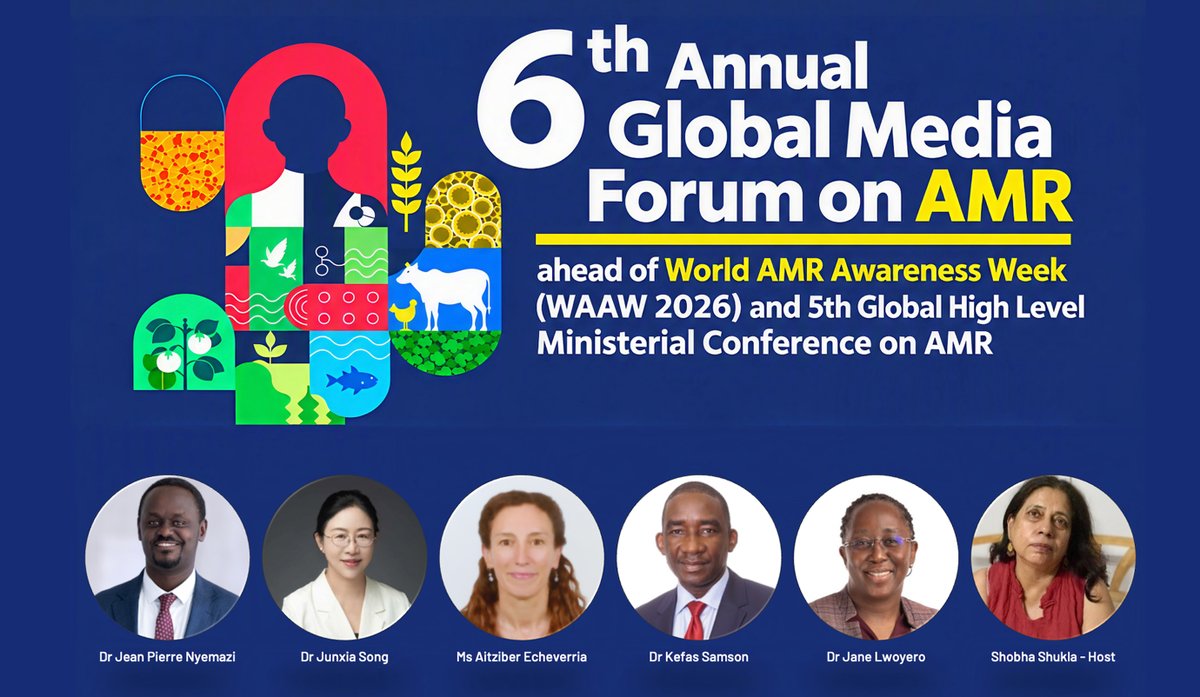
Speaking in Chennai at the sixth Global Media Forum on AMR ahead of World AMR Awareness Week (November 18–24), international health officials called for coordinated action binding human healthcare, livestock farming, and environmental sanitation together. Current gaps in financing, diagnostics, and surveillance continue to undermine containment efforts worldwide.
Behind these numbers are patients, families, farmers, and communities," said Jean
Pierre Nyemazi, Director ai — AMR Department at the World Health Organization (WHO) and Director of the Quadripartite Joint Secretariat on AMR. "Global commitments should translate into results on the ground."
The updated Global Action Plan on AMR for 2026–2036 establishes a unified framework targeting four pillars: infection prevention, laboratory surveillance, responsible antimicrobial use, and sustainable financing mechanisms. World leaders have now pledged to slash bacterial AMR-associated deaths by 10% by 2030.
Agricultural misuse remains a principal engine of microbial resistance. Antibiotic use in commercial livestock will climb by nearly 30% by 2040 if current practices continue unchecked, cautioned Junxia Song, deputy chief veterinarian and head of the One Health and Disease Control Branch at the Food and Agriculture Organization of the United Nations (FAO).
But that trajectory is not inevitable. Song pointed out that instituting basic animal health protocols and rigorous farm management practices can slash agricultural antibiotic consumption by up to 57%.
Jane Lwoyero, programme officer at the World Organisation for Animal Health (WOAH), emphasized that livestock producers must prioritize routine vaccination and tight on-farm biosecurity. Preventing sick herds eliminates the reliance on mass antibiotic feeds entirely.
| :--- | :--- | :--- | :--- | :--- | :--- | :--- | :--- | :--- |
|---|---|---|---|---|---|---|---|---|
| UN 2030 Mortality Reduction Target | 10% reduction in bacterial AMR deaths | Global Multilateral Pact | ||||||
| Projected Livestock Antibiotic Growth (by 2040) | +30% increase without intervention | FAO One Health Branch | ||||||
| Potential Antibiotic Reduction via Farm Management | Up to 57% reduction | FAO |
Pharmaceutical residues leaking into municipal watersheds present an equally volatile hazard. Aitziber Echeverria, AMR coordinator with the Chemicals and Health Branch of the United Nations Environment Programme (UNEP), demanded strict curbs on environmental pollution, singling out active antimicrobial residues discarded in hospital and industrial wastewater.
Kefas Samson, senior technical officer and lead of multisectoral coordination at the WHO headquarters AMR Department, underscored structural fault lines inside clinical facilities. Primary healthcare networks face chronic deficits in accurate diagnostic tools, active surveillance tracking, and reliable access to quality-assured antimicrobials. Without rapid diagnostics, physicians frequently prescribe broad-spectrum drugs blindly.
Careful stewardship must not lock vulnerable populations out of life-saving treatments, warned Shobha Shukla, chairperson of the Global AMR Media Alliance (GAMA) and host of the Chennai forum. Shukla urged an approach centered on human rights and gender equity.
"There is a critical need to balance preventing unnecessary antimicrobial use with ensuring access to effective medicines for those who need them," Shukla stated, noting that millions still die from lack of basic medicine while overuse breeds resistance elsewhere.
The Chennai summit concluded by conferring the Global AMR Media Awardees 2026 distinction upon 56 journalists and media professionals, recognizing frontline reporting on superbugs ahead of the 2026 implementation of the updated Global Action Plan.
| Updated Global Action Plan Horizon | 2026–2036 | WHO / Quadripartite |