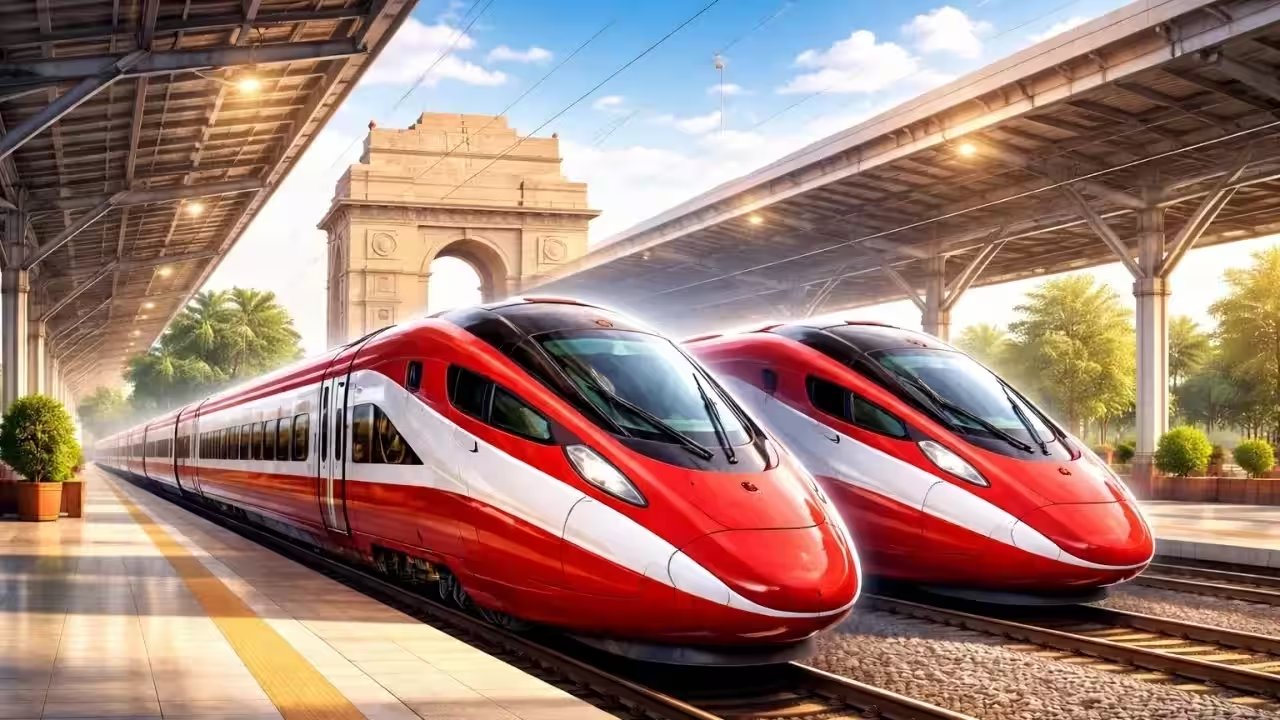
Mumbai-Pune in 48 minutes. Delhi to Varanasi in under four hours. This isn't a fantasy; it’s the blueprint laid out in the Union Budget. Finance Minister Nirmala Sitharaman announced seven new high-speed rail corridors, designed to act as 'growth connectors' across the country. The move signals a major shift in how India moves people and goods, moving beyond the current Vande Bharat sleeper initiatives to true high-speed infrastructure.
The details are striking. The Mumbai-Pune corridor, the flagship of the western region, will slash what is currently a grueling commute to less than an hour. In the south, Hyderabad to Bengaluru will take roughly two hours, while Chennai to Bengaluru drops to just 1 hour and 13 minutes. Even the eastern corridor, linking Varanasi to Siliguri via Patna, promises a journey of about 2 hours and 55 minutes, a first for high-speed rail in that region.
But the hardware is changing too. India is manufacturing its own bullet trains for the first time. BEML is currently building two high-speed trains, expected to roll out for testing in the first half of 2027. These trains will operate at speeds around 300 kmph, distinct from the 220-250 kmph range of other high-speed services. The entire Mumbai-Ahmedabad stretch will take a few more years, but a small section in Gujarat is likely to open by August 2027.
The economic ripple effects are the real story here. The Delhi-Varanasi line isn't just about speed; it’s an economic belt spanning Delhi, Uttar Pradesh, Bihar, and West Bengal. The southern 'diamond' of Hyderabad, Bengaluru, and Chennai aims to tighten the loop between major IT and manufacturing hubs. For commuters, the promise is simple: less time on the rails, more time doing what matters. The first tests will begin in 2027, but the transformation starts now.