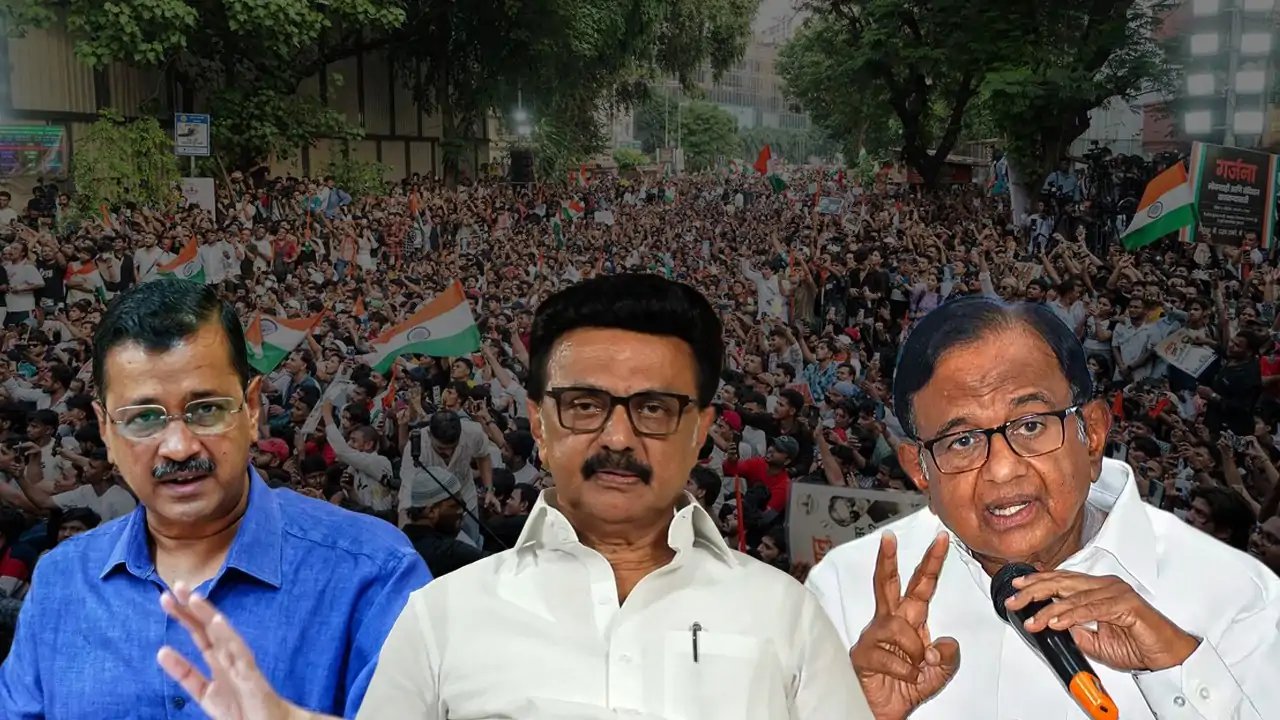
On Saturday, Delhi Police barred a demonstration planned by the Cockroach Janata Party at Jantar Mantar and detained three of its leaders—Abhijeet Dipke, Saurav Das and Ashutosh Ranka—upon arrival in the capital. Police cited “security concerns” and denied permission for the protest, citing a planned “Special Intensive Revision” of the electoral rolls that the party alleged undermined voting rights. The detainees were taken to a police station while the CJP’s headquarters in Delhi was surrounded by armed forces.
The move has drawn sharp criticism from the opposition, with Congress veteran P Chidambaram calling the crackdown a “political price” the BJP will pay for suppressing fundamental rights. AAP chief Arvind Kejriwal slammed the security arrangements as “worse than the Emergency,” accusing the government of turning Delhi into a “dictatorship” and of “locking down” 42 metro stations. He tweeted that the police had transported thousands of troops from other states and shut down internet access to stifle dissent.
Tamil Nadu’s DMK president M K Stalin echoed the call for the release of detained activists, asserting that “dissent is not a crime” and demanding the end of what he called the “scale of repression” reminiscent of 1975‑77. CPI(M) leaders from Kerala also condemned the action, with Pinarayi Vijayan labeling the capital an “open prison” and accusing the NDA of attempting to suppress protests with armed police and paramilitary forces.
In the aftermath, opposition parties have pledged to hold further rallies and to press the government for a judicial review of the police action. Delhi Police have said they will maintain a “high‑alert” status until the protest concludes, while the Election Commission has yet to respond to the allegations. The next day, opposition leaders will convene a press conference to outline a coordinated strategy against what they describe as a “political assault” on democratic rights.