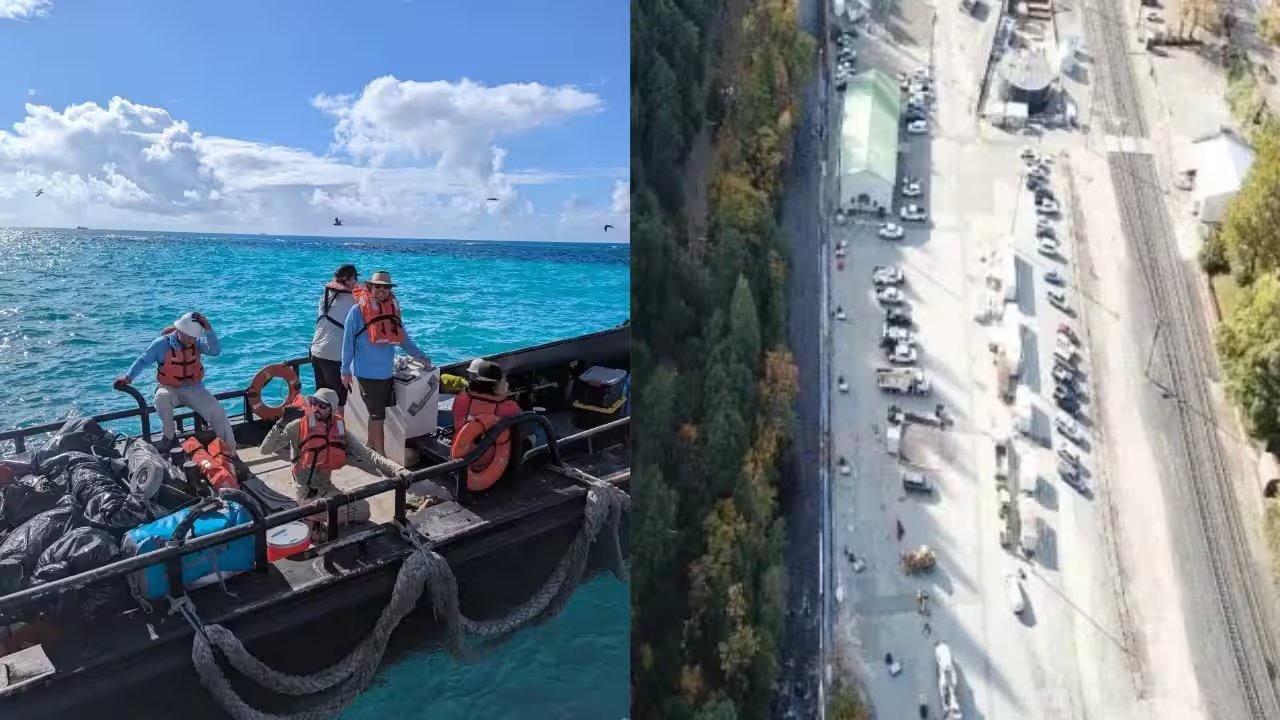
DUNSMUIR, California — The US Environmental Protection Agency has cleared 75,000 gallons of aged locomotive fuel and 100,000 tons of saturated dirt from an industrial rail yard in Dunsmuir, halting a plume that seeped toward the Sacramento River for over a century.
The contamination ran deep. Decades of unrecorded spills from locomotive-fuelling tanks—dating back to the early 1900s—had steadily migrated through regional aquifers toward the riverbank. State wildlife wardens and environmental inspectors uncovered the true scope of the subsurface reservoir in 2019, when visible slicks began bubbling into the fast-flowing current. In response, federal authorities stepped in during 2021, partnering with the California Department of Fish and Wildlife, the Central Valley Regional Water Quality Control Board, and Union Pacific Railroad to excavate the site.
Engineering crews dismantled an aging retaining wall on the water's edge, gouged out contaminated earth, and replaced the hollows with clean, non-porous barrier fill to bottle up lingering subsurface pockets. Downstream waters faced severe ecological hazards, prompting emergency contractors to deploy oil-retention booms and absorbents to protect fish habitats. They hauled gravel and river stones out of the channel bed, replacing fouled substrate with filtration media. By November 2025, federal supervisors closed out the primary cleanup, restoring 1,400 feet of natural shoreline.
| Remediation Parameter | Official Project Metric |
|---|---|
| Total Fuel Extracted | Approximately 75,000 gallons |
| Contaminated Dirt Removed | 100,000 tons |
| Shoreline Reconstructed | 1,400 linear feet |
| Primary Operations Concluded | November 2025 |
But industrial legacies rarely disappear overnight. In October 2026, field inspectors detected fresh oil weeping through the restored riverbank soil.
Containment teams acted immediately. Field personnel dropped barriers and absorbent booms into the current while backhoes scraped away freshly fouled gravel and sand along the shoreline. State wildlife inspectors confirmed that no waterfowl or fish sustained injuries during the October resurgence.
Water testing crews continue running daily turbidity and chemical assays upstream, downstream, and directly off the rail facility. Regulators maintain mandatory field monitoring along the Dunsmuir corridor through 2027 to ensure secondary containment walls permanently hold the historic subterranean plume.