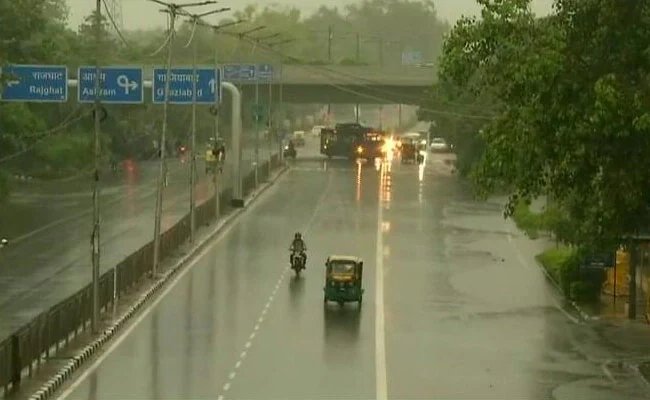
Windbreakers and heavy shawls dominated the streets of New Delhi on Friday as the capital shook off a thermal shock, with the India Meteorological Department (IMD) confirming the city logged its coldest October day since 1951. The maximum temperature at Safdarjung, the metro’s primary weather reference point, settled at 20.7 degrees Celsius—10.3 degrees below the seasonal average. It wasn’t just a dip; it was a statistical anomaly that broke a 75-year record for the month.
Heavy rains drove the mercury down, with the city accumulating 61.4 mm of precipitation in the 24 hours leading up to 8:30 am Friday. This marked the wettest October day in four years, surpassing the previous benchmark set on October 9, 2022, when 74 mm fell in a single day. Palam and Lodhi Road followed suit, registering maximums of 20.5 and 20.6 degrees Celsius, respectively, while visibility dropped sharply to 1,015 metres by 2 pm.
The deluge brought an unexpected silver lining: cleaner air. The Air Quality Index (AQI) dropped to 60, the best reading for the city since October 10, 2022. Of the 54 monitoring stations, 33 reported 'satisfactory' air and 17 reported 'good' conditions, with Lodhi Road hitting a low of 33. However, this reprieve is temporary. The Central Pollution Control Board (CPCB) predicts the AQI will deteriorate to 'poor' by November 1, as stagnant air and low wind speeds below 10 kmph trap pollutants.
Residents like Aarav Mehta, a software engineer in South Delhi, noted the sudden shift in atmosphere. “It felt like winter arrived early,” he said, checking his coat as he walked to the metro. “The rain cleared the smog, but the chill is intense.” He isn’t alone; the city-wide average wind speed remained weak, hindering the natural dispersion of emissions from the transport sector, which accounted for 17.8 per cent of Friday’s pollution load.
Looking ahead, the IMD forecasts cloudy skies with light drizzle for Friday night, with Saturday’s maximum expected to recover slightly to 24 degrees Celsius. The real test comes next week, as the ventilation index is projected to stay below 6,000 square metres per second, setting the stage for a return to severe air quality conditions.