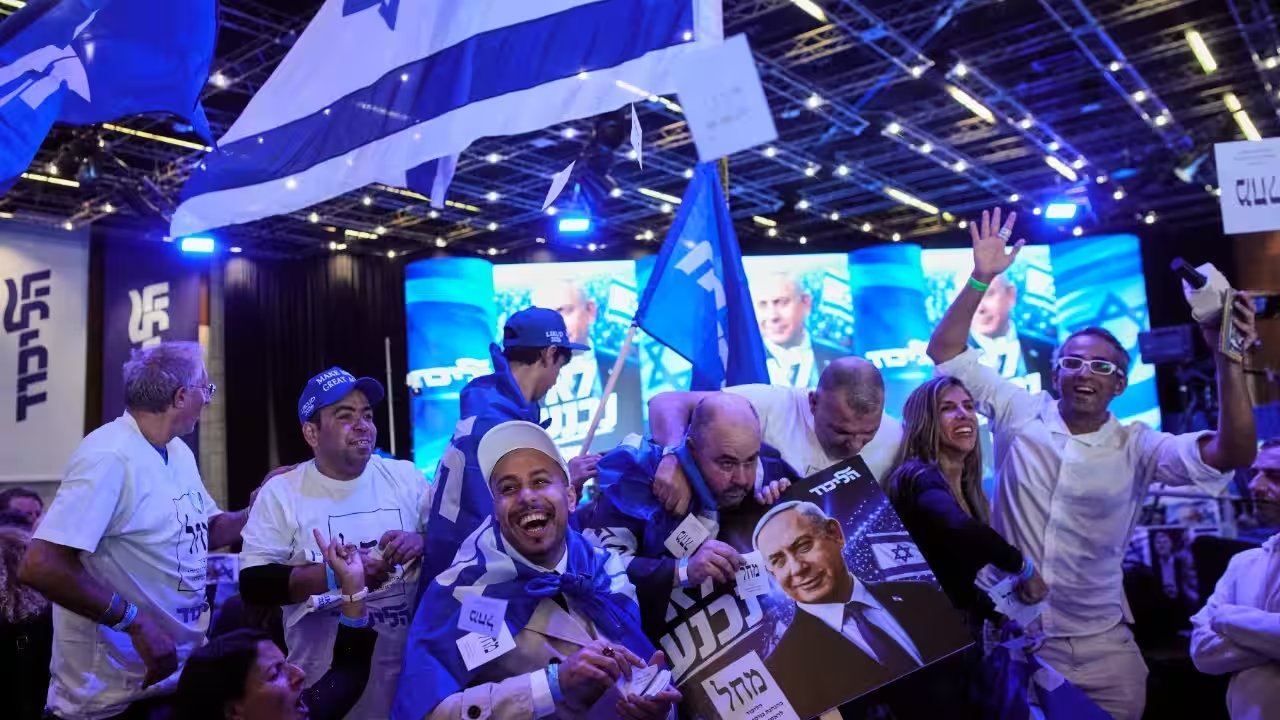
Polling stations across Israel overflowed Tuesday as voters surged to the polls at a pace that broke every historical record, forcing a final, high-stakes judgment on Prime Minister Benjamin Netanyahu’s wartime leadership. The Central Elections Committee confirmed that 66.7% of eligible citizens had already cast their ballots within the first nine hours of voting, a milestone that left political analysts scrambling to predict the final tally. This is the first general election since the October 7, 2023, Hamas attacks, and the queue outside the booths in Ramat Gan was a physical manifestation of the nation’s collective anxiety.
Netanyahu, now the longest-serving leader in Israeli history with 19 years in office, campaigned on his unique ability to manage existential threats, leveraging a public endorsement from US President Donald Trump. Trump has urged his ally to “finish the job,” a phrase that resonated with Netanyahu’s base but alienated moderate and left-wing voters who view the war’s extension into Lebanon and Iran as a strategic misstep. The Prime Minister explicitly targeted the Arab-Israeli demographic, roughly a fifth of the population, urging his supporters to match their turnout. He framed the election as a “fateful moment,” suggesting that any decline in his coalition’s support would leave Israel vulnerable to its enemies.
His main challenger, former military chief of staff Gadi Eisenkot, positioned himself as the security hawk who would rectify the “terrible day” of October 7. Eisenkot promised a national inquiry into the security failures—a demand Netanyahu’s government has consistently resisted—and committed to dismantling Hamas’ military and governing power in Gaza within 18 months of taking office. For voters like Ruth Epstein, an 81-year-old long-time left-wing supporter in Ramat Gan, the stakes feel personal and immediate. “I’m really scared about what will be here,” she said, describing this as the most important election of her life.
The election’s outcome hinges on a fragmented 120-seat parliament where Netanyahu’s right-wing and ultra-Orthodox coalition faces a diverse opposition bloc. Eisenkot has ruled out partnering with Arab parties, citing ideological differences, yet their record-breaking turnout could tip the scales if they prop up a minority government. The race remains neck-and-neck according to opinion polls, with no clear path to a stable majority for either side. If neither candidate secures the 61 seats needed to form a government, Netanyahu will likely remain in power as caretaker while a second election cycle begins, potentially extending the political limbo for months.
The final results are expected within hours, but the political fallout will take weeks to settle. A victory for Eisenkot would signal a sharp pivot in Israeli security policy and a potential thaw in relations with Western allies who have strained under the weight of settler violence in the West Bank. For Netanyahu, defeat means the end of an era, but his track record of political survival suggests he is not out of the game yet. The nation waits for the count to reveal whether Israelis have chosen continuity or change.