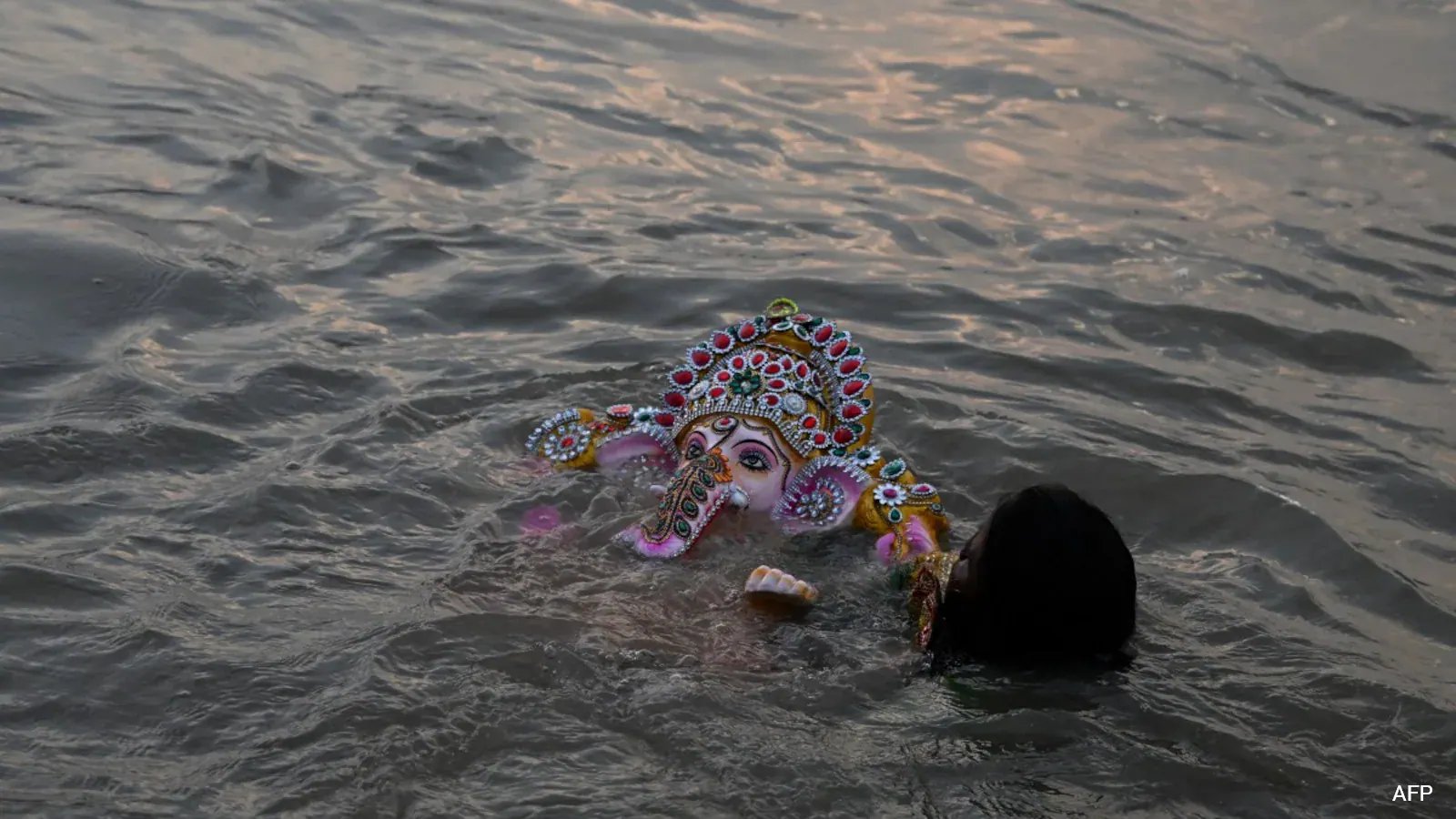
Tamil Nadu’s environment officials took a hard line before the National Green Tribunal (NGT) on Wednesday, pledging to end the practice of immersing Ganesh idols in natural water bodies by 2027. The assurance was made during the hearing of a petition highlighting how plaster of Paris, synthetic paints, and chemical additives from idols are choking aquatic life. The state committed to following directives from the Supreme Court, Madras High Court, and the NGT to keep these pollutants out of rivers, lakes, and coastal waters.
But the promise hits a wall on Chennai’s beaches. The government explicitly ruled out immersion at Foreshore Estate and Neelankarai beaches starting next year. A Chennai Corporation report submitted to the court flagged serious law-and-order and traffic risks in relocating the crowds. The plan involves moving approximately 450 idols from Palavakkam beach to Kovalam and 250 from Pattinapakkam to Ennore. It’s a massive logistical shift that police are already bracing for.
Petitioners argued that the current practice is an environmental disaster, suggesting temporary artificial immersion ponds as a viable alternative. They want a statewide ban on beach immersion from next year to protect the coastline. The NGT also grilled the government on its enforcement of immersion charges, which are supposed to be based on the size of the idols. The tribunal wants to know if the state is actually collecting these fees to fund cleanup operations.
The NGT has directed the Tamil Nadu government to file a detailed affidavit outlining exactly how it will implement this 2027 deadline. The court adjourned the matter, leaving the state with a tight deadline to clarify the scope of the statewide measure. This case will define the balance between religious tradition and environmental survival in India’s most populous southern state.