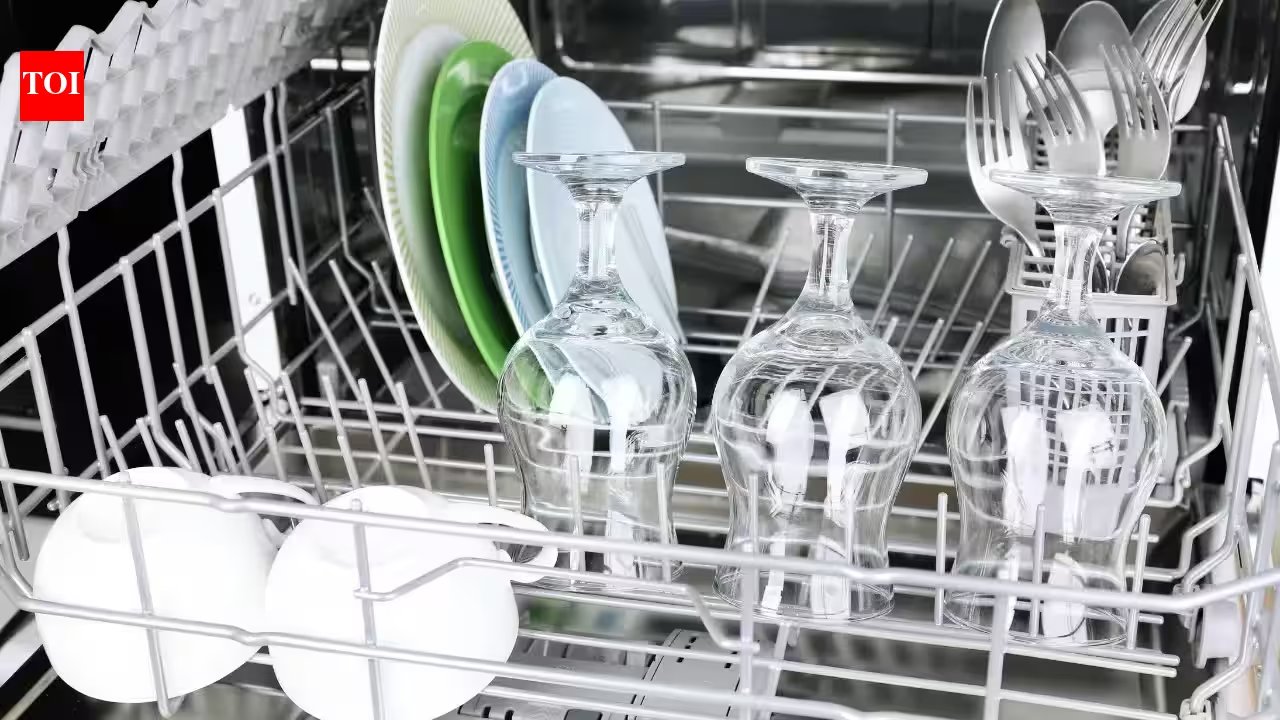
Sliding every dirty dish straight into the rack feels effortless after dinner. Do not do it. Standard dishwasher cycles unleash scalding water and corrosive detergents that quietly destroy your most expensive kitchen investments.
Certain materials simply cannot survive the high heat and churning spray arms inside a closed wash box. While ceramic plates and sturdy glassware emerge spotless, five daily staples suffer permanent damage the moment you press start.
Wood breathes and absorbs moisture. Exposing wooden spoons and butcher-block chopping boards to prolonged steam and alkaline detergent forces the grain to swell, warp, and split open along structural seams. Once timber cracks, trapped food residues lodge deep inside the fissures—ruining the utensil permanently. Wash wooden boards quickly at the sink using warm water and mild soap, then let them air-dry upright.
Cast-iron skillets demand even stricter protection. Generations of cooking build an essential patina—a baked-in polymerised oil seasoning that shields bare iron and delivers a slick, naturally non-stick surface. Dishwasher detergents strip that slick seasoning away in a single wash. The exposed metal reacts instantly with trapped humidity, coating the pan in orange rust. Handwash cast iron under hot running water, bypass harsh scrubbers, and dry the metal thoroughly on the stove immediately after rinsing.
| Kitchen Item | Dishwasher Hazard | Recommended Handwash Care |
|---|---|---|
| Wooden Spoons & Cutting Boards | High heat and moisture cause swelling, cracking, and warping | Quick rinse with mild soap; air-dry upright |
| Cast-Iron Cookware | Alkaline detergents strip baked seasoning, prompting rust | Warm water wash; dry immediately on low burner heat |
| Chef Knives & Carving Blades | Mechanical rattle dulls edges; wash chemicals degrade handles | Sponge wipe from spine to edge; towel-dry directly |
| Insulated Travel Mugs | Sustained steam breaks vacuum seals and degrades thermal performance | Clean body with bottle brush; remove rubber gaskets |
| Non-Stick Frying Pans | Harsh wash agents erode non-stick coatings over repeated cycles | Gentle wipe with a soft non-abrasive sponge |
Sharp knives take a beating inside a loaded utensil basket. As wash cycles run, water jets push sharp edges against forks, spoons, and metal wire racks, rolling and chipping the delicate bevel of a good blade. Beyond the ruined cutting edge, high water temperatures loosen rivets and dry out composite or wooden handle scales. Keep quality knives out of the rack entirely. A ten-second swipe with a soapy sponge—wiping carefully from spine to blade edge—preserves razor sharpness for months.
Your favourite insulated coffee tumbler relies on a double-walled vacuum chamber to keep drinks piping hot or ice-cold for hours. Machine wash cycles generate sustained, trapped heat that compromises those delicate airtight seals. Once the vacuum seal fails, moisture seeps between the metal walls, thermal insulation collapses, and your flask becomes a bulky, ordinary metal cup. Inspect the manufacturer stamp on the base before loading insulated drinkware, or default to a simple bottle brush at the sink.
Pan manufacturers frequently print 'dishwasher safe' across glossy cardboard packaging. Take that claim with a grain of salt. The abrasive detergents and sustained thermal stress of automated washing steadily thin and blister non-stick coatings over time, degrading food release long before the pan should wear out. A soft non-abrasive sponge and gentle liquid detergent remove cooking oils in thirty seconds without degrading the cooking surface.
Check every care label before loading unfamiliar cookware, keep a dedicated non-scratch sponge by the tap, and treat high-performance kitchen tools with the hands-on care they require.