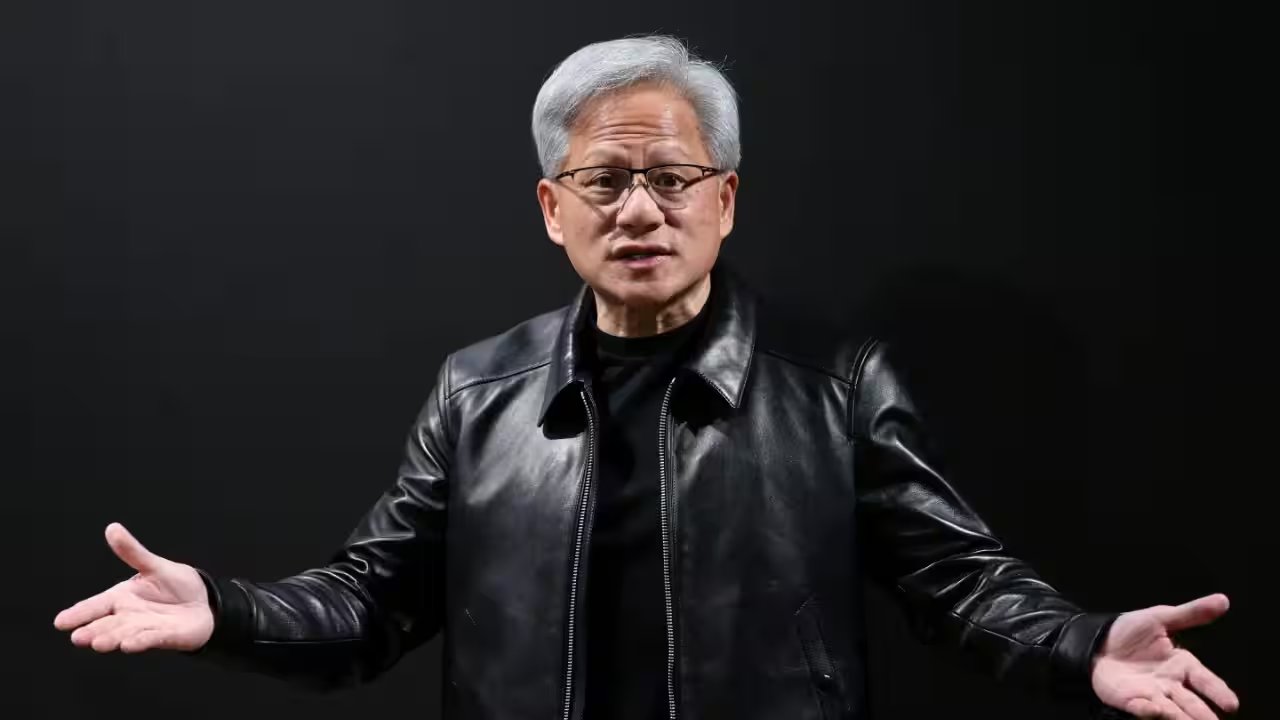
Jensen Huang built an empire on silicon. For more than 31 years, the Taiwanese-born executive steered Nvidia from a scrappy graphics chipmaker launched on April 5, 1993, into the dominant hardware titan powering global artificial intelligence. He ran the company with near-absolute control. But now, Nvidia's boardroom is confronting a crisis that directly challenges his tenure.
Scrutiny intensified following revelations regarding Huang's personal relationships, including allegations involving a woman suspected by US intelligence agencies of maintaining links to Chinese intelligence. Huang admitted he was unfaithful to his wife and apologised directly to his family and company employees. Nvidia's board had previously expressed confidence in its chief executive while reviewing whether he had been targeted in a foreign espionage operation. Yet board members are now reviewing a separate alleged relationship involving a senior female executive who reported directly to Huang. No formal decision to remove him has been made, and Nvidia has issued no official succession roadmap. Even so, the prospect of a post-Huang era has forced leadership alternatives into the open.
Finding someone to step into Huang's shoes presents a massive operational challenge. Huang understands the semiconductor business down to the wafer level. He personally cultivated decades-long ties across global supply chains and drove the strategic bets that positioned Nvidia at the center of the worldwide tech boom. Losing him would jolt the enterprise.
Nvidia's board previously backed Huang during an initial review of foreign intelligence contact, but new workplace allegations have renewed questions about executive oversight.
Internal governance guidelines face severe testing. When executive relationships intersect with reporting lines, corporate boards must weigh liability, internal morale, and shareholder stability. For Nvidia, the stakes are amplified by geopolitical tensions over advanced microchips and high-performance computing exports.
| Potential Successor | Current Role | Key Background & Strategic Strengths | Succession Pathway |
|---|---|---|---|
| Ian Buck | VP, Data Centre & Computing | 20+ years at Nvidia; spearheaded CUDA software ecosystem | Permanent internal chief |
| Colette Kress | Chief Financial Officer | 13 years at Nvidia; former Microsoft and Cisco finance leader | Interim or transitional CEO |
| Madison Huang | Senior Director, Physical AI | Product marketing lead; expanding operational responsibilities | Long-term internal candidate |
Previous transitions across Silicon Valley demonstrate that sudden chief executive exits can spark severe market volatility. Board members are moving deliberately to avoid destabilizing core commercial operations.
Two internal veterans lead discussions among industry analysts. The first is Ian Buck. Buck has spent more than two decades inside Nvidia and stands as one of the chief architects of its market dominance. He played a foundational role in building CUDA, the computing software platform that turned Nvidia graphics processors into the default engine for deep learning and supercomputing. Today, Buck directs the data centre and computing division. That single division generates virtually all of Nvidia's company-wide revenue. A former executive noted that Buck effectively operates the commercial engine of the entire firm already, giving him unrivaled technical credibility among the company's engineering ranks.
Colette Kress offers a different profile. She has served as Nvidia's chief financial officer for roughly 13 years, arriving after senior finance positions at Microsoft and Cisco. Outside of Huang, Kress is the company's most recognizable public voice on Wall Street. DA Davidson analyst Gil Luria indicated that Kress stands out as the natural choice for an interim chief executive post if Huang steps aside abruptly. Her steady hand on financial strategy and investor communications would calm jittery markets. But unlike Huang, who cut his teeth on chip design, Kress brings a pure finance background. Whether the board wants a financial steward or a hardcore chip builder remains the central question.
Discussions have also turned toward Madison Huang, the founder's daughter. She currently serves as senior director of product marketing for physical AI, an emerging sector dedicated to embedding machine intelligence into robotics and physical machinery. Observers note she has steadily taken on broader managerial duties across several business units. Her brother, Spencer Huang, also works inside the company. Yet elevating a founder's child into top corporate leadership carries heavy risks. Institutional investors would aggressively challenge any perceived nepotism, demanding proof of independent executive qualifications before sanctioning an internal dynasty. Nvidia has confirmed no plans to position her as her father's heir.
Beyond Nvidia's walls, outside technology chiefs are drawing attention. Thomas Kurian, the chief executive of Google Cloud, tops the list of viable external executives. Kurian runs one of the world's largest cloud infrastructure networks, buying and deploying tens of thousands of Nvidia processors every quarter. He understands enterprise computing at scale, manages massive engineering divisions, and commands respect among Fortune 500 customers. Recruits of his stature could stabilize Nvidia if the board decides it needs a clean break from internal factions.
Market Context: Nvidia's hardware underpins the global AI economy, leaving customers, partners, and regulators acutely sensitive to any leadership tremors. Huang's departure would instantly alter commercial dynamics across the entire computing sector.
The board's next formal moves will hinge on internal findings regarding governance compliance and corporate conduct. Huang remains in his post as chief executive, but the era of unquestioned authority atop the world's most valuable chip company has drawn to a close.
| Thomas Kurian | CEO, Google Cloud | Enterprise infrastructure veteran; runs hyperscale AI systems | External appointment |