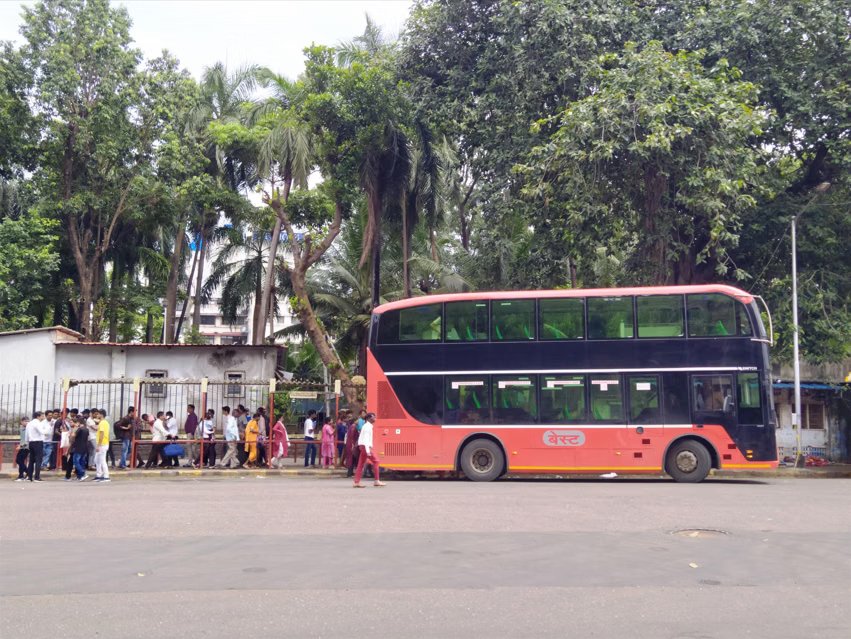
Mumbai commuters wedged into packed railway stations and clogged metro feeder junctions are getting a massive transit injection. Brihanmumbai Electric Supply and Transport (BEST) Undertaking finalized an agreement on Thursday to deploy 1,500 air-conditioned electric midi-buses. The nine-meter coaches will cut through the metropolis’s notoriously narrow streets and unlock 125 brand-new bus routes.
The capital outlay bypasses direct civic ownership. Instead, BEST pushed the procurement through under the federal government's "PM E-DRIVE" scheme using a long-term wet-lease structure. Two private consortiums—selected through a national competitive bidding process managed by Convergence Energy Services Limited (CESL)—will supply, maintain, and run the fleet across municipal depots.
Mumbai Vidyut Vahan Operation Pvt. Ltd. bagged the lion’s share of the procurement. The company will deliver 1,050 EKA-branded electric buses stationed across 10 municipal depots. The remaining 450 vehicles will carry the Switch badge, supplied and maintained by Saigreen EVM Pvt. Ltd. across two dedicated depots.
Under the 12-year concession deal, each midi-bus comes with a contractual guarantee of 64,800 kilometers of annual operation. BEST opted for a gross-cost contract model. Private operators shoulder the mechanical and charging overheads, but municipal dispatchers retain ironclad operational control over route schedules and depot timetables. BEST also pockets every rupee of non-fare advertising revenue generated across the 1,500 coaches.
| Specification / Contract Parameter | Details | |
|---|---|---|
| Fleet Size | 1,500 Electric Air-Conditioned Midi-Buses | |
| Vehicle Length | 9 Meters | |
| Manufacturer Split | EKA: 1,050 units | Switch: 450 units |
| Operator Allocations | Mumbai Vidyut Vahan (10 depots) | Saigreen EVM (2 depots) |
| Certified Minimum Range | 200 km per charge | |
| Passenger Capacity | 28 seated passengers | |
| Entry Floor Height | 400 mm ultra-low floor | |
| Annual Guaranteed Run |
Full-size 12-meter transit buses frequently stall in Mumbai’s crowded suburban gullies. These nine-meter midi-buses tackle that exact physical bottleneck. Each coach seats 28 passengers and features an ultra-low 400-millimeter boarding height, paired with an automatic slide-out wheelchair ramp and dedicated accessible passenger bays.
Energy flows from modular battery packs mounted across the roof and rear subframe. The system yields a minimum operational range of 200 kilometers on a single charge—more than enough buffer for typical high-frequency suburban feeder loops. For the driver and passengers, mechanical hardware includes dual-axle full air suspension to absorb rutted asphalt, alongside front and rear disc brakes for dense stop-and-go traffic. Onboard safety networks integrate automated fire detection and suppression systems (FDSS), 360-degree security cameras, seat-integrated USB charging ports, and real-time fleet telematics.
Transit Context: BEST’s fleet has faced severe fleet contraction over recent years as aging diesel workhorses exited service. By pairing compact 9-meter footprints with metro feeder links, transit planners intend to rebuild daily passenger capacity without choking suburban lane space.
Deliveries will arrive in two staggered waves rather than all at once. Transit officials confirmed that an initial batch of roughly 225 buses will enter revenue service by March 2027. Factory production lines will ramp up thereafter, delivering the final 1,275 vehicles for complete network deployment by March 2028.
Once deployed across all 12 depots, the 1,500 zero-emission midi-buses will anchor 125 planned feeder lines, slashing platform wait times and funnelling daily commuters straight to expanding metro networks.
| 64,800 km per bus |
| Contract Term & Structure | 12-Year Wet-Lease (Gross-Cost Model) |
| Delivery Target Dates | 225 units by March 2027; 1,275 units by March 2028 |