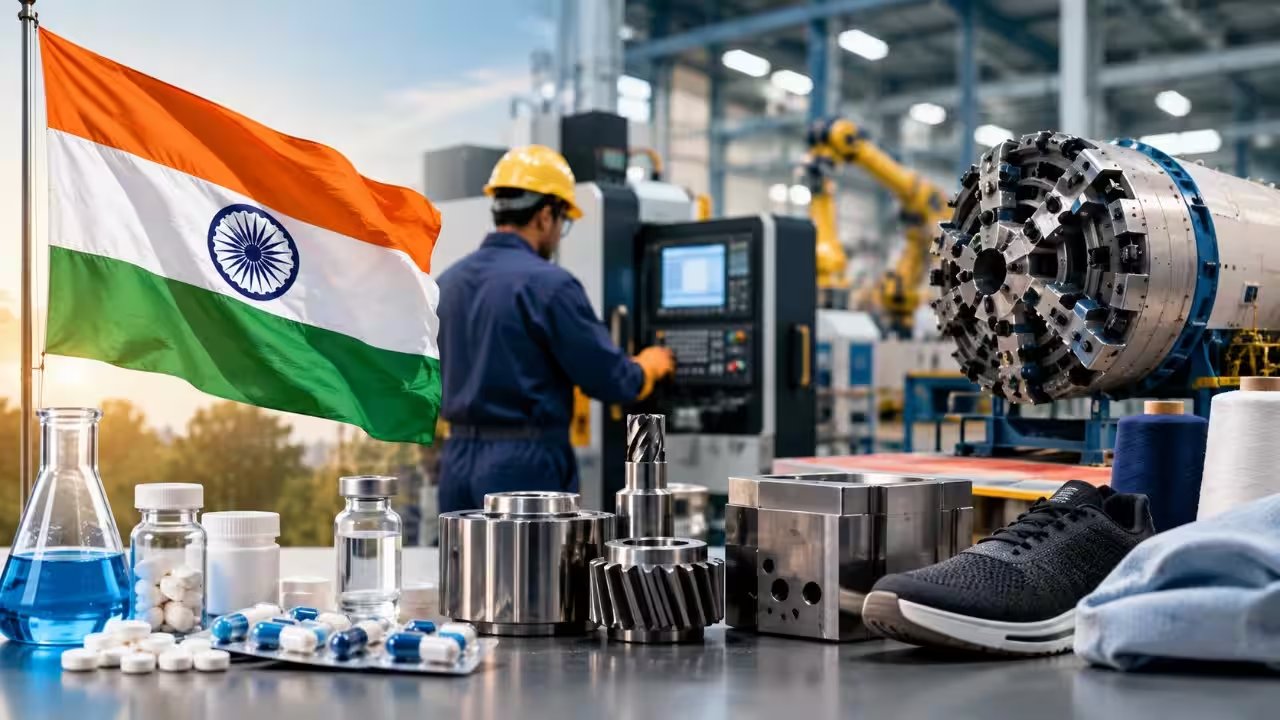
On March 15, 2026, the Ministry of Commerce released a catalogue of 120 items earmarked for local manufacture, ranging from acetic acid and drug intermediates to machine tools and aerospace MRO components. The list also flags tunnel boring machines, a sector hit by recent Chinese export restrictions.
The announcement comes amid a broader Atmanirbhar Bharat push that has already seen subsidies for solar panels, semiconductors and mobile‑phone assembly. Delhi officials said that the 120‑product program will be the next step in a five‑year plan to cut import dependence after the West Asian crisis left critical inputs scarce.
Three tiers of support are planned: short‑term protective tariffs to shield nascent units from overseas competition; capital incentives and phased subsidies tied to turnover; and R&D grants for technologies that are still absent from the domestic supply chain. The Department for Promotion of Industry and Internal Trade (DPIIT) will begin a 90‑day assessment of each product’s viability.
Delhi has already channeled funds through the Production Linked Incentive (PLI) scheme and semiconductor missions, and the new list will likely see similar financing streams. A small Bengaluru‑based biotech firm, MicroPharma Labs, said the inclusion of drug intermediates could ease its dependence on Chinese imports and boost local production of life‑saving medicines.
The next phase will see DPIIT convening a panel of industry experts, economists and technology specialists to devise tariff schedules and R&D roadmaps by June 2026, with an eye on meeting the 2028 target of 60% domestic manufacturing for the identified products.