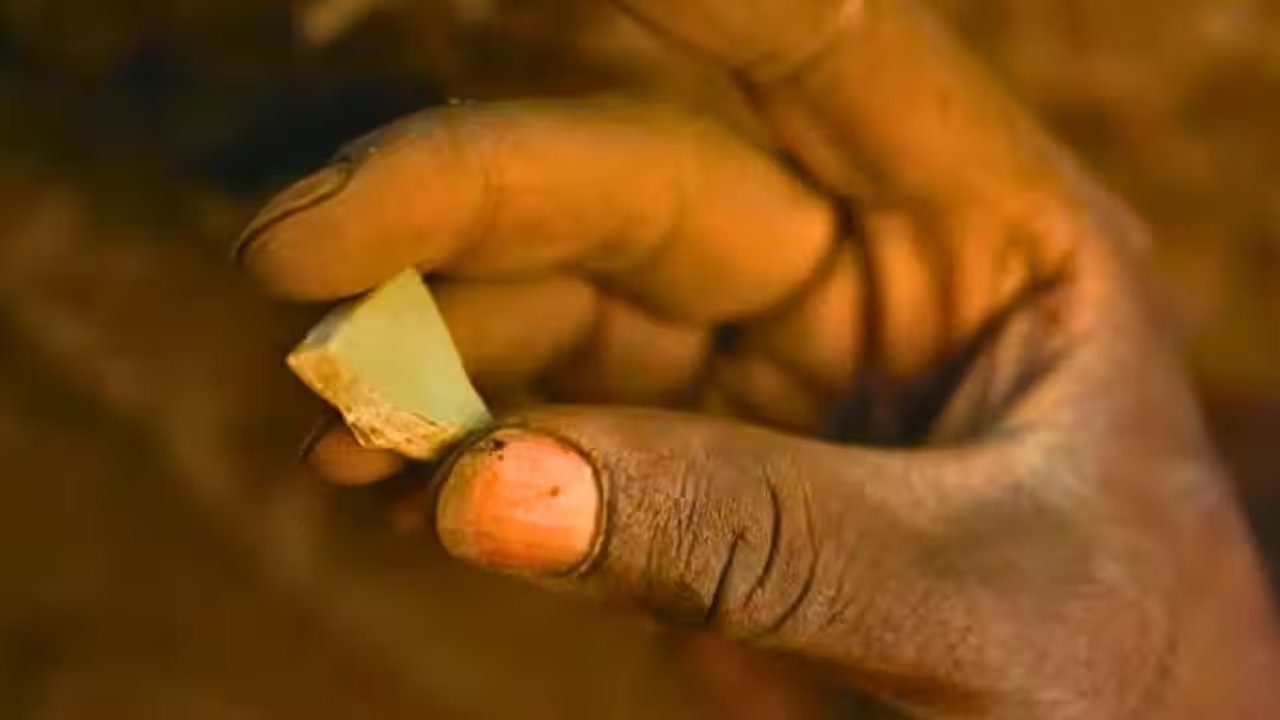
Shadreck Chirikure, Edward Hall Professor of Archaeological Science at Oxford, announced that a jade‑green shard unearthed in a trench at Great Zimbabwe was Longquan celadon from southeast China. The fragment’s apple‑green glaze and the pale body beneath it differ sharply from the earth‑brown pots found in the same layer, prompting a closer look.
Muchen Zhou, a DPhil candidate, examined the piece under an ultra‑high‑resolution microscope, noting a smooth glazed surface and a rough edge that hints at a broken rim. The glaze’s uniformity indicates firing at temperatures above 2,000°F, a technique unique to Longquan kilns in 12th‑century China.
The shard’s presence in southern Africa implies a long‑distance journey that likely crossed Southeast Asia, South Asia, the Persian Gulf, and the Indian Ocean before reaching the site. Such a route would have connected traders from China to the coastal towns of the Indian Ocean rim.
The excavation has also uncovered dozens of glass beads that cannot be traced to local production. Their chemical signatures match those from Southeast Asia, India, the Middle East, and Iran, reinforcing the idea that Great Zimbabwe was a hub of international trade.
Scholars argue that this network of goods helped fuel the settlement’s expansion and attracted a growing population, turning it into a center of wealth and cultural exchange.
Archaeologists plan to extend the dig through the summer, aiming to publish a comprehensive study in a leading archaeology journal and to display the shard in the National Museum of South Africa.