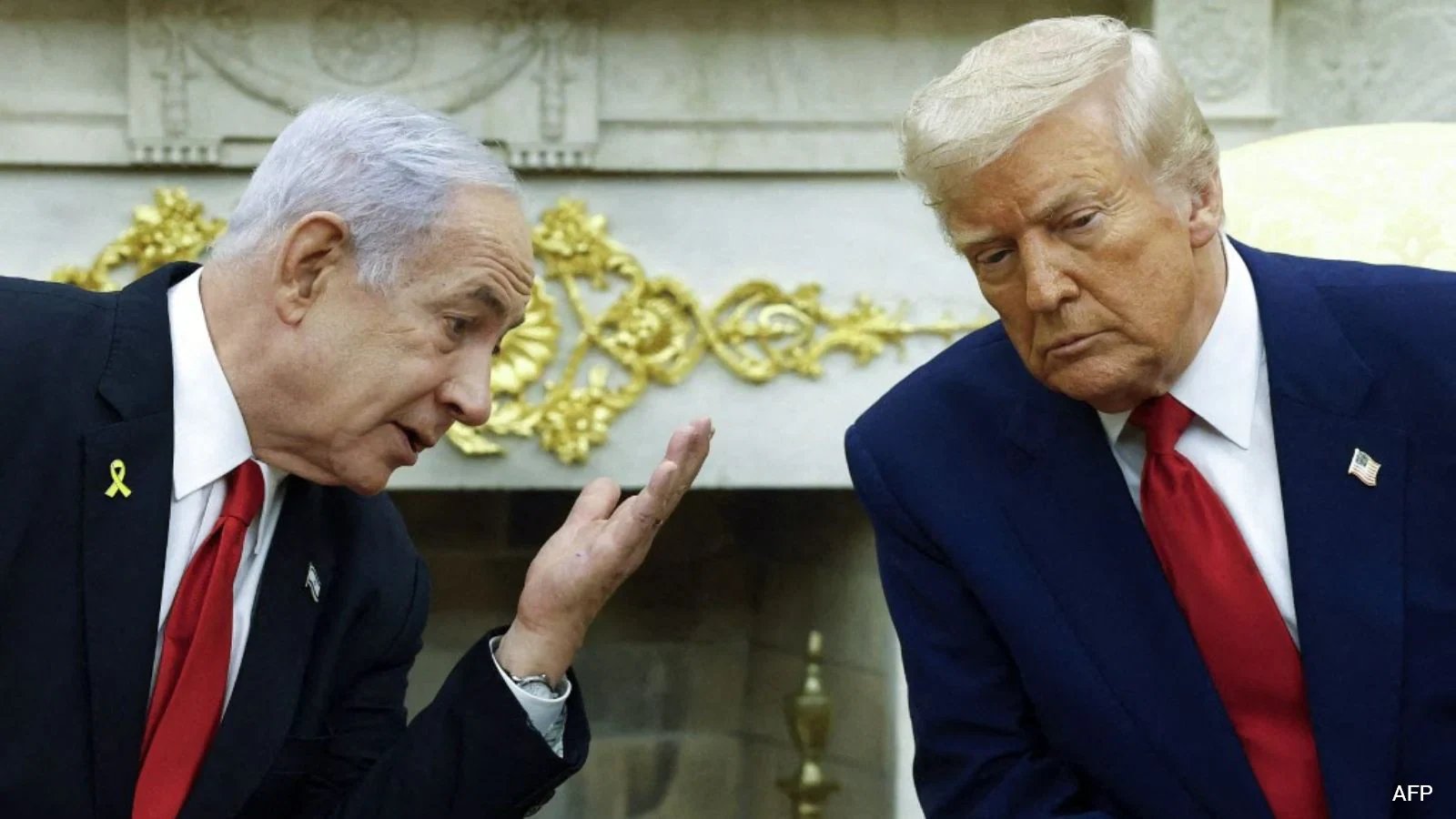
Israeli Prime Minister Benjamin Netanyahu is phoning US President Donald Trump every single day, mounting relentless pressure on the White House to greenlight renewed military strikes against Iran.
But the blitz is meeting stiff resistance inside Washington. Officials resisting a broader Middle Eastern war are pushing back, backed by an unprecedented diplomatic counter-offensive launched by alarmed regional capitals.
Diplomatic cables burned across the Gulf as regional heads of state moved quickly to counter Netanyahu's lobbying effort. Qatari Prime Minister Sheikh Mohammed bin Abdulrahman al-Thani spearheaded direct talks with Washington to broker an interim framework between the United States and Tehran. The message from Arab and Muslim capitals was clear and coordinated: do not escalate, and choose negotiation over conflict.
Saudi Crown Prince Mohammed bin Salman, United Arab Emirates President Sheikh Mohamed bin Zayed al-Nahyan, Qatar’s Emir Sheikh Tamim bin Hamad al-Thani, and Turkish President Recep Tayyip Erdogan all placed urgent calls directly to Trump, urging the US administration to halt any planned kinetic action.
Trump blinked.
Following his discussions with Qatari leadership, Trump announced that fresh airstrikes against the Islamic Republic appeared unlikely, declaring his preference for economic throttling over physical bombardment. Trump singled out regional cooperation on social media, detailing the alternative strategic track agreed upon with Gulf allies.
Qatar, Saudi Arabia, UAE, Bahrain, Kuwait and others would prefer the status quo, in other words, a continuation of the Greatest Naval Blockade in History, and the new Operation Iron Gate. We are seeing positive momentum toward an end to this Conflict, and will ensure that America's interests are at all times protected.
Donald Trump, US President
While figures close to the Israeli government insist Netanyahu has not mounted an aggressive persuasion campaign, officials briefed on the Oval Office exchanges confirm the daily outreach aimed directly at restarting kinetic operations.
| Strategic Stance | Key Regional Stakeholders | Proposed Strategic Course | Target Mechanism |
|---|---|---|---|
| Military Resumption | Israel (Prime Minister Benjamin Netanyahu) | Immediate kinetic strikes against Iranian facilities | Aerial bombardment |
| Containment & Choke | United States (White House) | Maritime economic pressure via 'Operation Iron Gate' | Global naval blockade |
| Diplomatic Mediation | Qatar, Saudi Arabia, UAE, Bahrain, Kuwait, Turkey | Negotiated temporary bilateral settlement | Multi-state diplomatic channels |
Tehran is not standing still. Iranian military leaders, flanked by commanders from the Islamic Revolutionary Guard Corps, warned that any renewed aggression from Washington or Tel Aviv will trigger violent, asymmetric retribution across the Persian Gulf.
Iran’s retaliation doctrine will not be confined to standard military targets. Strategic threats issued by Iranian defense officials specifically singled out seven critical undersea telecommunications cables crossing the seabed of the Strait of Hormuz—the arterial digital spine connecting Europe, the Middle East, and Asia. Iranian planners have also marked commercial cloud infrastructure and regional corporate data centers for direct disruption if strikes resume.
For now, Washington has chosen economic strangulation over bunker-busters. Whether Trump holds that line under Netanyahu's relentless daily calls depends entirely on the durability of Qatar's mediation efforts in the coming days.
| Asymmetric Retaliation | Iran (IRGC & General Armed Forces Leadership) | Counter-strikes against critical communications & energy corridors | 7 Strait of Hormuz cables, regional data centers |