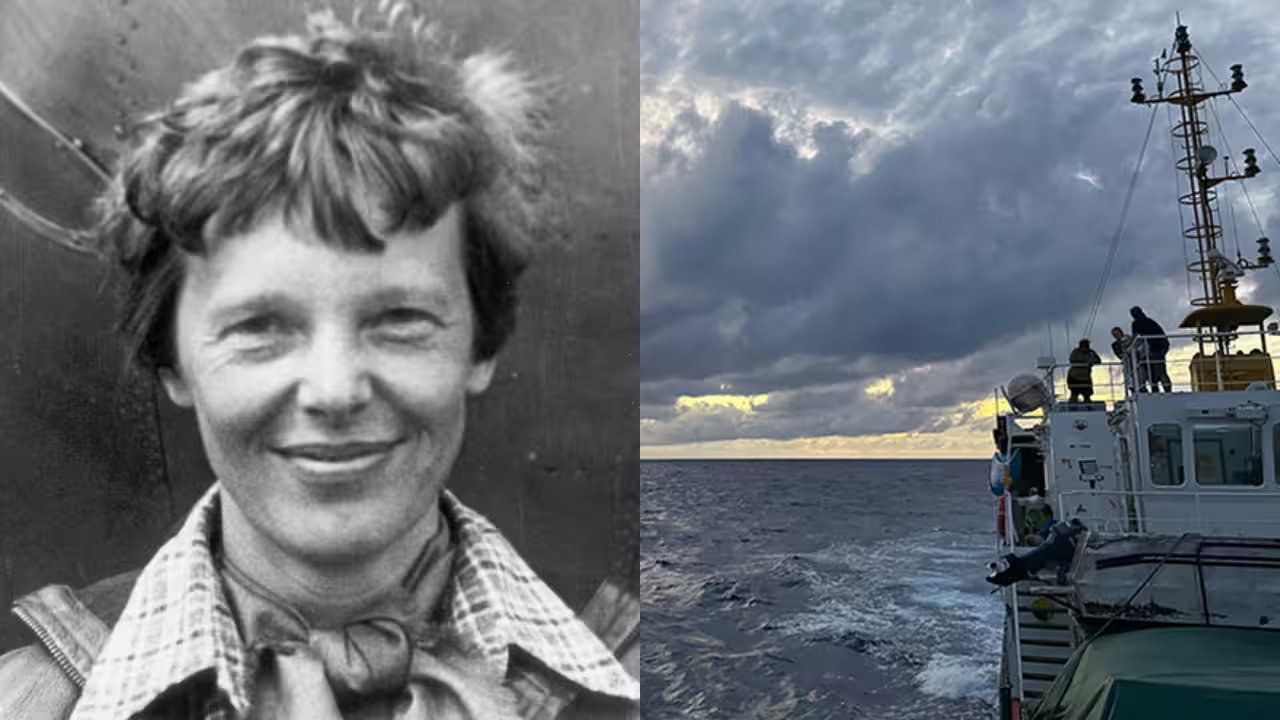
The 17‑member crew, led by marine archaeologist Richard Pettigrew of the Archaeological Legacy Institute and backed by Purdue University, departed Tarawa on Thursday, heading west across the Pacific.
They are chasing a peculiar shape in Nikumaroro’s lagoon first spotted in a 2020 satellite image—a branching formation that could resemble an aircraft fuselage and wings.
Some experts argue the anomaly is simply a fallen pandanus tree, while others point to 1938 aerial photos that show a similar contour, sparking a heated debate among historians and scientists alike.
The team will conduct underwater sonar and ground surveys over five days, then return to Tarawa in six days, hoping to confirm whether the object is indeed Earhart’s Electra.
Their efforts follow earlier attempts, notably a 2019 dive led by Robert Ballard that found no wreckage, and the longstanding Nikumaroro hypothesis that Earhart and navigator Fred Noonan might have landed there after failing to reach Howland Island.
A $900,000 budget covers travel, equipment, and scientific analysis, underscoring the academic community’s renewed interest in solving one of aviation history’s most enduring mysteries.