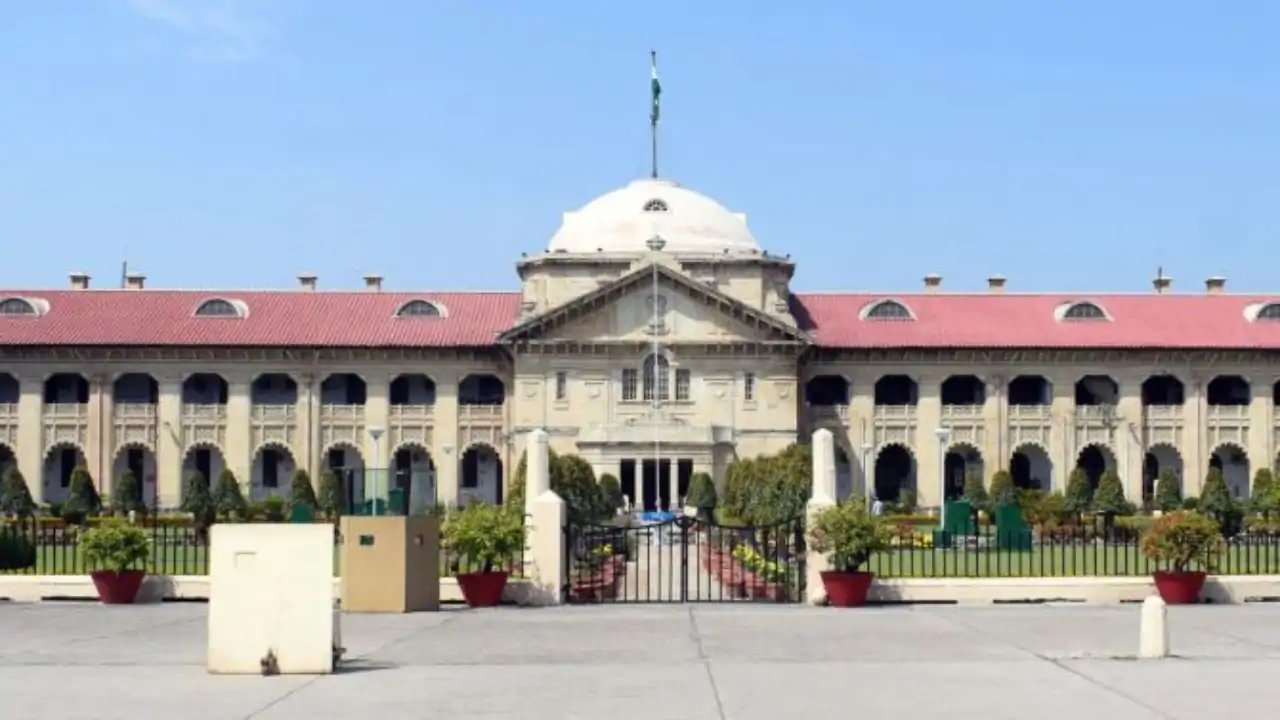
The Allahabad High Court has ordered the immediate release of Deepak, a Noida resident, after declaring his police detention unlawful and criticizing the Uttar Pradesh Police for acting as a "law unto themselves." In a sharp verdict delivered on October 7, a bench of Justices Atul Sreedharan and Achal Sachdev dismissed the state's argument that tense crowd dynamics justified procedural shortcuts. The court ruled that such circumstances do not excuse officers from adhering to the strict procedural and substantive requirements of the law.
The timeline reveals a glaring violation of the Bharatiya Nagarik Suraksha Sanhita (BNSS). Police records indicate Deepak and four others were taken into custody at 7:34 pm on August 23, 2026, following a clash between two groups. Yet, an FIR was not registered until 9:39 pm that same day, and Deepak was formally shown as arrested only at 2:57 pm on August 24. The bench noted it was undisputed that Deepak was in police custody before the FIR existed, suggesting documents were prepared later to legitimize the action.
The court highlighted specific procedural failures, including the allegation that Deepak’s signature was obtained on blank paper by Investigating Officer Anuj Kumar. This sheet was countersigned with the space above left blank for the grounds of arrest to be filled in later. The bench described this casual approach as indicative of a broader issue: "Documents appear to have been prepared and executed as a mere formality, replete with errors that raise serious doubts about the legality of the detention."
The judges did not mince words regarding the officers involved. They described Noida ACP Kamlesh Kant and IO Anuj Kumar as "highly ignorant" of BNSS procedures. The state government had argued that police acted in good faith to prevent further escalation given the gathered crowd, but the court rejected this defense. "It is for the police to understand that all the provisions... providing protection to a person sought to be detained arise from the constitutional protection guaranteed under Article 22(1)," the bench stated.
The judgment mandates that critical observations against ACP Kamlesh Kant and Investigating Officer Anuj Kumar be recorded in their respective service books. Furthermore, the court directed the Uttar Pradesh Director General of Police to develop better training modules to educate officers on civil liberties and legal procedures. This ruling follows a pattern of similar cases reaching the court, prompting the bench to describe the current situation as reflecting a "sordid state of affairs" within the UP Police.