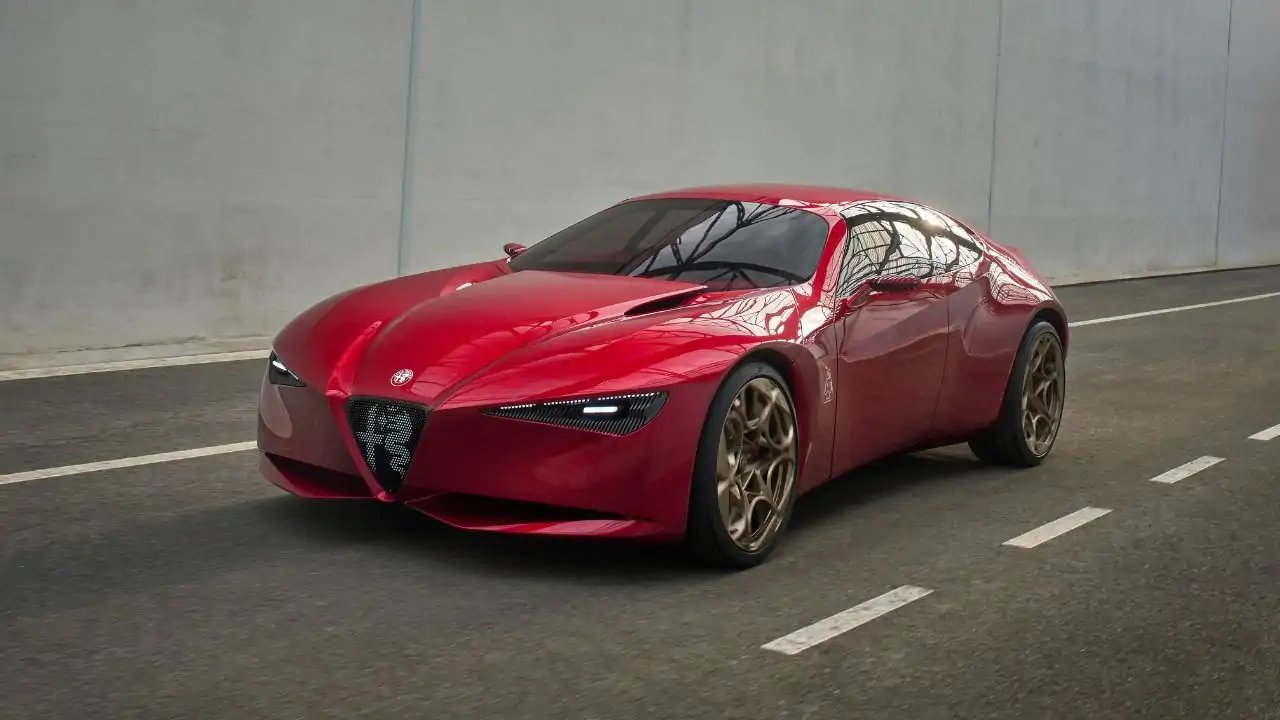
Let’s be honest: the automotive industry is currently drowning in EVs that feel like appliances, not cars. So when Alfa Romeo rolls out the Cuorerosso at the Paris Motor Show, it hits a nerve. This isn’t just another sleek shell with a battery pack; it’s a 2+2 coupe packing a 2.9-litre V6 hybrid unit. The dimensions are substantial — 4,700mm long, 1,980mm wide, and just 1,331mm tall — but the real story is under the hood. That V6, mated to a torque-converter automatic and Q4 all-wheel drive, is a deliberate counter-programming to the silent, instant-torque orthodoxy. It’s a statement that the brand still values the sound and feel of an internal combustion engine, even as it plans a full electrified lineup.
The design language is aggressive, borrowing the 'Coda Tronca' truncated tail from the classic 8C but modernizing it with flush windows and concealed handles. The paint, a 'Liquid Ink Red,' shifts tone in the light, a nod to the brand's 'Bellezza Necessaria' philosophy. Inside, the cabin is stripped back. No clutter. Just a driver-focused cockpit with steer-by-wire, air suspension, and Brembo carbon-ceramic brakes. It’s a 1,750kg machine, which is heavy for a car this size, but the carbon-fibre driveshaft helps manage the weight distribution. The interior offers three driving modes, including a Quadrifoglio setting, suggesting the production car won’t be a soft cruiser.
Here’s the catch for buyers: the Cuorerosso is a concept. It won’t be hitting showrooms in this exact form. Instead, its design cues and powertrain architecture will trickle down to future Alfa Romeo models up to 4.7 metres in length. The brand has confirmed a multi-energy strategy, meaning upcoming cars will offer mild-hybrid, full-hybrid, plug-in hybrid, and all-electric options. The V6 hybrid in the Cuorerosso is unconfirmed for production, but its presence suggests Alfa Romeo is hedging its bets. They’re building a bridge between the traditional V6 enthusiast and the inevitable electric future, ensuring the 'driving enjoyment' they tout isn’t lost in the transition.
So, what does this mean for the market? It sets the stage for a new generation of Italian GTs that compete with the Mercedes-AMG GT and Porsche 911, but with a distinct Italian flair. The launch timeline for the production models isn't specified, but the design direction is set. For enthusiasts, this is a relief. It’s a promise that the soul of the car — the V6, the handling, the style — will survive the electric shift. Keep an eye on the next 18 months. The Cuorerosso is the blueprint, and the production cars are just around the corner.