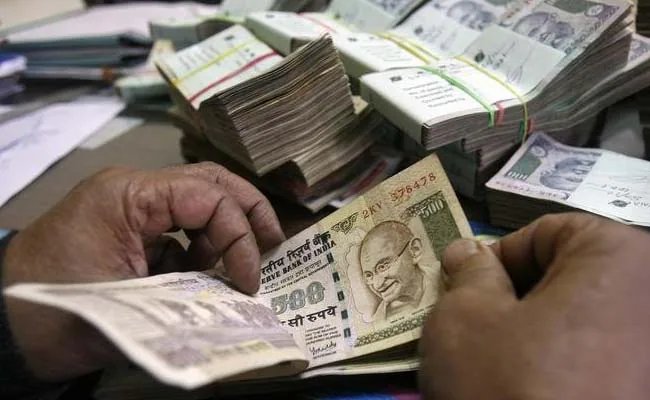
Ten years after demonetisation stripped the nation of 86 percent of its paper wealth overnight, cash has tightened its grip on the Indian economy.
Currency in circulation climbed to ₹43.16 lakh crore on October 23, 2026, according to Reserve Bank of India data. That represents a 143 percent leap from the ₹17.77 lakh crore recorded on November 8, 2016, when Prime Minister Narendra Modi outlawed ₹500 and ₹1,000 notes. Cash did not vanish. It multiplied. Yet this swelling hoard of banknotes coincides with the world's most aggressive digital payments revolution, exposing an economic paradox that defies cashless policy orthodoxies.
National Payments Corporation of India data reveals that the Unified Payments Interface processed 25.46 billion transactions worth ₹31.53 lakh crore in October 2026 alone. Ten years ago, digital payments barely registered on street corners. Today, QR codes hang from pushcarts in remote Himalayan hamlets and bustling wholesale yards in Old Delhi. Yet Indian consumers pull physical notes from automated teller machines just as eagerly as they scan QR codes on mobile screens.
Banknote demand accelerated sharply over the past fiscal cycle. The Reserve Bank of India's Annual Report for 2025-26, released in May 2026, recorded an 11.9 percent jump in the total value of circulating banknotes, alongside a 10.5 percent climb in physical volume. At the close of March 2026, paper currency held by the public and commercial vaults stood at ₹41.24 lakh crore, excluding metal coins. Weekly central bank ledgers show circulation expanded another 13.7 percent year-on-year by late October 2026.
The composition of this currency pile has concentrated heavily at the top.
Paper money in India is now overwhelmingly a ₹500 note economy. Central bank denomination breakdowns establish that ₹500 bills account for 85.5 percent of the total value of all circulating currency as of March 31, 2026. By piece count, ₹500 notes make up 41.2 percent of all circulating paper, while ₹10 notes comprise 16.1 percent and ₹100 notes represent 15.7 percent. Smaller bills keep local change fluid, but high-value tender anchors private reserves.
To gauge why households refuse to abandon paper, the Reserve Bank conducted a nationwide field survey examining spending patterns across households and neighborhood corner stores. The findings confirmed a persistent, uncompromising preference for hard cash.
| Financial Metric | November 2016 Baseline | Fiscal 2025-26 / October 2026 |
|---|---|---|
| Currency in Circulation (Value) | ₹17.77 lakh crore | ₹43.16 lakh crore |
| Banknotes in Vaults / Circulation (FY End) | ₹17.97 lakh crore (Pre-Dem.) | ₹41.24 lakh crore (March 2026) |
| Annual UPI Transaction Volume | 1.78 crore (FY17) | 24,162 crore (FY26) |
|---|---|---|
| Annual UPI Transaction Value | ₹7,000 crore (FY17) | ₹314 lakh crore (FY26) |
| Monthly UPI Value (October 2026) | Negligible | ₹31.53 lakh crore (25.46B txns) |
| ₹500 Note Share of Total Value | Nil (Scrapped / Replaced) | 85.5% (March 2026) |
Digital adoption expanded by orders of magnitude over the past decade. Government records track annual UPI transaction volume leaping from a modest 1.78 crore settlements in fiscal 2016-17 to more than 24,162 crore payments in 2025-26. Total clearing value exploded from ₹7,000 crore to ₹314 lakh crore across the same span. Everyday commerce—from utility bills to rail tickets and milk cartons—migrated to phone screens.
But convenience did not kill distrust.
An RBI research study titled 'Cash versus Digital Payment Transactions in India: Decoding the Currency Demand Paradox' pinpointed the twin drivers maintaining physical money demand: precautionary safety buffers and wealth storage. The study discovered that while cash use as an actual medium of exchange has shrunk, aggregate demand for currency keeps expanding. People spend through mobile apps, but keep cash tucked away in steel cupboards and bedside drawers for medical emergencies, power blackouts, and unbanked trades.
The data isolates two primary drivers behind persistent currency appetite: precautionary holdings and the role of physical notes as an untethered store of value.
Reserve Bank of India Research Division
Practical bottlenecks also sustain the paper habit. Millions of unorganized day laborers, farmhands, and small-scale traders operate outside formal banking channels, facing spotty cellular reception or lacking smartphones. Cash functions without servers, battery charges, or payment gateway timeouts.
Market Context: The dual expansion of UPI rails and paper money highlights structural resilience within India's retail economy. Digital payment platforms function as transaction accelerators, while physical currency acts as an autonomous shock absorber for liquidity, shielding households against network disruptions and volatile economic cycles.
The Reserve Bank of India plans to review liquidity management and currency supply targets ahead of its upcoming mid-year monetary policy review, where central bankers will assess holiday cash withdrawals and digital settlement trends heading into fiscal 2027.