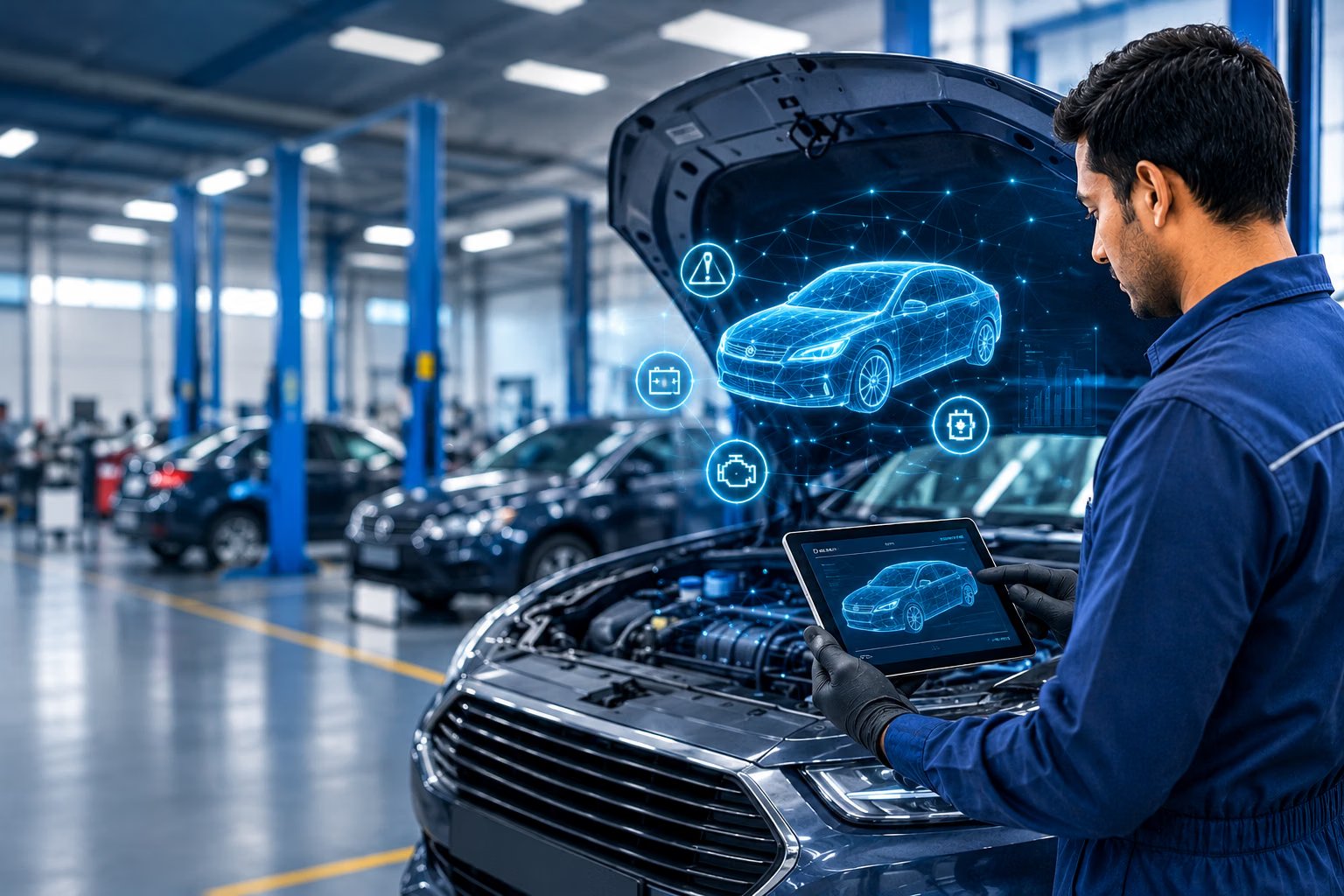
The car already knows what’s wrong with it. The problem is the service center isn’t listening. For large Original Equipment Manufacturers (OEMs), the gap between how modern vehicles are engineered and how they’re actually serviced is costing more than just customer goodwill. It is a staggering $150 million in untapped annual value that is slipping through the cracks of legacy workshop processes. It is a massive leak in a sector that already generates three to five times the operating margin of selling a new car.
Drivers today expect the same speed and transparency from a mechanic that they get from an Uber or an HDFC bank app. They want to know what is broken, how much it will cost, and when their car will be fixed before they even pull into the bay. Traditional aftersales setups are struggling to keep up. They are drowning in data from dozens of electronic control units (ECUs) but failing to translate that stream of information into usable insights for the technician standing in front of the engine. The result is guesswork.
And guesswork is expensive. Much of the $150 million loss stems from repeat repairs—vehicles coming back for the same problem because the initial diagnosis was incomplete. AI-guided diagnostics, which cross-reference live field data with deep engineering knowledge, can slash these repeat repairs by up to 30%. When you fix it right the first time, technician productivity jumps by 25-30%. For a fleet operator, that means fewer idle trucks and more revenue; for a private car owner, it means the car actually works when the warranty expires.
The value isn't just in fixing faults; it's in predicting them. Connected data allows service networks to flag emerging issues before the car even breaks down. Some problems can be resolved remotely, while others allow the dealer to have the right part and the right technician ready before the customer arrives. Predictive maintenance can reduce unplanned downtime by 15-20%, a critical advantage for commercial operators where every hour of downtime is money burning on the ground.
Ultimately, this isn't just about better software; it's about a different way of running the business. By tracking first-time fix rates and turnaround times, OEMs can move from reactive fire-fighting to proactive management. The vehicle ecosystem is shifting from a hardware-centric model to a data-centric one, and those who close the gap between the workshop floor and the digital cloud will own the next decade of automotive profit.