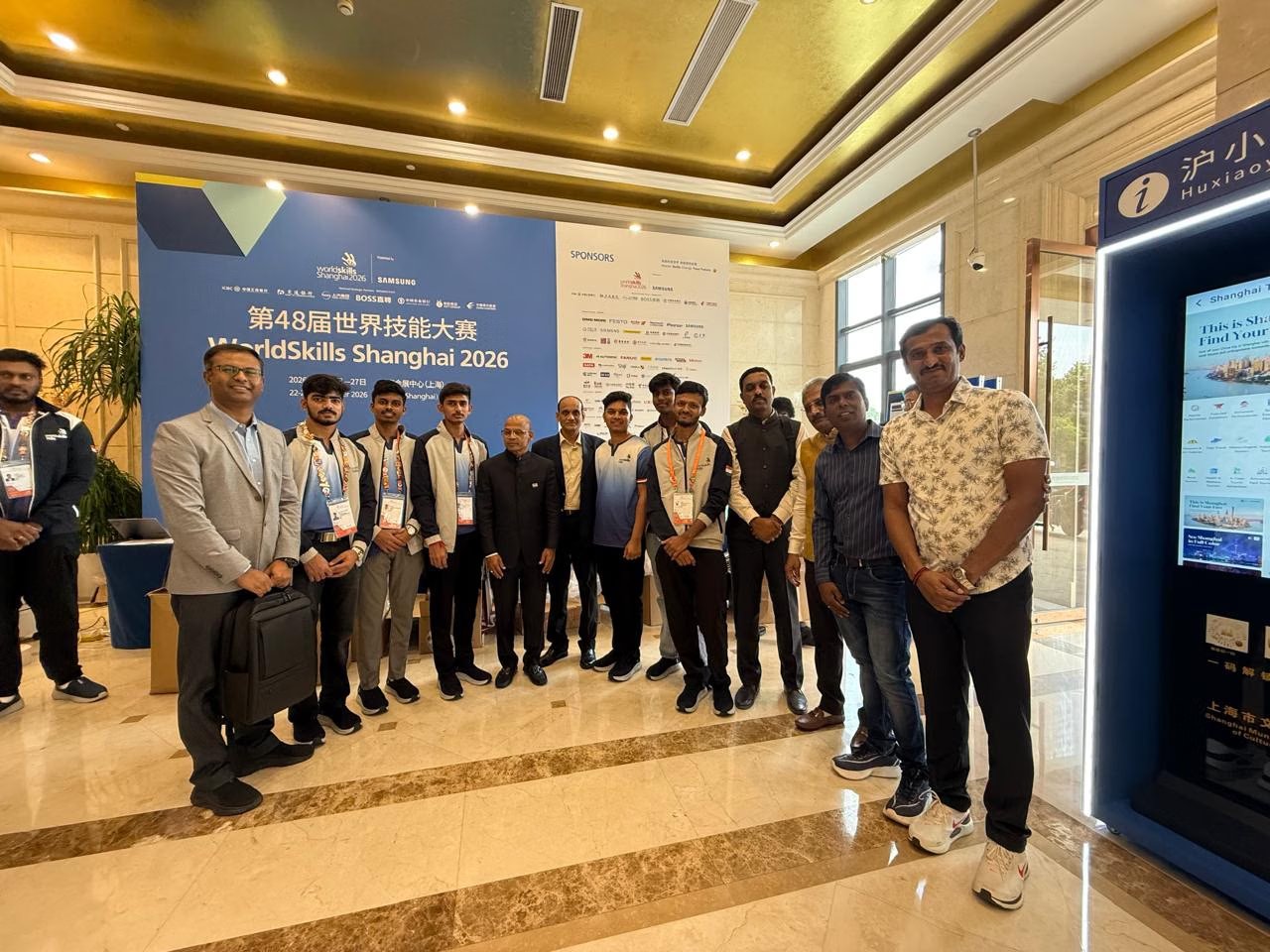
Five TKM employees clinched Medallions for Excellence at the 48th WorldSkills Competition held in Shanghai from 22‑27 September 2026, marking India’s fifth share of the country’s 20 awards. The accolade is awarded to competitors whose scores fall just below the thresholds for gold, silver or bronze, underscoring consistent high‑level performance.
The medallions came from three distinct skill clusters—Mechatronics, Additive Manufacturing and Robot Systems Integration—each of which feeds directly into vehicle assembly and component fabrication. Mechatronics, for instance, enhances the precision of sensor calibration in modern powertrains, while additive manufacturing sharpens the production of lightweight chassis parts.
Behind the success lies the Toyota Technical Training Institute (TTTI), founded in 2007. The institute runs a free, three‑year residential program that has trained more than 140,000 youngsters across Karnataka. Alumni routinely represent India in global skill contests, having bagged bronze at WorldSkills 2022 and Medallions in 2024.
TKM isn’t the only automaker investing in grassroots talent. Maruti Suzuki runs its Own Skill Development Initiative, and Tata Motors has its own Technical Education Program, each aiming to raise the bar for on‑the‑floor craftsmanship. TKM’s focus on Mechatronics and robotics places it among the leaders in automating skill transfer.
For the average buyer, the ripple effect is clearer: a workforce that hones advanced manufacturing techniques tends to produce fewer defects, smoother assembly lines and, ultimately, vehicles that last longer. That translates into lower long‑term ownership costs and higher resale values.
While the company has not announced a new car launch tied to this training push, its continued expansion of TTTI and partner ITI programmes signals that future models will benefit from a more technically adept workforce. Buyers can watch for subtle improvements in build quality and reliability as TKM rolls out its next generation of vehicles.