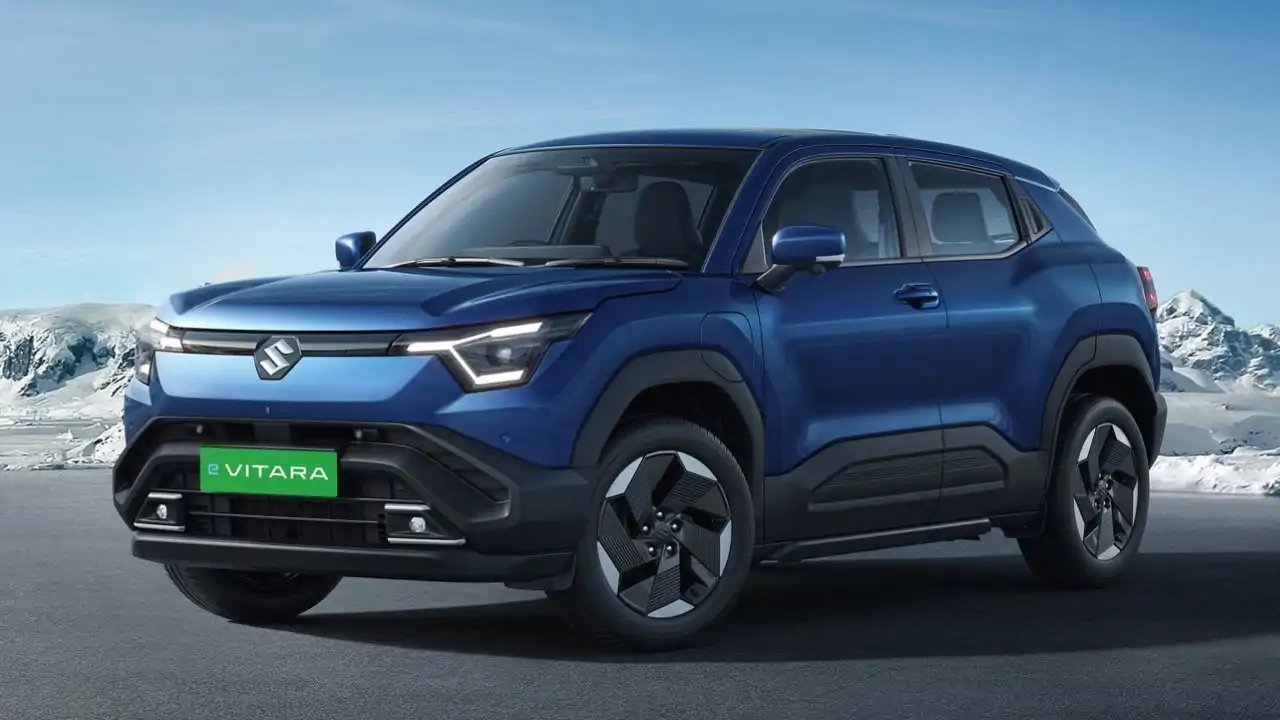
The India‑made Maruti Suzuki e Vitara just earned a four‑star safety rating in Japan NCAP’s 2026 assessment. That’s a clear sign the SUV can hold its own in a country that runs the world’s most stringent crash‑test protocols.
Under the Japanese protocol, the e Vitara nailed Level 5 in a full‑width frontal impact and side‑impact, and Level 5 in rear‑impact neck protection for the driver and front passenger. Yet it dropped to Level 2 for emergency braking on crossing vehicles and Level 3 for motorcycle handling during a right‑turn—situations that matter when driving in congested city streets.
When you pair those numbers with the SUV’s hardware, the picture gets clearer. The 49 kWh battery gives it a 543‑km range on the NEDC cycle, while the 61 kWh version pushes that up to 590 km. In the same segment, the Tata iX offers a 500‑km range with a 48 kWh pack, and the MG ZS EV tops out at 520 km with a 60 kWh battery. So, the e Vitara’s range sits comfortably above the iX and slightly ahead of the MG, even though the price point is a touch higher.
Bharat NCAP remains the benchmark for Indian buyers because it tests vehicles under local conditions and uses a different scoring rubric. The e Vitara’s five‑star Bharat rating, earned on 31.49 of 32 for adult occupant protection, shows that the SUV is already well‑protected for the domestic market. Japan NCAP’s detailed breakdown simply gives buyers a deeper look at how the car behaves in specific crash scenarios.
The e Vitara is already rolling out across major metros, with the 61 kWh variant scheduled for Delhi and Mumbai by the end of Q2 2026. Keep an eye on the next Bharat NCAP cycle in 2027 for updated scores and any new safety tech that Maruti may roll out. That will help you decide whether the current 4‑star Japan rating is enough or if you should wait for the next update.