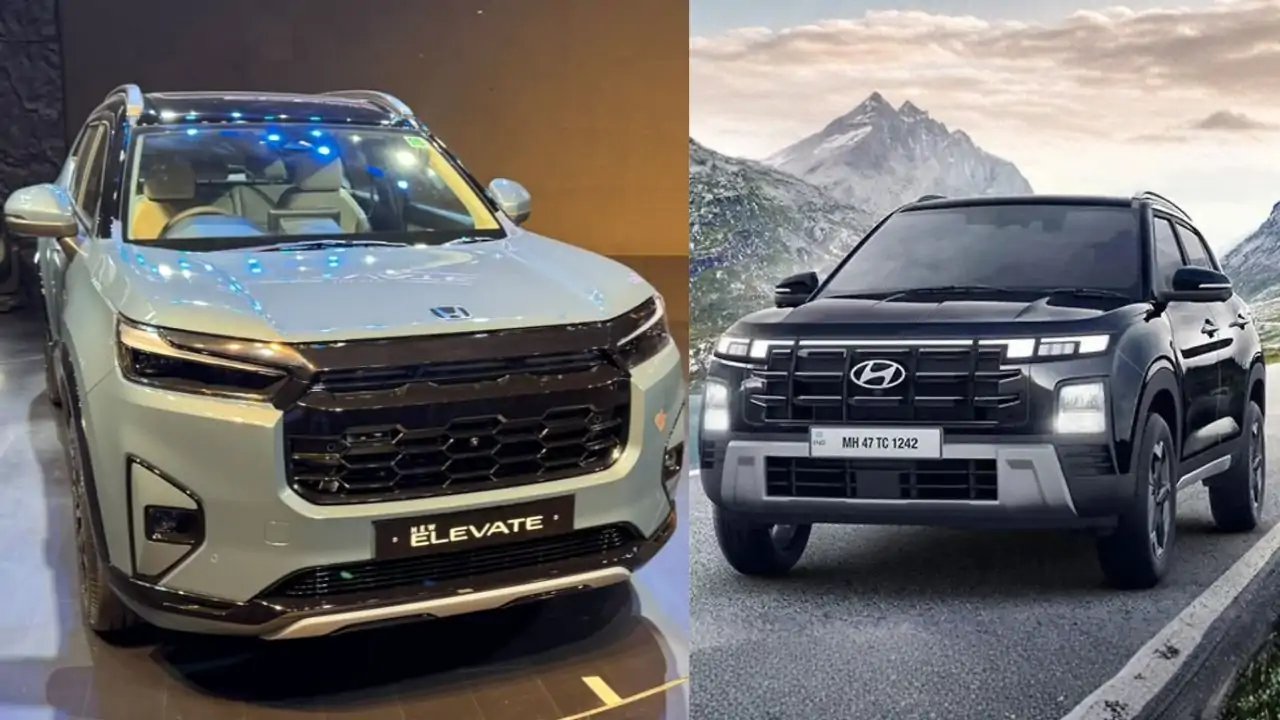
The facelifted Honda Elevate enters the market at ₹11.80 lakh, aiming directly at the Hyundai Creta’s ₹10.91 lakh starting price. For the average buyer, this price point signals a direct fight for the compact SUV crown. You’re looking at a vehicle that finally addresses the most common complaint about the previous model: the lack of rear seat ventilation. It’s a practical upgrade, not a cosmetic one. If you live in a hot climate or plan to use the car for family trips, those rear vents are a genuine quality-of-life improvement that the Creta currently lacks in most variants.
Under the hood, the Elevate sticks with its 1.5-liter petrol engine, now producing 119 hp and 145 Nm of torque. That’s slightly punchier than the Creta’s naturally aspirated petrol unit, which manages 113 hp. But here’s the catch. The Creta offers a 1.5-liter diesel option with 250 Nm of torque and a claimed 21.8 kmpl mileage, plus a 157.8 hp turbo-petrol variant. If high-speed highway cruising or long-distance travel is your primary use case, the Elevate’s single-engine strategy limits your flexibility. You’re getting a refined city commuter, not a versatile all-rounder.
Inside, the feature list has shifted. The Elevate now includes wireless Android Auto and Apple CarPlay, a standard expectation in 2026 that was previously missing. It also boasts a 2,650 mm wheelbase, which is 40 mm longer than the Creta’s 2,610 mm, translating to slightly more rear legroom. However, the Creta retains the upper hand with a panoramic sunroof, rear sunshades, and a fully digital driver’s display. The Elevate’s sunroof is a single-pane unit, and its ADAS system relies solely on a camera, whereas the Creta uses a combination of camera and radar for better performance in low-light conditions.
Safety and braking also show a split. The Elevate offers all-wheel disc brakes, but only on the CVT variants. The manual transmission models get rear drum brakes. The Creta, on the other hand, offers more gearbox choices, including a 7-speed DCT and a 6-speed torque-converter automatic, giving buyers more control over driving dynamics. For those who prioritize a sportier drive, the Creta’s gearbox options are more compelling. The Elevate’s 6-speed manual and CVT are adequate but unexciting.
So, who should buy what? If you want a refined petrol SUV with extra rear legroom and the comfort of ventilated seats for all passengers, the Elevate is the logical choice. It’s a cleaner, more predictable package. But if you need the torque of a diesel, the tech flair of a panoramic roof, or the confidence of radar-based ADAS, the Creta remains the stronger contender. The Elevate has closed the gap on comfort, but the Creta still owns the versatility market.