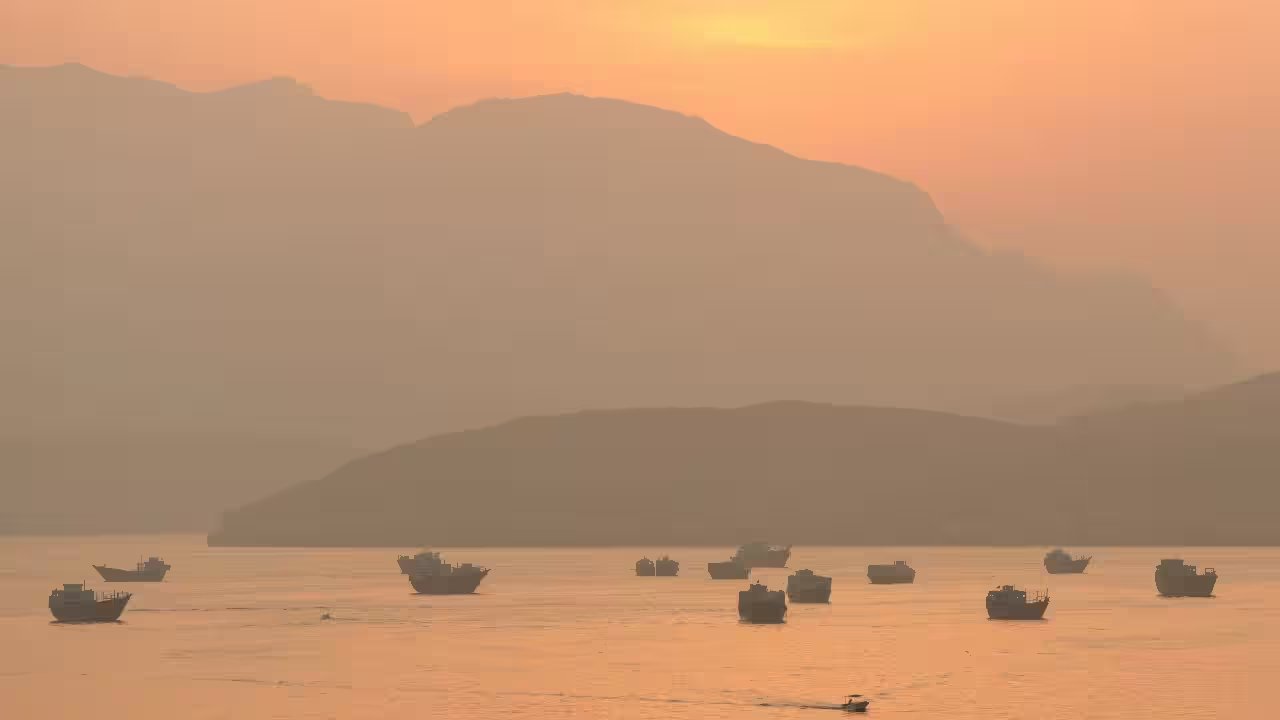
On the morning of Tuesday, HSBC’s chief executive Georges Elhedery told investors in Dubai that the Gulf’s energy corridor could shift away from the Strait of Hormuz after the war exposed the chokehold the waterway puts on global trade. A fifth of the world’s oil and LNG passes through those narrow waters, but the new plan proposes constructing pipelines that tie production hubs directly to ports, potentially letting vessels skirt the strait entirely.
The proposal, unveiled at the HSBC Future Forum, calls for a $1.4 trillion pipeline network over five years. Roughly $872 billion of that is earmarked for individual projects, according to MEED data cited in an HSBC report. The first segment, a 350‑mile link from the UAE’s Abu Dhabi fields to Jebel Ali port, is slated for commissioning by 2028.
Despite the conflict, Gulf investors remain buoyant. A recent HSBC survey of 1,600 business leaders and 820 institutional investors found that 78 % still view the region as an attractive hub, even as a World Bank forecast warns of a 1.3 % contraction in 2026. The pipeline could cushion that downturn by keeping energy flows steady.
Elhedery said the Gulf’s shift could be a “strategic hedge” against future geopolitical shocks. Yet the region’s biggest hurdle remains securing financing for such scale. The Saudi Arabian Investment Conference, postponed to 2027 after a strike in Riyadh, will likely be the stage for finalizing funding agreements.
For shipping firms, the change means less reliance on the Hormuz chokepoint. “If the pipeline gets built, we’ll be able to move cargoes more flexibly,” said Fatima Al‑Mahmoud, a logistics director in Dubai. The next milestone is a formal tender launch scheduled for early next month, which could spark a wave of construction contracts across the Gulf.