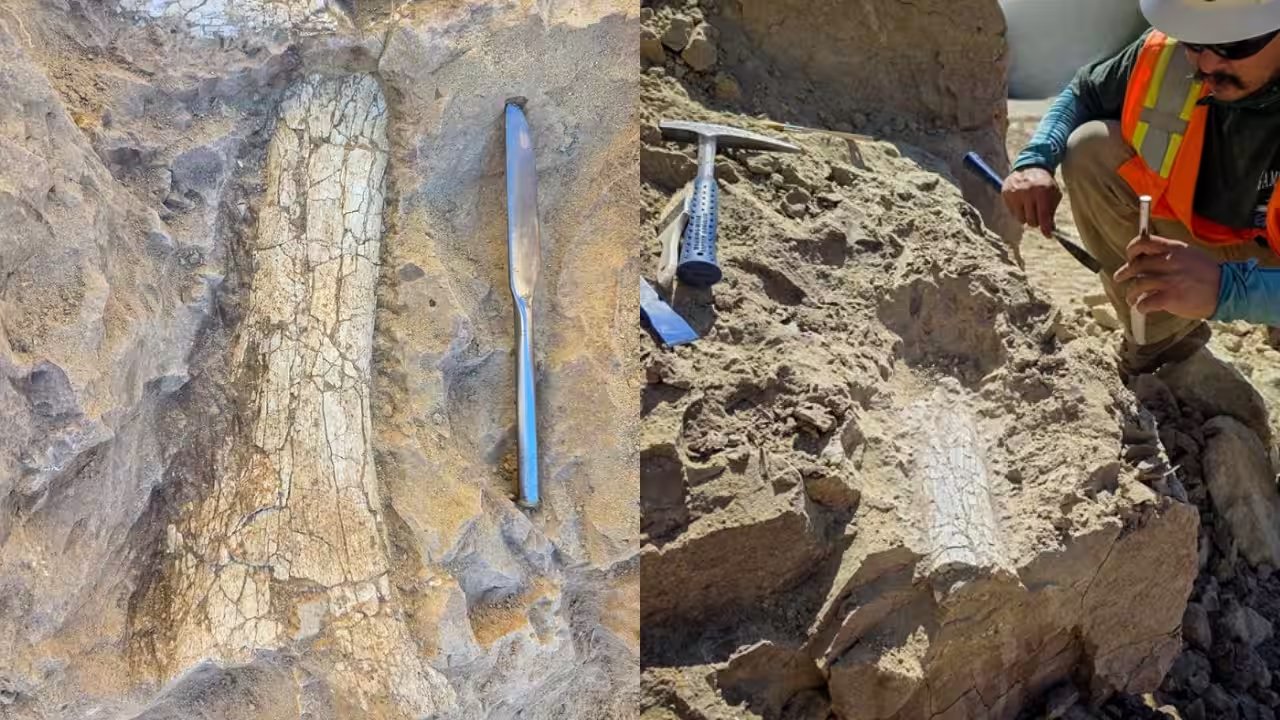
Construction crews in Oceanside, California, uncovered a 40‑million‑year‑old rhino‑sized fossil 12 feet below the surface during a routine infrastructure project, and the City of Oceanside’s principal paleontologist, Dr. Joseph El Adli, immediately secured the site for further work.
The find emerged from Member C of the Santiago Formation, a thick sequence of sedimentary rocks that has yielded other Eocene fossils across northwestern San Diego County; geologists date the layer to roughly 40–45 million years ago.
Dr. El Adli, who has led the city’s paleontological investigations for over a decade, believes the bones belong to either a brontothere—an enormous, hoofed beast nicknamed the “thunder beast”—or an amynodont, a swamp‑rhino with a squat, hippopotamus‑like build that roamed North America during the same epoch.
Over seven days, a team of specialists extracted the bones from several tons of hardened mudstone and sandstone, then encased them in a plaster field jacket for transport to an off‑site laboratory. Construction foreman Rajesh Kumar, who has been on the site for three years, said the discovery stunned him: “You never expect to see something like that in a parking lot.”
The fossils will undergo lab preparation—cleaning, gluing, and resin casting—before being placed in a museum collection for research and public education. City officials have kept the exact location under wraps to protect the site from unauthorized digging and anticipate completion of the excavation by the end of June, with a museum exhibit slated for early 2025.