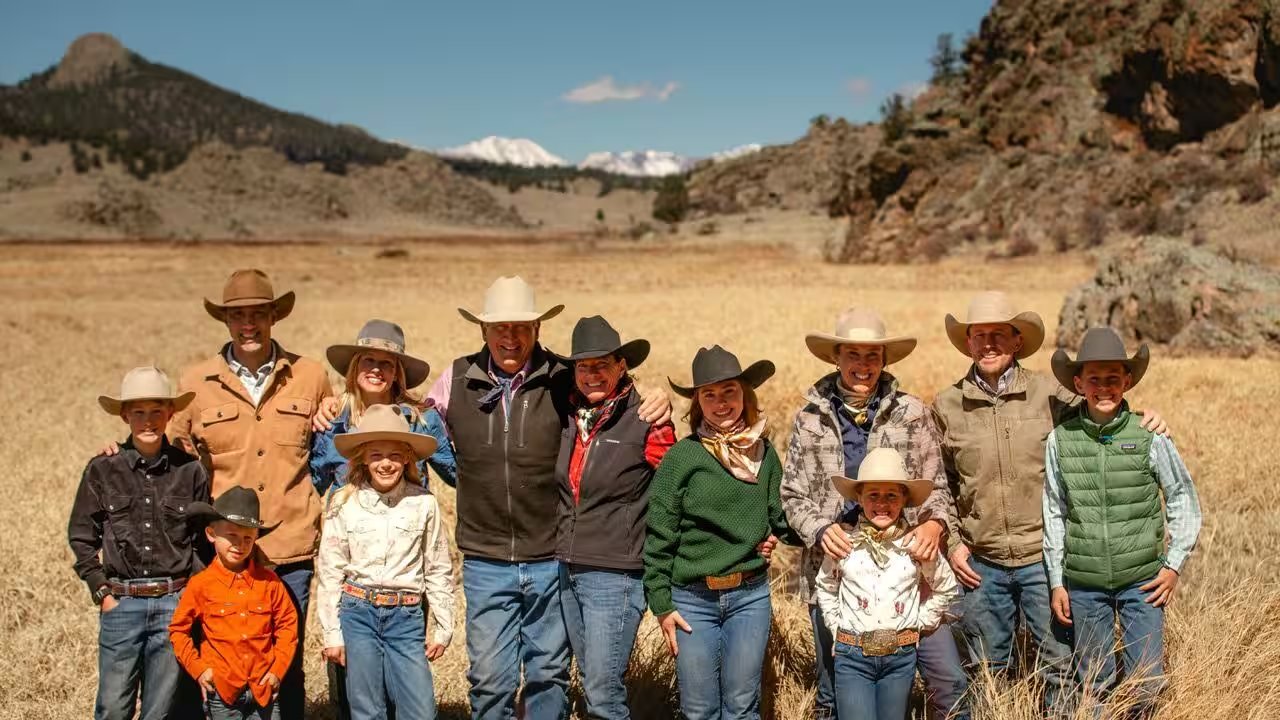
Dave and Jeannie Gottenborg stand on the highest ground of Eagle Rock Ranch, a sprawling stretch of Colorado’s Park County that looks nothing like the hellscape they bought 15 years ago. The Sand County Foundation formally recognized their work with the 2026 Colorado Leopold Conservation Award, a nod to a quiet, decade-and-a-half labor that turned a 'wounded landscape' into a functioning ecosystem. They didn't just fix the fence lines. They rewrote the rules of how the land breathes.
The property was a mess when the couple took the keys. Corals sat knee-deep in manure. Willows lining the creek had been hacked away to make room for more hay. The result was churned soil, polluted water, and a constant battle with migrating elk that tore through fences despite propane cannons. Dave and Jeannie tore out the rotting corrals and pulled the rusty barbed wire. The work was unglamorous. It involved hauling trash, replanting native grasses, and installing wildlife-safe fencing.
The shift in daily operations changed the physics of the ranch. Instead of mowing hay fields to the bone, they now leave stubble standing to trap snow and slow erosion. A solar-powered pump pushes clean water from a settling pond through miles of underground pipe to 10 stock tanks. This infrastructure allowed them to implement rotational grazing, spreading the cattle’s impact rather than concentrating it in one muddy patch. The creek, once a channel for runoff, now runs clear and supports a thriving trout population thanks to new habitat structures and hundreds of planted willow saplings.
The Gottenborgs didn't stop at their own fence line. Dave initiated talks that produced the first voluntary elk migration agreement in the country, a program backed by the Colorado Cattlemen’s Agricultural Land Trust and the Property and Environment Research Center. It uses private funding to compensate landowners for allowing herds to pass. Researchers are now using trail cameras on the property to test if better fencing can guide elk to safer crossing points on highways.
The award isn't just a trophy for saving a few trout. It validates a business model where conservation and cattle ranching aren't mutually exclusive. The ranch now hosts a comprehensive survey of its biological community, from invertebrates to Mountain Bluebirds. The next step is scaling this model, with the elk agreement drawing interest from ranchers across the American West who want to protect their land without losing their livelihood.