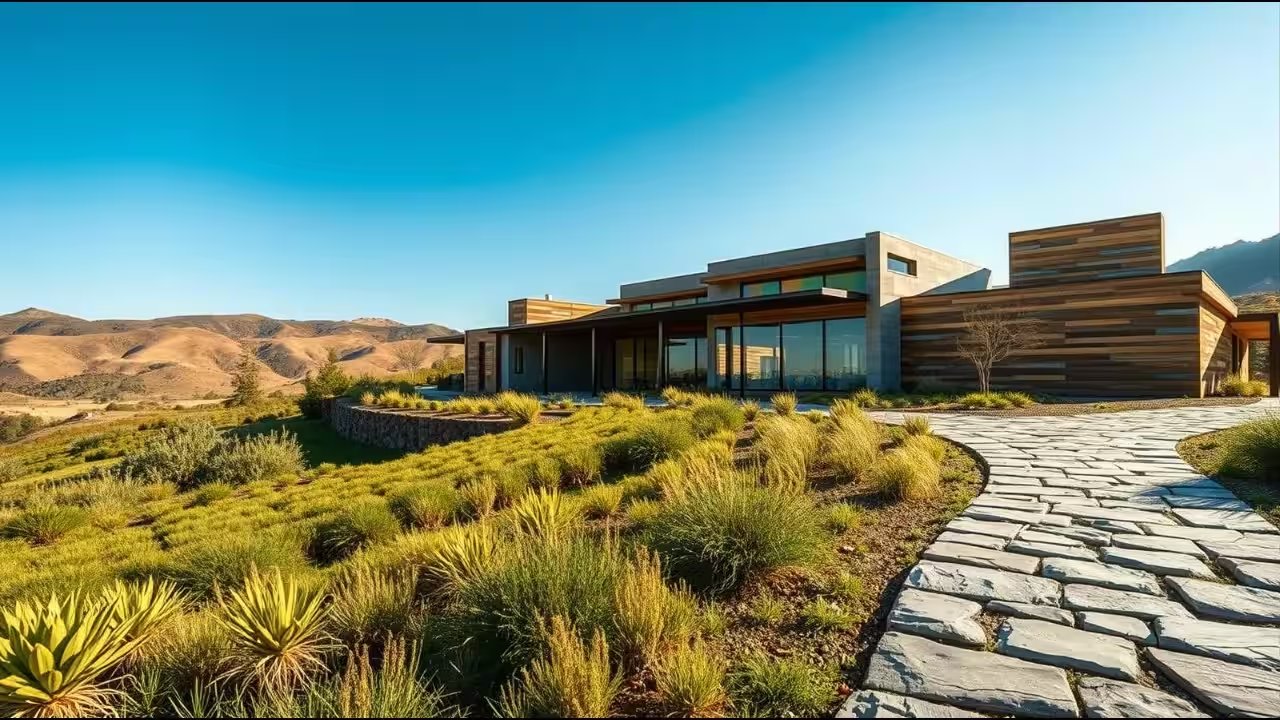
In 2024, Louis Jansen van Vuuren and Hardy Olivier unveiled EcoSpace, a 305‑square‑metre luxury home in Riebeek‑Kasteel that incorporated 97 tonnes of reclaimed plastic, fabric and glass.
Zerocrete’s data show the house used 55,636 kg of plastic—about 4 million PET bottles—26,115 kg of discarded textiles, equivalent to 186,000 T‑shirts, and 15,281 kg of glass, roughly 38,000 wine bottles.
Zerocrete CEO Jeroen van der Meer said the project diverted the waste from landfill and that the plastic forms the core of walls and furniture while the fabric and glass add texture and visual interest.
Local artisan Sipho Moyo, who received training in Zerocrete techniques, noted that the project has already created 36 new jobs and opened doors for craftsmen in the region.
The construction also replaced 50 % of the cement with a low‑carbon alternative, which the company estimates cut 283,000 kg of CO₂ emissions, and the overall carbon footprint is reported at less than 200 kg per square metre.
Van Vuuren and Olivier, who previously owned five homes in France, see EcoSpace as a prototype that proves high‑end construction can use waste‑derived materials without compromising comfort or design. They plan to replicate the model in other South African towns as a step toward more sustainable building practices.